

 Pakistan
Ahmed Sofa
Ahmed Sofa was a Bangladeshi writer, thinker, novelist, poet, philosopher, and public intellectual.
 Biography DeskOctober 25, 2026
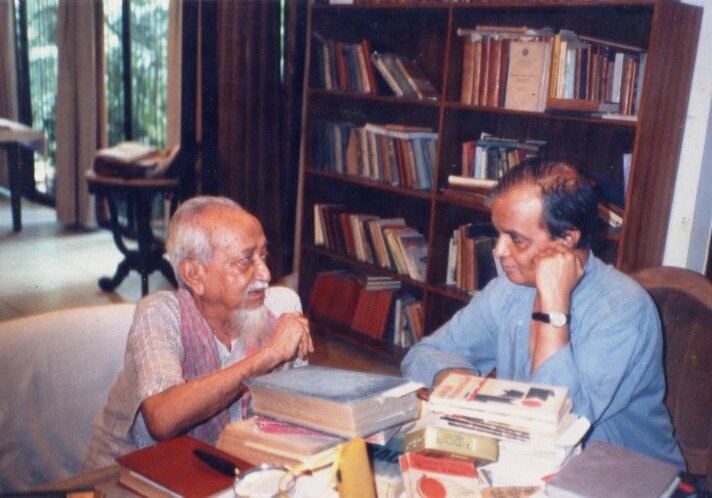
Ahmed Sofa was born into a family of farmers at Gachbaria in the district of Chattogram to Hedayet Ali and Asiya Khatun. He received his secondary and higher secondary education in Chattogram. In 1962, he moved to Dhaka and was admitted to the Department of Bangla at the University of Dhaka.
He earned a bachelor's degree as a private candidate from Brahmanbaria College in 1967. In 1970, he earned a master's in political science from the University of Dhaka. He was granted a fellowship by Bangla Academy in 1970 to do his PhD under the supervision of Abdur Razzaq.
Sofa began his writing career in the 1960s and served many newspapers and magazines as an editor. His first novel, Surya Tumi Sathi, was published in 1967. In 1972, he wrote Buddhibrittir Natun Binyas to map the intellectual landscape of Bangladesh.
He wrote the novel Omkar in 1975, which is considered a literary expression of the liberation movement. In 1977, he wrote the poem Ekti Prabeen Bater Kache Prarthana. His non-fiction book Bangali Musalmaner Man was published in 1981.
Sofa wrote the novel Ekjan Ali Kenaner Utthan Patan in 1988 and Maranbilash in 1989. He published the novel Alat Chakra in 1993 and the satire Gabhi Bittanta in 1995. His semi-autobiographical novel Ardhek Nari Ardhek Ishvari was published in 1995.
In 1996, he published Pushpa Briksa ebang Bihanga Puran. He also published the memoir He Is Still My Teacher in 1998. Sofa died of cardiac arrest on 28 July 2001 in a hospital in Dhaka.
He was posthumously awarded the Ekushe Padak by the Government of Bangladesh in 2002. He was buried near the Mirpur Martyred Intellectual Graveyard. His works include 18 non-fiction books, 8 novels, 4 collections of poems, and 2 collections of short stories.
Key facts
- Ahmed Sofa was born on 30 June 1943 in Chattogram.
- He authored 18 non-fiction books and 8 novels.
- He died on 28 July 2001 in Dhaka.
- He received the Ekushe Padak posthumously in 2002.