

Draconid Meteor Shower Peaks Tonight
The Draconid meteor shower will briefly light up the sky Thursday night, with up to 10 meteors per hour visible, peaking at 9 p.m. ET. The shower is best seen from the Northern Hemisphere, but some meteors may be visible from the Southern Hemisphere.
 Space Desk 2 min read
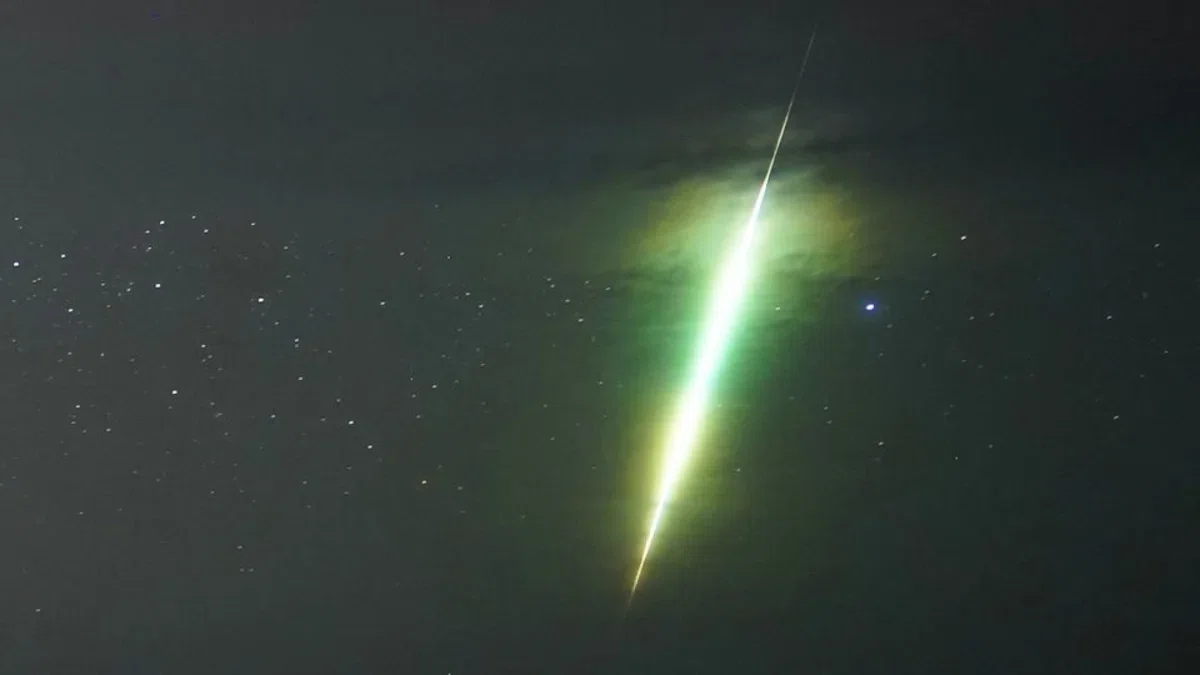
The Draconid meteor shower is expected to peak at 9 p.m. ET Thursday, with meteors visible into the early hours of Friday morning. According to EarthSky, the shower is best seen from the Northern Hemisphere, but sky-gazers in the Southern Hemisphere may catch a glimpse of a few meteors near the horizon after darkness falls.
The Draconid meteors move relatively slowly, taking about one or two seconds to streak across the sky. This is slower than meteors from other showers, which can be visible for only a fraction of a second. The shower gets its name from the constellation Draco the Dragon, as the meteors appear to originate from this direction.
The Draconid meteor shower occurs when Earth passes through the debris trail left behind by the comet 21P/Giacobini-Zinner. This comet completes its orbit of the sun every seven years, and scientists have reported increased meteor activity in the past when the comet's debris is concentrated close to the comet.
The possibility of a meteor storm makes the Draconid meteor shower a popular event among sky-gazers. A meteor storm can happen when Earth passes through a concentrated trail of debris, resulting in hundreds or thousands of meteors visible per hour. However, this is not guaranteed and depends on various factors, including the comet's orbit and the distribution of its debris.
The Draconid meteor shower is also known as the Giacobinids, named after the comet's discoverer, Michel Giacobini. While the shower is considered smaller compared to others later in the year, it remains a notable event in the astronomical calendar.
The waning crescent moon will not interfere with the shower, allowing for optimal viewing conditions. Sky-gazers can expect to see up to 10 meteors per hour, making it a worthwhile event to observe.
The location of the shower's radiant point, near the constellation Draco, means that the meteors are best seen just after nightfall and throughout the evening hours. This is different from most other meteor showers, which peak early in the morning.
Key facts
- The Draconid meteor shower peaks at 9 p.m. ET Thursday
- Up to 10 meteors per hour will be visible
- The shower is best seen from the Northern Hemisphere
- The meteors move relatively slowly, taking about one or two seconds to streak across the sky
Three perspectives
Neutral
The Draconid meteor shower offers a unique opportunity for sky-gazers to observe a celestial event. With optimal viewing conditions and the possibility of a meteor storm, it is an event worth watching. However, the shower's smaller size compared to others later in the year may affect its overall impact.
Positive
The Draconid meteor shower is a popular event among sky-gazers, offering a chance to see up to 10 meteors per hour. The possibility of a meteor storm adds to the excitement, making it a worthwhile event to observe. The shower's unique characteristics, such as the slow-moving meteors, make it a notable event in the astronomical calendar.
Negative
The Draconid meteor shower is considered smaller compared to others later in the year, which may affect its overall impact. The shower's peak time, just after nightfall, may not be ideal for all sky-gazers, and the possibility of a meteor storm is not guaranteed. However, the event still offers a unique opportunity for astronomical observation.
Your week in news, every Wednesday
The biggest stories of the week for your edition, in your inbox every Wednesday morning, your time. Free, and you can unsubscribe at any time.