

Voyager 1 regains communication after 48-hour loss
NASA engineers are investigating a brief communication loss with the spacecraft while celebrating a successful energy-saving effort nicknamed the Big Bang.
 Space Desk 2 min read
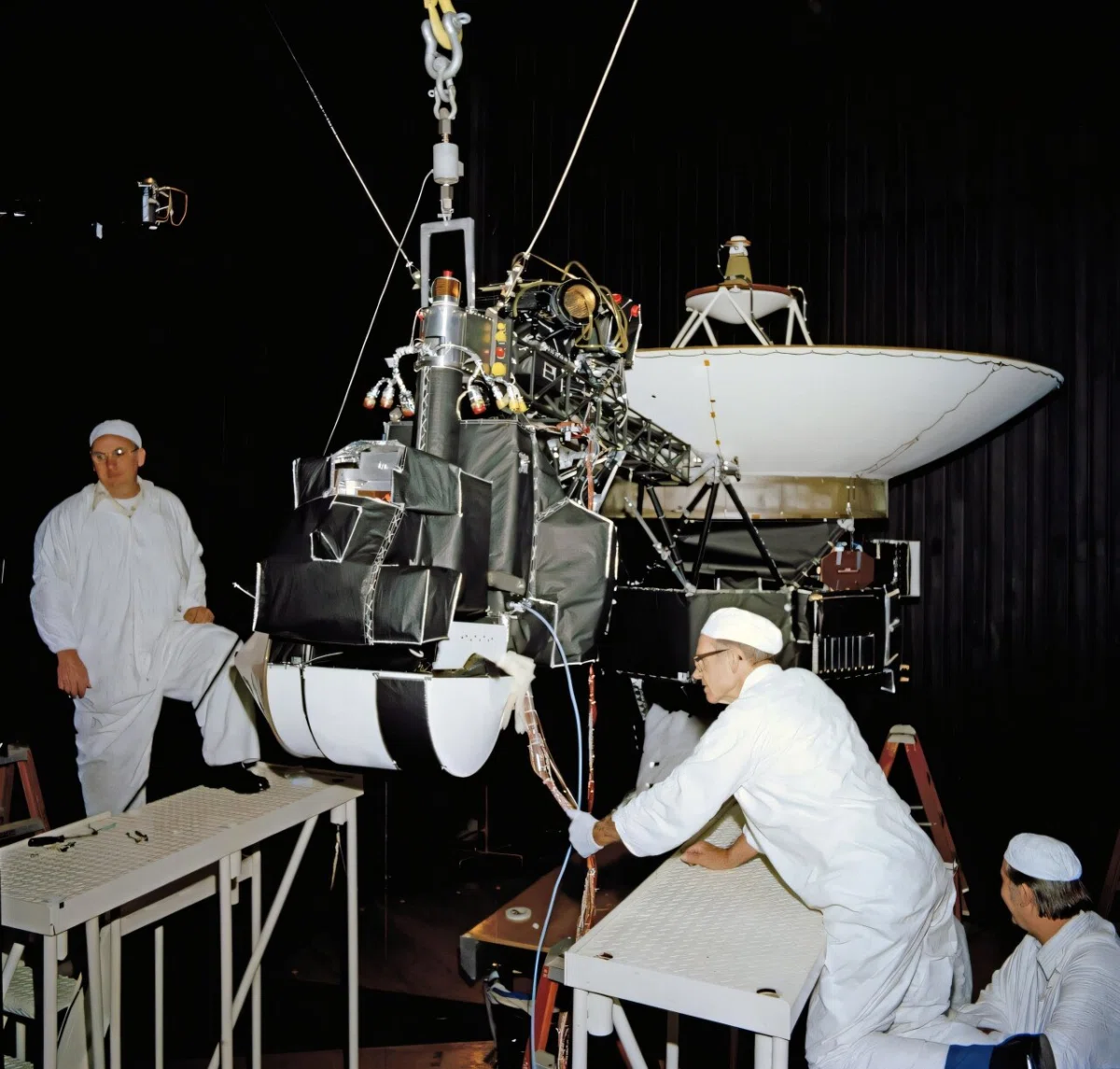
NASA's Voyager 1 spacecraft has regained communication after an unexpected 48-hour loss of signal. The probe, which is 16 billion miles from Earth, was unable to be detected by the Deep Space Network during two scheduled communication attempts on Oct. 18 and 19. The signal reappeared on Oct. 20, and the team has maintained communication since then.
Engineers are investigating the cause of the loss. The team has determined that one group of thrusters went offline and their backups turned on. This automatic fault protection response is programmed to occur if computers detect an issue with active thrusters, directing the spacecraft to a stable configuration and pausing normal operations.
Kareem Badaruddin, Voyager mission manager at NASA's Jet Propulsion Laboratory, said this is the first time the team has seen the spacecraft perform such an action, but they must expect the unexpected. The team is relieved to be back in contact and is eager to understand what happened.
The communication issue follows a successful energy-saving effort completed in September nicknamed the Big Bang. Engineers turned off three devices and substituted them with three lower-power alternatives to extend the mission. This swap was required to occur simultaneously to reduce power use while ensuring heat is properly distributed to keep the spacecraft warm.
Voyager 1 is traveling at 38,000 mph toward a milestone on Nov. 18, when it will be 16.09 billion miles from Earth. This distance is equivalent to one light-day, meaning radio waves take 24 hours to reach the probe and another 24 hours for a return message to arrive. Suzanne Dodd, Voyager project manager at JPL, said sending a message requires a two-day wait for a response.
Key facts
- Voyager 1 regained communication on Oct. 20 after a 48-hour loss.
- The spacecraft is 16 billion miles from Earth.
- The 'Big Bang' energy-saving effort in September will allow science instruments to operate longer.
- On Nov. 18, the spacecraft will be 16.09 billion miles from Earth, or one light-day away.
Three perspectives
Neutral
Voyager 1 is currently being investigated by engineers following a brief loss of communication and a recent power-saving reconfiguration.
Positive
The successful 'Big Bang' energy-saving effort will enable Voyager 1's remaining science instruments to operate longer than previously anticipated.
Negative
The spacecraft's power margins have grown thin as the plutonium supply in its radioisotope thermoelectric generators continually depletes.
Your week in news, every Wednesday
The biggest stories of the week for your edition, in your inbox every Wednesday morning, your time. Free, and you can unsubscribe at any time.