Chemical fingerprint in rocks marks shift to modern plate tectonics
Researchers found a chemical signature in thousands of rocks that disappears 2.5 billion years ago, indicating when Earth's tectonic engine switched on.
 Science Desk 2 min read
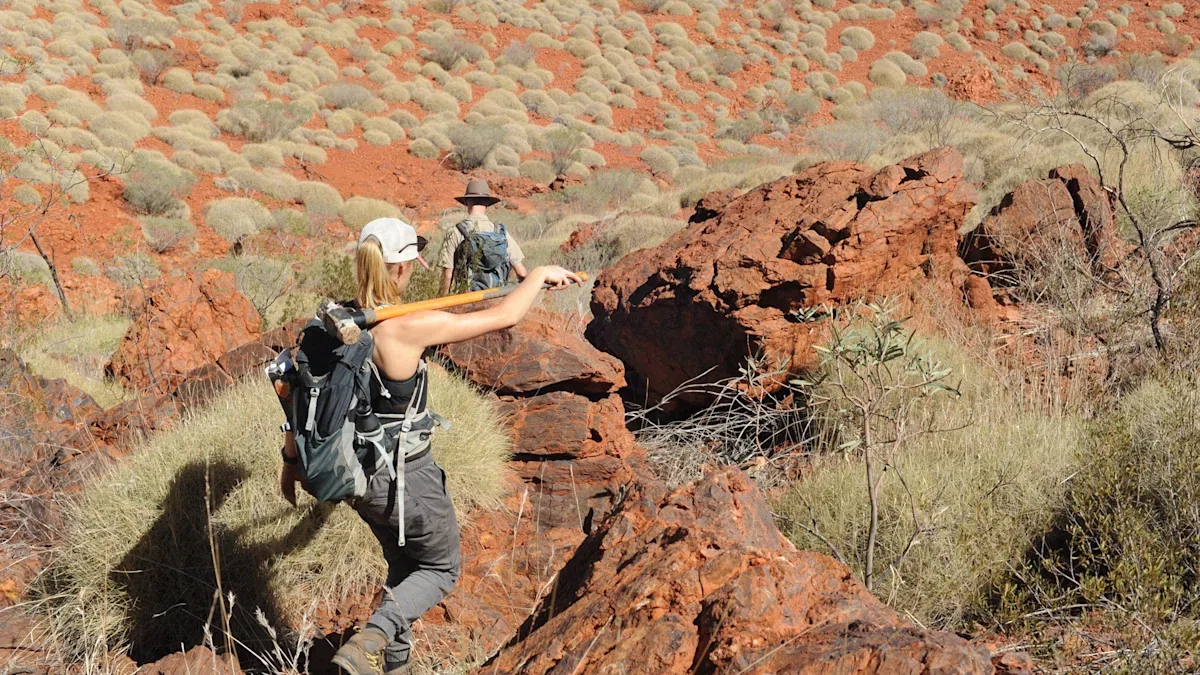
Researchers have identified a chemical fingerprint in thousands of rocks that disappears 2.5 billion years ago, marking a turning point in Earth's geological history. This finding provides the clearest geological timing for when the processes shaping Earth's surface began to resemble modern plate tectonics.
The team searched for a signature left behind when new crust forms by melting older rock. They examined thousands of rocks from around the world spanning almost four billion years of history. Lead author Janne Liebmann, a research fellow at Curtin's Timescales of Mineral Systems Group, said the fingerprint was found consistently in rocks older than 2.5 billion years, showing they came from a pool of ancient crust formed about four billion years ago.
Liebmann said this points to a basic change in how Earth's crust was formed and transformed toward the dynamic system seen today.
Co-author Chris Kirkland, a professor in Curtin's School of Earth and Planetary Sciences, described the shift as a move from an early Earth, where ancient crust could be melted and reworked in place, to one able to move and recycle crust on a much larger scale. Kirkland said the result helps explain when Earth gained a feature that distinguishes it from tectonically inactive planets such as Venus and Mars.
Plate tectonics shapes continents and oceans and helps regulate Earth's climate and magnetic field over deep time. Kirkland called the finding the clearest geological evidence for when the tectonic engine of the modern Earth switched on.
Scientists have previously struggled to determine when plate tectonics began because the process destroys much of its own evidence by recycling crust deep inside the planet. The start date remains debated, as other studies of ancient mineral crystals have proposed earlier beginnings for some form of tectonic motion.
Key facts
- A chemical fingerprint in rocks disappears 2.5 billion years ago, signaling a change in how Earth's crust is formed.
- The research team examined thousands of rocks spanning almost four billion years of Earth's history.
- The findings provide evidence for when Earth's tectonic engine switched on, distinguishing it from planets like Venus and Mars.
Perspectives
Neutral
Researchers found a chemical signature in ancient rocks that disappears 2.5 billion years ago, suggesting a shift in how Earth's crust is formed and recycled.
Positive
The finding provides the clearest geological timing yet for when the processes shaping Earth's surface began to resemble modern plate tectonics.
Your week in news, every Wednesday
The biggest stories of the week for your edition, in your inbox every Wednesday morning, your time. Free, and you can unsubscribe at any time.