

Archaeologists identify potential identity of Westminster Abbey skeleton
Researchers have narrowed the identity of a mysterious 11th-century skeleton found in a repurposed Roman sarcophagus to two former abbots.
 Science Desk 2 min read
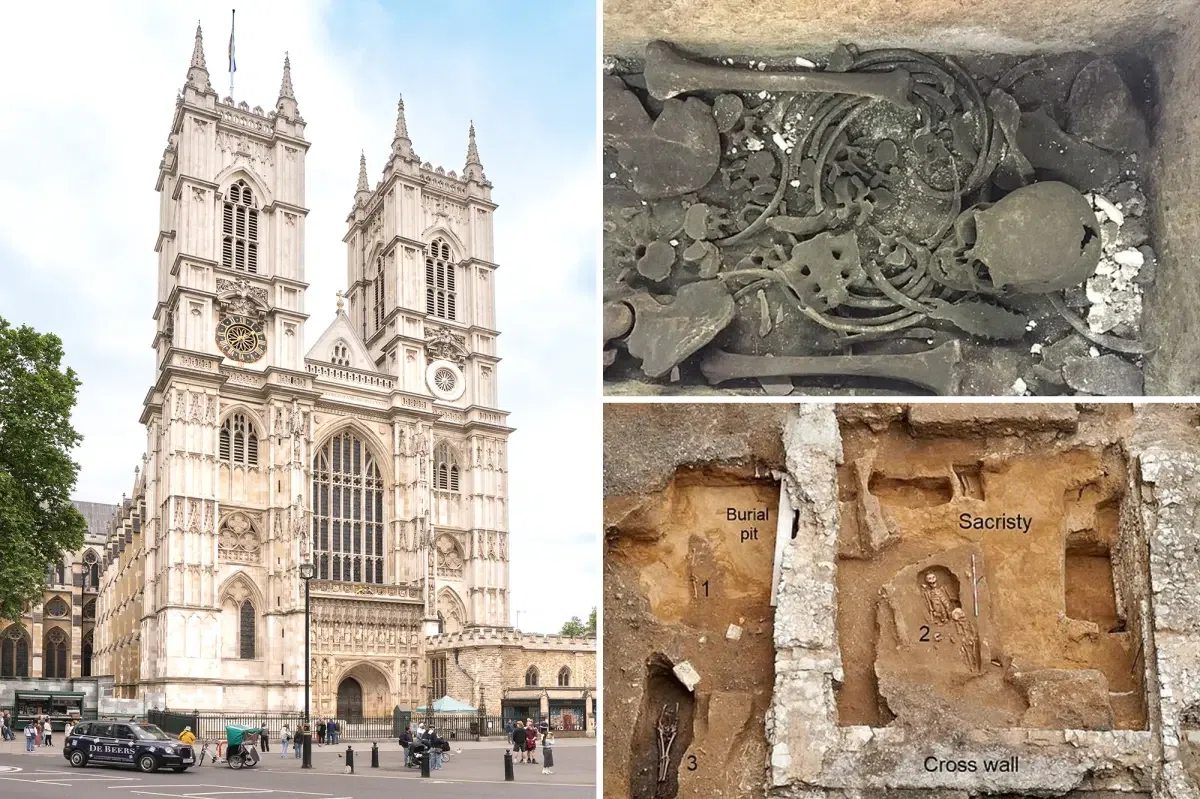
Archaeologists have identified the potential identity of a mysterious skeleton discovered at Westminster Abbey in London. The remains belong to one of two abbots who served at the abbey during the 11th century.
The skeleton was found in a stone sarcophagus that the landmark's chief mason unearthed in 1820 while digging on the north side of the abbey. Workers accidentally smashed the lid into six pieces during the process. Although the vessel featured a Roman-style carving and a Latin inscription dedicated to the memory of Valerius Amandinus, a massive cross carved into the lid suggests the tomb was repurposed for a religious figure centuries later.
Professor Warwick Rodwell, the consultant archaeologist at Westminster Abbey who led the study, said there are two viable contenders for the occupant's identity. The candidates are Ælfwig, who served from 993 to 1020, and his successor Wulfnoth, who held the position from 1020 to 1049. Rodwell noted that while the birth dates of both men are unknown, either would fit the profile if the abbot was in his early 20s at appointment and close to 50 at death. He added that the fact Ælfwig might have already been a monk of Westminster could favor him.
Carbon dating deduced the individual lived between 987 and 1052. The remains belonged to a middle-aged male of average height with a history of gout, rib injuries, and osteoarthritis. The mystery of the skeleton had eluded archaeologists for 150 years until the vessel was opened for conservation in 2016.
The recycling of Roman sarcophagi is highly unorthodox, with no comparable cases documented. Scientists noted the inscription on the box might indicate Valerius Amandinus was an early Christian and a significant figure in Roman London, though nothing is known about his career.
Key facts
- The skeleton was found in a Roman-style sarcophagus that had been repurposed for an 11th-century interment.
- Researchers have identified two possible candidates for the occupant: Ælfwig and Wulfnoth.
- Carbon dating indicates the occupant lived between 987 and 1052.
Three perspectives
Neutral
Archaeologists have narrowed the identity of an 11th-century skeleton found in a repurposed Roman sarcophagus at Westminster Abbey to two possible abbots.
Positive
Researchers have used carbon dating and historical records to potentially resolve a mystery that eluded archaeologists for 150 years.
Negative
Nothing is known about the career of Valerius Amandinus, whose name was inscribed on the Roman-style vessel.
Your week in news, every Wednesday
The biggest stories of the week for your edition, in your inbox every Wednesday morning, your time. Free, and you can unsubscribe at any time.