

 United Kingdom
Voyager 1 to reach one light-day from Earth next week
The NASA space probe will be 16.094 billion miles from home on 18 November, marking the first time a spacecraft has achieved this milestone.
 Space Desk 2 min read
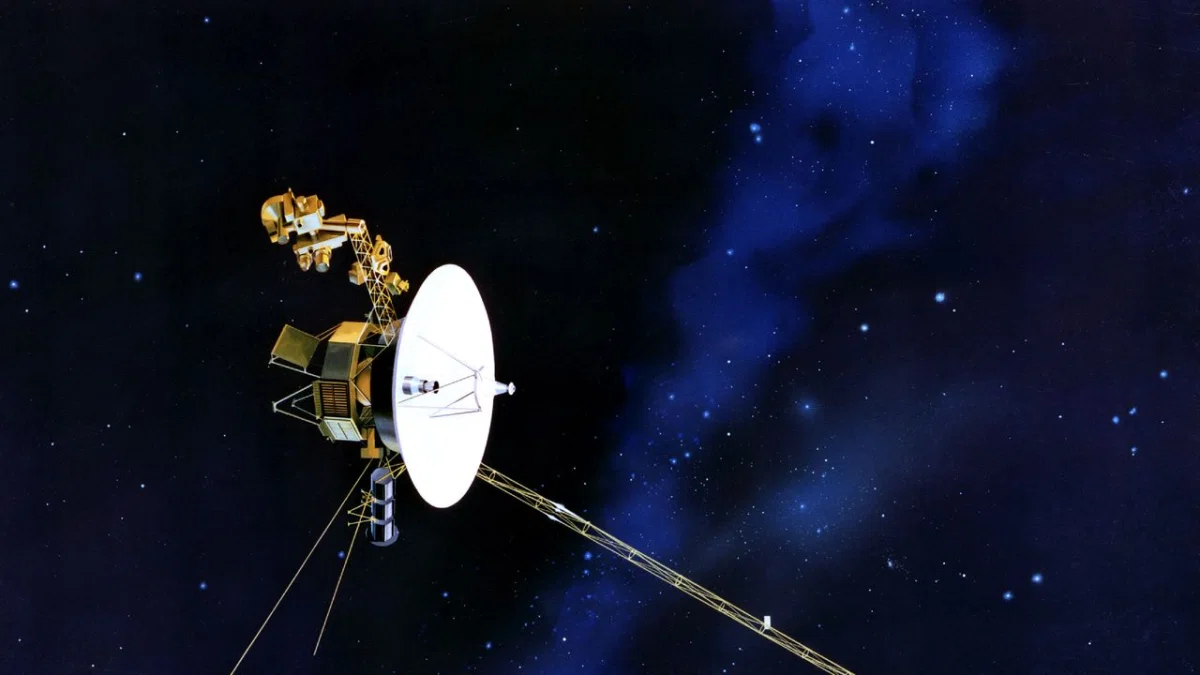
The Voyager 1 space probe will reach one light-day from Earth next week, the first time a spacecraft has achieved the milestone. Eastern time, the probe will be 16.094 billion miles from our planet. At this distance, light from Earth would take 24 hours to reach the spacecraft.
NASA is inviting people to help create a wave of golden light around the planet by logging on to a special website that turns phones into a golden Morse code signaller. The message will beam Voyager's VGR call-sign into space, though the spacecraft will not be able to see it because it powered off its cameras in 1990.
Voyager 1 was launched in 1977 to study the outer Solar System and eventually interstellar space. It became the first spacecraft to enter interstellar space in 2012 after leaving the heliosphere. The probe is currently travelling at 38,000 mph away from Earth.
The spacecraft is powered by radioisotope thermoelectric generators that convert heat from decaying plutonium into electricity. Because the plutonium supply depletes, the probes lose around four watts of power each year. Voyager 1 is now operating with just two remaining instruments: the magnetometer and the plasma wave subsystem. Scientists expect that by about 2036, radio telescopes will no longer be able to pick up its transmissions.
Key facts
- Voyager 1 will be 16.094 billion miles from Earth on 18 November.
- The spacecraft will be one light-day away from Earth.
- Voyager 1 was launched in 1977.
Three perspectives
Neutral
Voyager 1 will reach a distance of 16.094 billion miles from Earth on 18 November, a distance light travels in 24 hours.
Positive
The Voyager mission represents human exploration on the scale of those by Magellan and Lewis and Clark.
Negative
The probes are losing power as the plutonium supply depletes, and it is expected that radio telescopes will no longer be able to pick up transmissions by about 2036.
Your week in news, every Wednesday
The biggest stories of the week for your edition, in your inbox every Wednesday morning, your time. Free, and you can unsubscribe at any time.