Canada
Space
Amateur astronomers join NASA's Kilonova Catcher network to track cosmic flashes
The volunteer network helps follow fading light from gravitational-wave alerts and is preparing for alerts from the Nancy Grace Roman Space Telescope.
 Space
The volunteer network helps follow fading light from gravitational-wave alerts and is preparing for alerts from the Nancy Grace Roman Space Telescope.
The quasar J1504+6252, nicknamed Dún Aonghasa, was seen 630 million years after the Big Bang.
 China
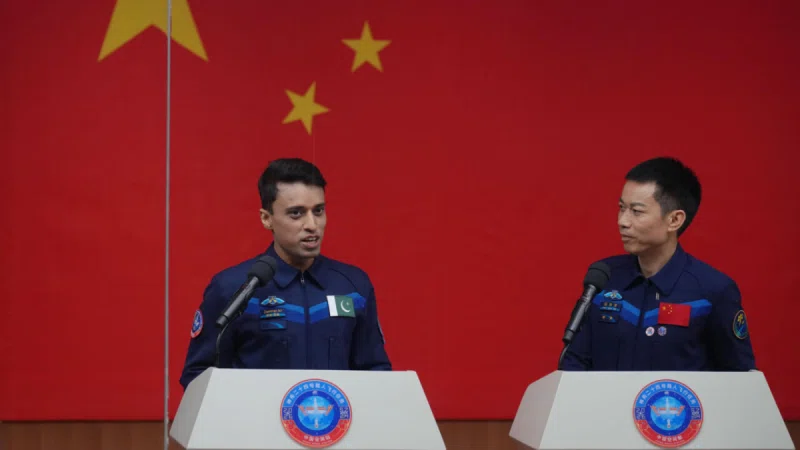
Muhammad Zeeshan Ali will join the Shenzhou-24 mission launching Wednesday from the Gobi Desert.
The spacecraft overcame a last-minute glitch to become only the second craft to orbit the planet closest to the sun.
Dust in the supernova remnant suggests the star's interior changed, possibly just hours before it died.
The mission has arrived at the Didymos binary system to study the aftermath of NASA's DART collision.
The November full Moon marks the beginning of a sequence of four consecutive supermoons ending in February 2027.
The European Space Agency said the spacecraft is safe and is investigating a software issue that shortened the burn.
New research shows how a spherical black hole and a surrounding ring-shaped black hole can rotate independently in two planes.
 Iceland
The American astronaut, who travelled around the Moon in April on Artemis II, received the main award at the 12th Explorers Festival.
The smallest planet in the solar system is well placed for observation following its greatest western elongation.
 Norway
The new system at the Ny-Ålesund Geodetic Observatory provides faster and more precise tracking of satellites and Earth's surface changes.
Researchers say a hypothetical world they call Planet X2 could explain odd orbits of distant icy bodies such as Sedna, but it has not been detected.
A study of the galaxy MARTA 3887 suggests a black hole weighing 3.3 million suns grew faster than the stars within its host.
The full Moon will appear 30% brighter and 14% larger than usual as the first of four consecutive supermoons.
The spacecraft's carrier signal still reaches Earth, but its data has gone silent since November 14.
A Nature study led by Viraj Karambelkar of Columbia University followed the merger, which ended in an eruption in late 2025.
The Welopōʻai system contains two white dwarfs and a red dwarf, a configuration that challenges current models of stellar evolution.
The €1.6bn BepiColombo mission is set to fire its thrusters on Saturday to enter orbit around the smallest planet in the solar system.
Oregon State University researchers say potatoes can grow in lunar-simulant soil mixed with vermicompost, though the work was done on Earth.
Skywatchers in the UK could see up to 15 meteors per hour as the fast-moving celestial display reaches its maximum activity.
The anomaly occurred 10 minutes after liftoff from Florida, marking the first total mission failure in the history of United Launch Alliance.
The discovery, involving a global consortium of 2,000 scientists, provides a massive new collection of cosmic tools to help astronomers study dark matter and dark energy.
An 11-metre wide object known as 1998 KY26 is moving near Earth with an acceleration that cannot be explained by gravity alone.
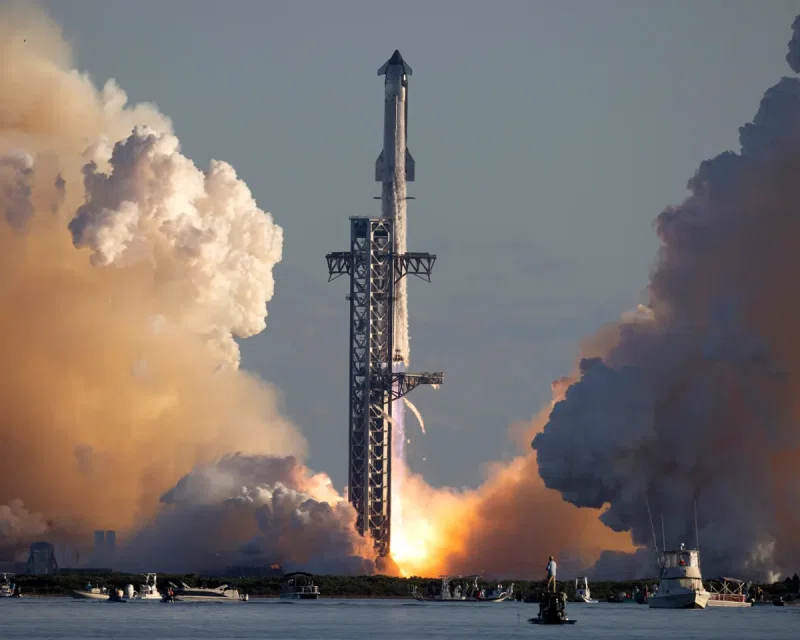
The 171ft Starship stage is sailing through space at over 26,000 km/h after the Super Heavy booster splashed down in the Gulf of Mexico.
The mission to orbit the Moon, funded by Yusaku Maezawa, was terminated following a 2023 rocket disassembly.
US citizens have until 23:59 EST on 3 December 2026 to apply for roles supporting Moon and Mars missions.
The NASA Swift Observatory is expected to plunge back to Earth next week after a failed rescue effort left the aging telescope drifting progressively lower.
Anil Menon and Joshua Kutryk completed a mission to deploy a solar array that will increase the station's power generation by up to 30 per cent.
 Russia
The Russian president said he is in close contact with the SpaceX owner to prevent satellite interference in orbit.
Reflect Orbital, a US startup, plans to launch 50,000 satellites into space over the next decade to reflect sunlight onto Earth during the night.
 Japan
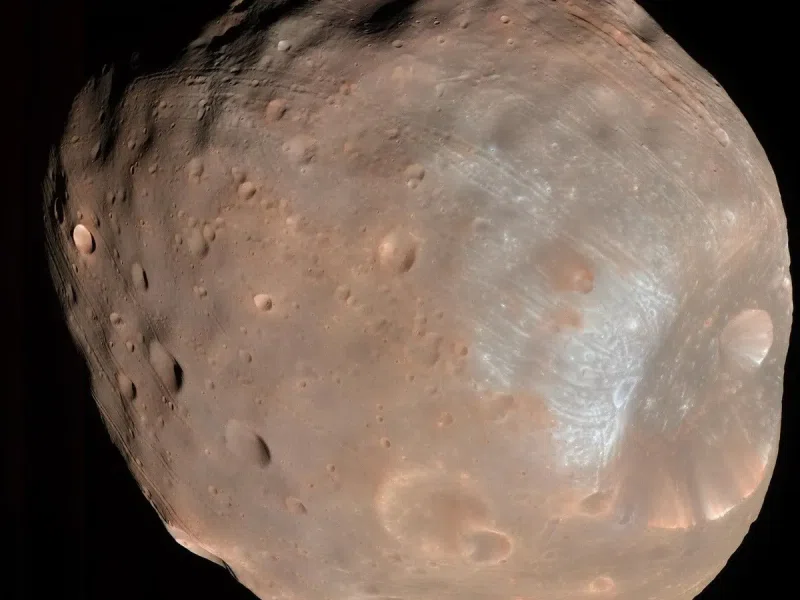
The Martian Moons eXploration mission aims to return 10g of soil to Earth by 2031 to solve mysteries regarding the formation of the Red Planet's moons.
Saturn makes its closest approach to Earth this year. NASA provides skywatching tips for October 2026.