

 United Kingdom
NASA Swift telescope expected to crash to Earth next week
The NASA Swift Observatory is expected to plunge back to Earth next week after a failed rescue effort left the aging telescope drifting progressively lower.
 Space Desk 2 min read
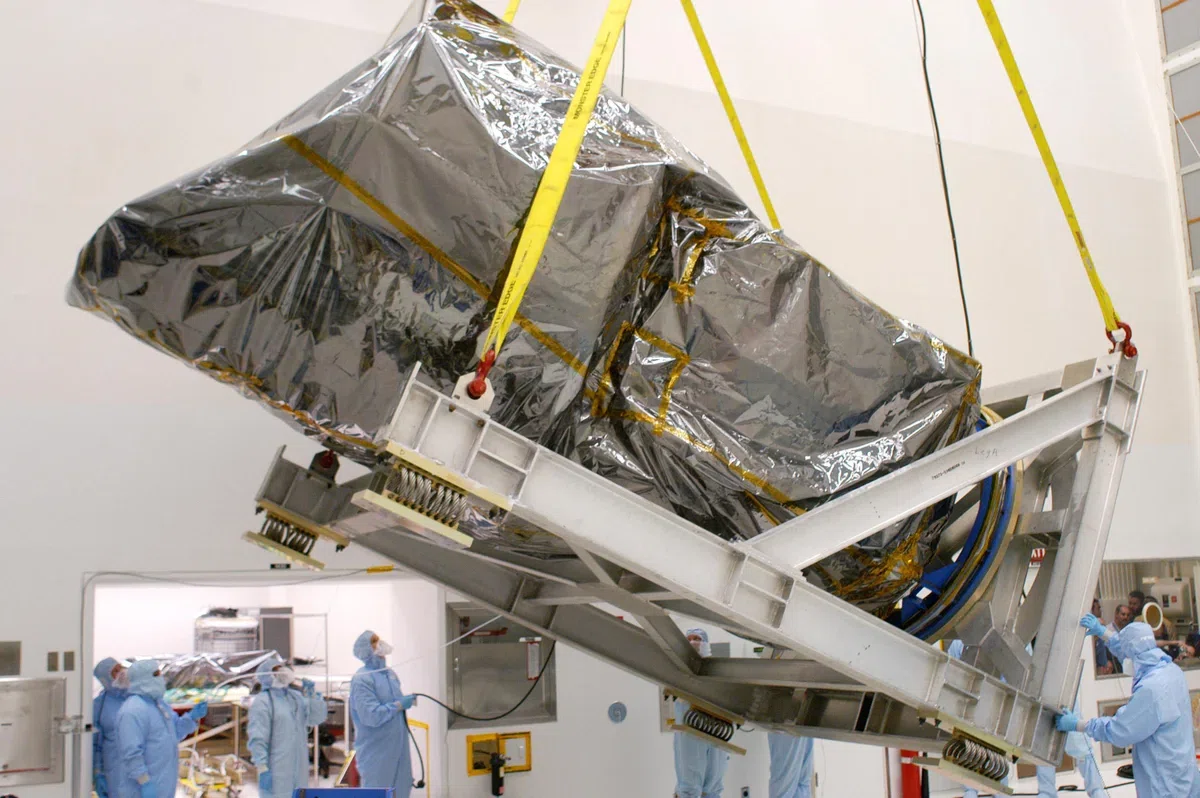
The NASA Swift Observatory is expected to plunge back to Earth next week after a failed rescue effort left the aging telescope drifting progressively lower. The U.S. Space Force predicts the telescope will come crashing down on or around Friday.
Any surviving wreckage will likely plunge into the ocean, but portions of Africa, Australia, India, Southeast Asia, and Central and South America remain inside the reentry zone.
NASA hired Katalyst Space a year ago for an emergency rescue, but the company's three-armed robot, Link, suffered issues after launching in July. Link got no closer than 7 miles to 9 miles (12 kilometres to 15 kilometres) to the telescope before falling back to Earth in September.
Strong solar activity in recent years accelerated the spacecraft's orbital decay. The imminent destruction marks the end of 22 years in orbit for Swift, which launched on 20 November 2004.
The telescope was tasked with searching for the universe's most violent events, including supernovas and gamma ray bursts. It logged more than 2,000 gamma ray bursts and 1,400 exploding stars, along with comets, asteroids, and black holes.
Astronomers are now working on methods to fill the operational void. "Our fervent hope is that the lessons learned by the successes of Swift can be applied to new generations of space missions to accelerate our discoveries about the universe," said Pennsylvania State University's John Nousek, an astronomer who led the control team.
Key facts
- The Swift telescope launched on 20 November 2004.
- The U.S. Space Force predicts the telescope will crash on or around Friday.
Three perspectives
Neutral
The Swift Observatory is expected to reenter the atmosphere next week, with the U.S. Space Force monitoring its trajectory.
Positive
The telescope successfully logged more than 2,000 gamma ray bursts and 1,400 exploding stars during its 22 years in orbit.
Negative
A failed rescue attempt by Katalyst Space's robot, Link, left the telescope drifting lower toward Earth.
Your week in news, every Wednesday
The biggest stories of the week for your edition, in your inbox every Wednesday morning, your time. Free, and you can unsubscribe at any time.