

 United Kingdom
Astronauts complete 100th ISS spacewalk to install solar array
Anil Menon and Joshua Kutryk completed a mission to deploy a solar array that will increase the station's power generation by up to 30 per cent.
 Space Desk 2 min read
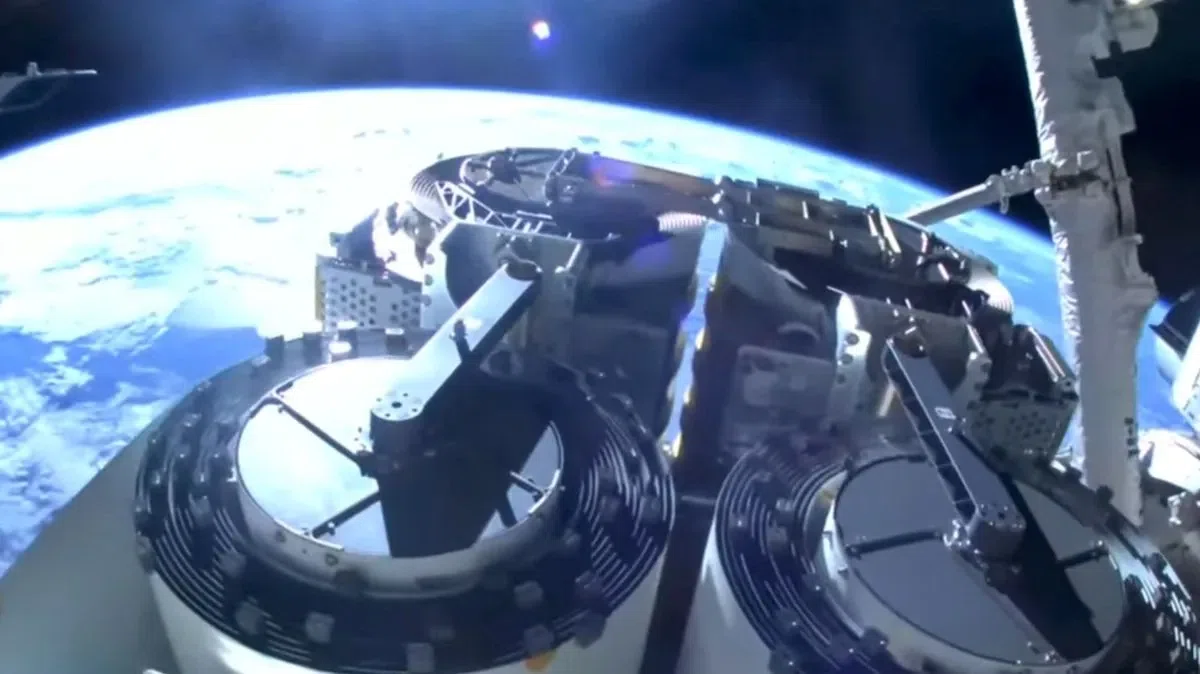
Astronauts Anil Menon and Joshua Kutryk have completed the 100th spacewalk conducted from the International Space Station's Quest airlock without the space shuttle present. The mission involved installing and deploying a roll-out solar array to generate power for the research station.
The task required the astronauts to unbolt the roll-out solar array before remotely activating the power source. This upgrade is intended to increase the station's power output from 160 kilowatts to approximately 215 kilowatts. Gaurang Patel, an operations manager at NASA, said these arrays increase power generation capability by up to 30 per cent.
The spacewalk was the eighth of 2026 and the first of two planned for the autumn. These works aim to complete upgrades to the ISS to power the station until its scheduled decommissioning in 2030. The upgrades will support operations until a safe and controlled deorbit when the station is retired.
For Menon, a 43-year-old US Air Force lieutenant colonel and physician, this was his third spacewalk. For Kutryk, a 44-year-old Royal Canadian Air Force colonel, it was his first spacewalk. Kutryk is the fifth Canadian astronaut to complete a spacewalk and the first since 2019.
The astronauts worked while the ISS orbited Earth at approximately 17,500mph. NASA warned that at this speed, collisions with debris even the size of a grain of sand can be life threatening.
Key facts
- The spacewalk was the 100th conducted from the ISS Quest airlock without a space shuttle.
- The new solar arrays will increase power generation from 160 kilowatts to around 215 kilowatts.
- Joshua Kutryk became the fifth Canadian astronaut to complete a spacewalk.
Three perspectives
Neutral
Astronauts Anil Menon and Joshua Kutryk completed a mission to install a solar array on the International Space Station.
Positive
The deployment of the roll-out solar array will increase the station's power generation capability by up to 30 per cent.
Negative
NASA warned that collisions with debris even the size of a grain of sand can be life threatening at the station's orbital speed of 17,500mph.
Your week in news, every Wednesday
The biggest stories of the week for your edition, in your inbox every Wednesday morning, your time. Free, and you can unsubscribe at any time.