North Carolina U.S. Senate race may show impact of Trump association
Democrat Roy Cooper and Republican Michael Whatley compete for the seat held by retiring Republican Thom Tillis.
 Politics Desk 3 min read
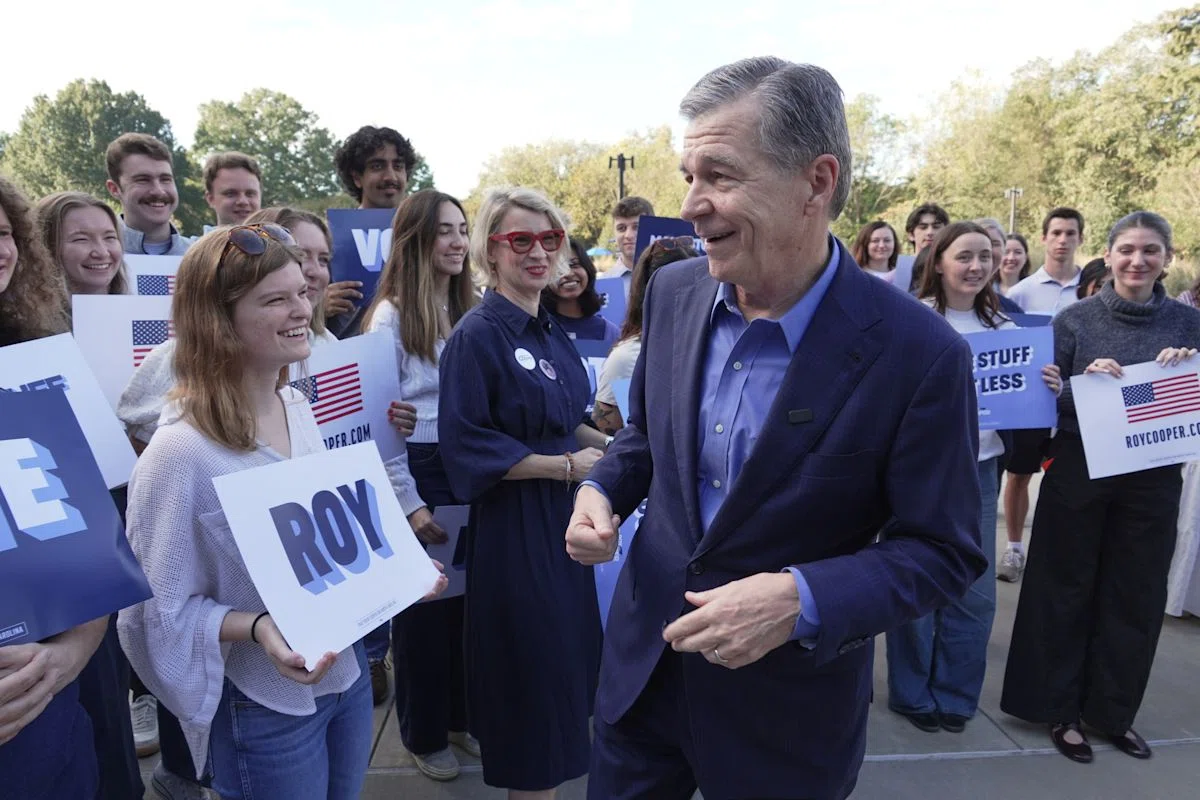
Voters in North Carolina will cast their ballots for a new U.S. senator in a midterm contest that may show whether an association with President Donald Trump represents a boon or a liability. The race to succeed Republican Senator Thom Tillis, who announced his retirement last year after clashing with Trump, features Democrat Roy Cooper and Republican Michael Whatley.
Whatley, the former Republican National Committee chairman, has the endorsement of Trump, who personally chose him to lead the RNC after Whatley supported the president's claims that the 2020 election was stolen. During a September rally in Gastonia, Trump told attendees, "in this election, I'm asking you to pretend I'm on the ballot just one more time." Whatley has focused much of his early campaign on crime, claiming Cooper's policies as governor weakened public safety, though state statistics show violent crime has fallen since pandemic-era highs.
Cooper, who served two terms as governor from 2017 to 2025, has focused his messaging on the affordability crisis with the slogan "make stuff cost less." As of mid-October, Cooper raised about $49.6 million, while Whatley raised $13.7 million. The Senate Leadership Fund, a Republican super PAC aligned with Senate Majority Leader John Thune, cancelled millions in planned advertising for North Carolina in early October, signaling the party's diminishing confidence in Whatley.
North Carolina has not elected a Democrat to the U.S. Senate since 2008. To win, Cooper would need to win urban centers and remain competitive in Republican-leaning suburban counties. The state has favored the Republican candidate in every presidential election since 1980, except in 2008 when former President Barack Obama won the state by less than half of 1 percentage point.
Two congressional districts are also being watched for their potential to affect the balance of power in the U.S. House. In the 1st District, Democrat Don Davis faces a rematch against Republican Laurie Buckhout following Republican redistricting that shifted a share of Black voters to the 3rd District. In the 11th District, Republican Chuck Edwards suspended his reelection campaign in August after the House Ethics Committee recommended he be censured for conduct toward two female aides. State House Rep. Jennifer Balkcom was nominated by a Republican executive committee to run in Edwards' stead, competing against Democrat Jamie Ager.
Key facts
- Democrat Roy Cooper has raised approximately $49.6 million compared to Michael Whatley's $13.7 million.
- North Carolina has not elected a Democrat to the U.S. Senate since 2008.
- Republican Michael Whatley is running for the seat held by Republican Thom Tillis.
Three perspectives
Neutral
The North Carolina U.S. Senate race between Roy Cooper and Michael Whatley may reveal whether an association with Donald Trump is a boon or a liability.
Positive
Cooper has raised approximately $49.6 million for his campaign as of mid-October.
Negative
The Senate Leadership Fund cancelled millions in planned advertising for North Carolina, signaling diminishing confidence in Whatley.
Your week in news, every Wednesday
The biggest stories of the week for your edition, in your inbox every Wednesday morning, your time. Free, and you can unsubscribe at any time.