

Perseverance rover finds hydrated silica in Idubi area of Mars
The NASA Perseverance rover has identified hydrated silica in a cluster of bright, light-toned rocks located in the Idubi area.
 Space Desk 2 min read
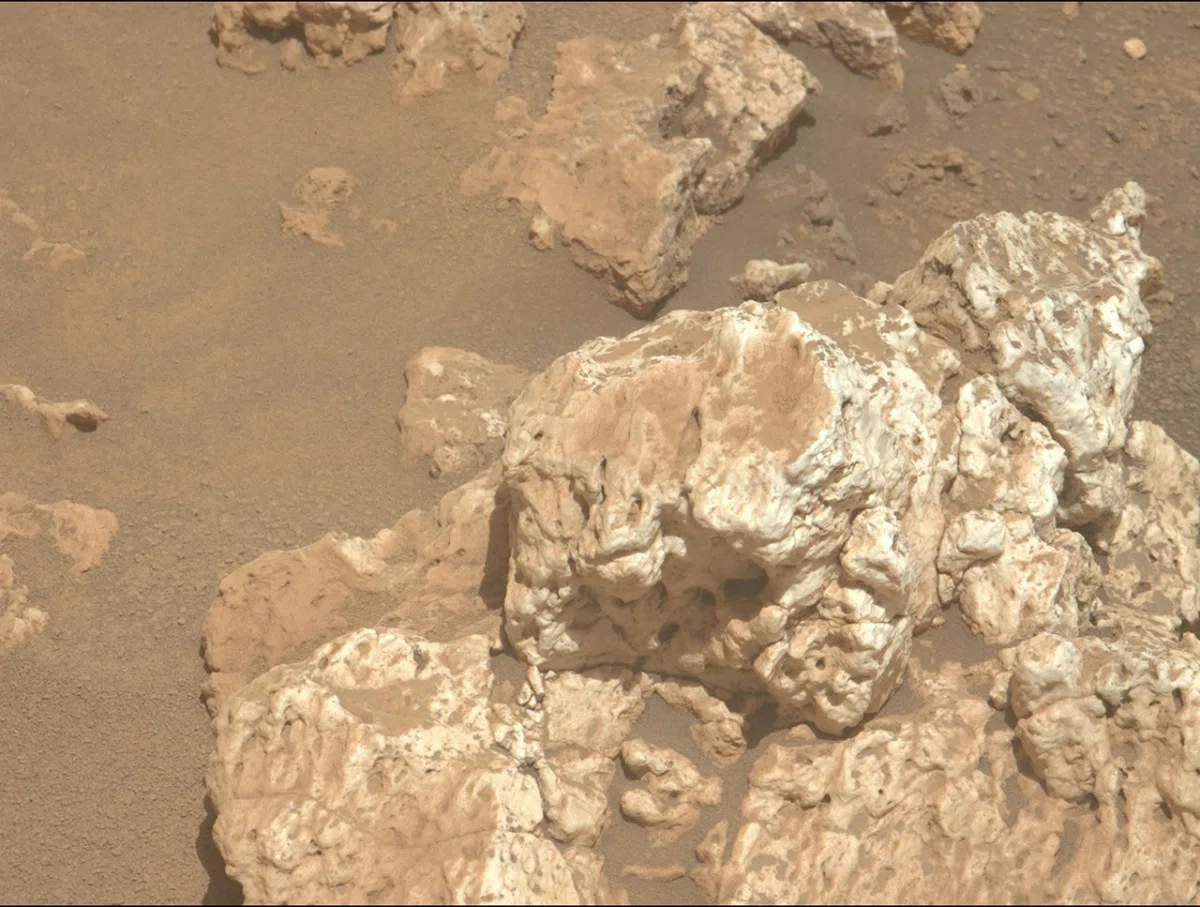
The NASA Perseverance rover has identified hydrated silica in a cluster of bright, light-toned rocks located in the Idubi area. This area is part of the ancient Martian crust exposed in the Lac de Charmes region, which lies outside of Jezero crater.
Data downlinked from the SuperCam instrument confirmed the rocks are not igneous in origin. The fragments appear much brighter than the igneous and impactite rocks previously studied by the rover and stand out against the darker, dust-covered Martian surface.
Hydrated silica can form in various aqueous environments on Earth, such as groundwater, pedogenic, or hydrothermal systems. These deposits are considered primary targets for studying the hydrological history of Mars, as some of these environments may have supported life.
The mineral also has high astrobiological value because it can preserve microfossils. While the rover previously found silica-rich rocks on the inner rim of Jezero Crater, those deposits were too small for the team to use proximity science instruments to collect high-resolution mineralogical and chemical data.
The scale of the rocks at Idubi is more promising for scientific study. A detailed proximity science campaign is currently underway to investigate the site.
Key facts
- The Perseverance rover captured an image of the silica-rich rocks on Oct. 29, 2026, at 13:03:53 local mean solar time.
- SuperCam instrument data confirmed the light-toned rocks are rich in hydrated silica rather than being igneous.
- The Idubi area is located in the Lac de Charmes region outside of Jezero crater.
Perspectives
Neutral
The Perseverance rover has identified hydrated silica-rich rocks in the Idubi area of Mars.
Positive
The larger scale of the Idubi rocks allows for a detailed proximity science campaign to investigate their origin and potential for preserving biosignatures.
Your week in news, every Wednesday
The biggest stories of the week for your edition, in your inbox every Wednesday morning, your time. Free, and you can unsubscribe at any time.