

Ancient sea level changes helped preserve early life, research shows
Mapping of the Flinders Ranges reveals submarine canyons that provided space for sediment and the preservation of Ediacaran biota.
 Science Desk 2 min read
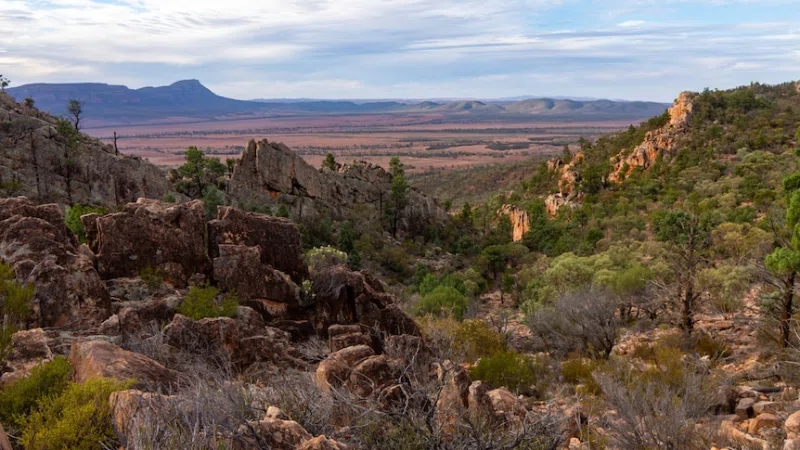
Changes in ancient sea levels led to the preservation of some of the earliest complex life forms on Earth, according to new research mapping the Flinders Ranges.
Researchers identified unusual rock formations in the Chace Range that indicate the existence of submarine canyons. These canyons, found throughout the Flinders Ranges, reached depths of up to 280 metres and widths of 6 kilometres.
The study, led by Adelaide University, reconstructed the landscape from hundreds of millions of years ago to study how fossils and sediment formed. Diego Garcia-Bellido, an associate professor at the University of Adelaide, said the area was once under the ocean.
The findings focus on the Ediacaran period, approximately 550 million years ago, which was around or just before the emergence of the planet's first complex life. Dr Garcia-Bellido and colleagues from the university and the South Australian Museum found that seawater flooding helped carve these canyons.
As sea levels rose and canyons filled, the environment in the shallow shelf became ideal for the growth of shallow water microbial mats. This process created accommodation space for more sediment, which helped preserve fossils of soft-bodied organisms known as Ediacaran biota.
The discovery of these geological features provides context for how early animals developed and where they lived. These fossils are part of an ongoing effort to gain UNESCO World Heritage status for the Flinders Ranges.
Key facts
- Submarine canyons up to 280 metres deep and 6 kilometres wide were found in the Flinders Ranges.
- The research focuses on the Ediacaran period, roughly 550 million years ago.
- Sea level changes and canyon formation helped preserve early complex life forms.
Perspectives
Neutral
Researchers mapped geological features in the Flinders Ranges to understand how ancient sea level changes influenced sediment and fossil formation.
Positive
The findings offer a clearer understanding of early evolution and how the first complex life forms arrived on the planet.
Your week in news, every Wednesday
The biggest stories of the week for your edition, in your inbox every Wednesday morning, your time. Free, and you can unsubscribe at any time.