 Canada
U.S. tariffs are a reality of the future, says lead trade negotiator
Janice Charette says the Canada-U.S. trading relationship is never going back to what it used to be.
 Business Desk 2 min read
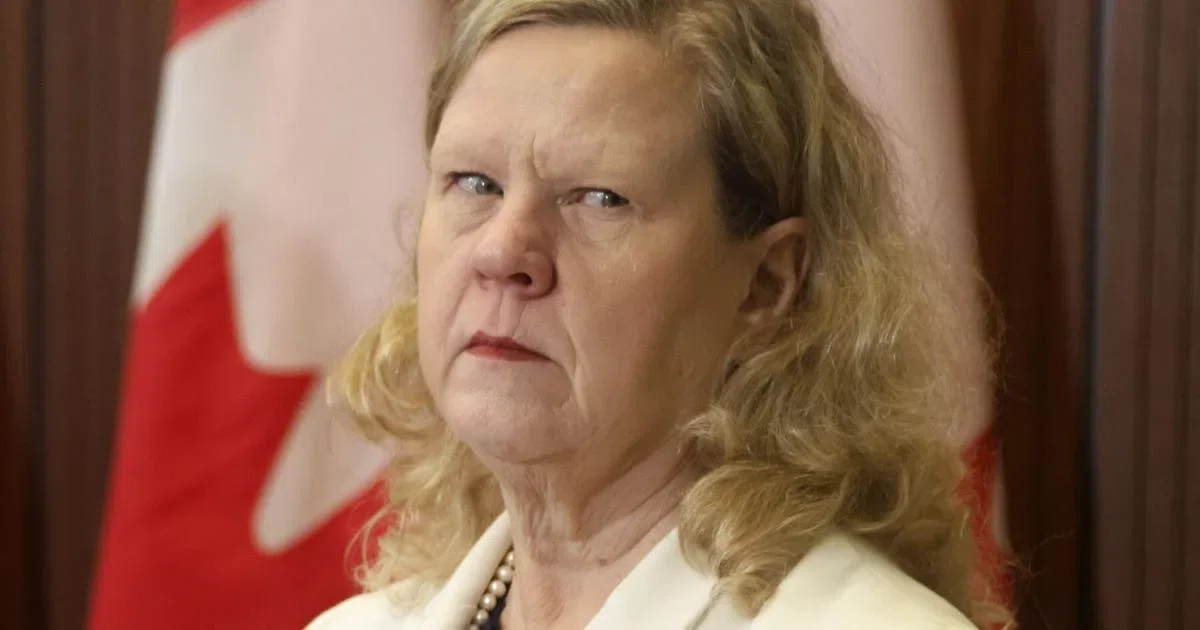
The Canada-U.S. trading relationship is never going back to what it used to be, and U.S. tariffs are a reality of the future even if the continental trade pact is renewed, said Janice Charette, lead trade negotiator for Prime Minister Mark Carney. Charette said at the Toronto Global Forum that the goal is to get the lowest tariff rates possible on the widest possible range of goods.
No trade negotiations have taken place since Canada walked away from talks in August over what Carney called excessive eleventh-hour U.S. demands that encroached on Canada’s cultural, economic and trade sovereignty. While the prime minister and President Donald Trump, as well as ministers and their U.S. counterparts, continue to have informal discussions, the Canadian team is ready to take up bilateral negotiations again.
Canada struck back at U.S. President Donald Trump on Tuesday with tariffs on about $20 billion worth of U.S. goods in response to the latest round of tariffs on Canada. Economist Trevor Tombe told the Commons foreign affairs committee that U.S. tariffs may be less of a trade war with Canada than a fundamental change in how the United States runs its economy. Tombe noted that 93 countries have higher average rates of tariff applied to them than Canada's current rate of about 8 per cent.
Retaliation costs the Canadian economy half a per cent off disposable income for low-income Canadians and increases consumer prices by about a quarter of a percent overall. These costs amount to about $100 million per week. Tombe suggested the economic case for retaliation is thin, noting that counter-tariffs are having a quite limited impact on the U.S.
Charette said the Trump administration is focused on efforts to re-shore production and reindustrialize in the United States. She added that while they believe in North America, they do not believe in globalization in the same way. Charette urged business leaders to continue to go to the United States to talk to their partners, customers, and suppliers.
Key facts
- Canada responded to U.S. tariffs on Tuesday with tariffs on about $20 billion worth of U.S. goods.
- Retaliation costs the Canadian economy about $100 million per week.
- Janice Charette said the goal is to get the lowest tariff rates possible on the widest possible range of goods.
Three perspectives
Neutral
The Canada-U.S. trading relationship is undergoing changes as the United States shifts its economic policy.
Positive
The Canadian team is ready to take up bilateral negotiations again and is looking ahead to trilateral talks to review and renew the Canada-U.S.-Mexico Agreement.
Negative
Retaliation costs the Canadian economy half a per cent off disposable income for low-income Canadians.
Your week in news, every Wednesday
The biggest stories of the week for your edition, in your inbox every Wednesday morning, your time. Free, and you can unsubscribe at any time.