

 Iceland
Archaeologists discover Norse church in southern Greenland
The discovery of a human skeleton confirms the site is a church and may offer clues to the 15th-century disappearance of the Viking settlers.
 Science Desk 2 min read
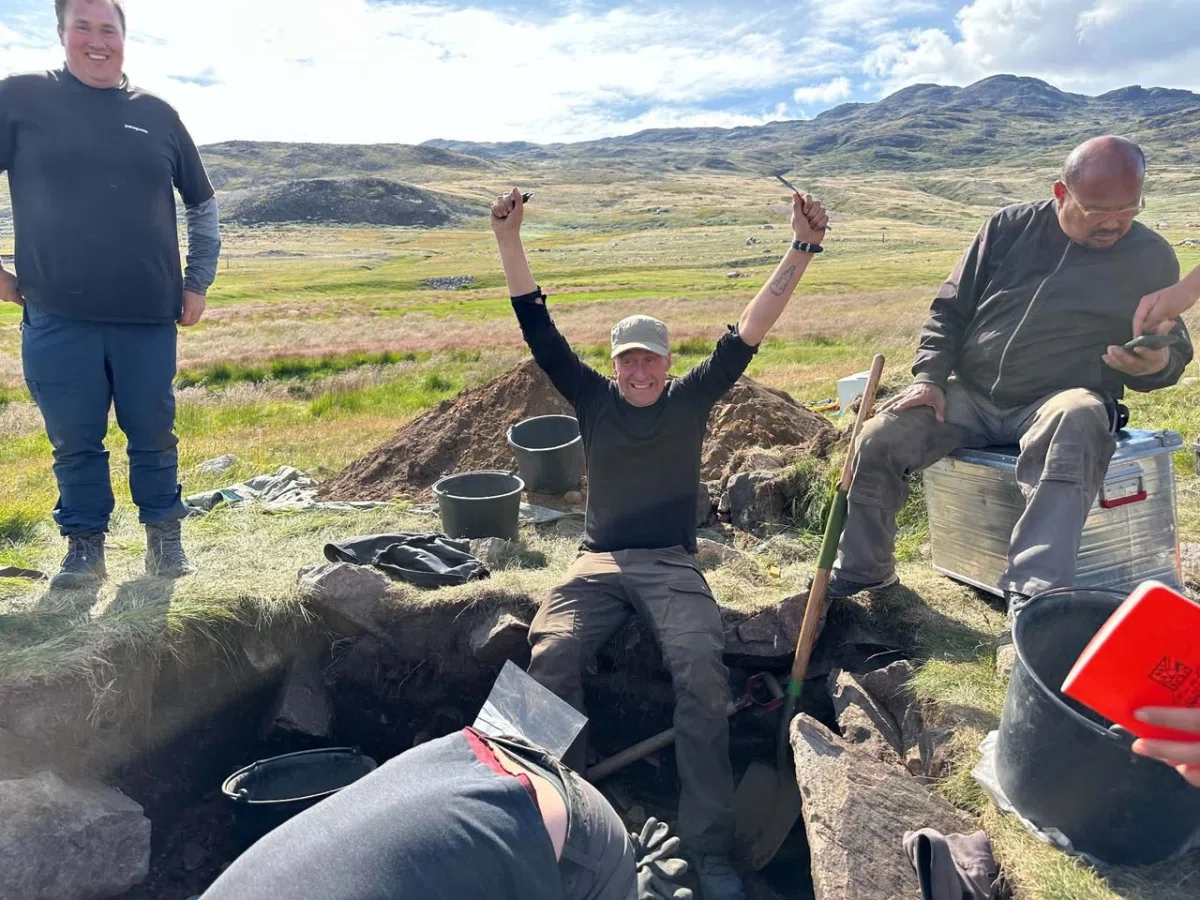
Archaeologists have discovered the remains of a Norse church in southern Greenland.
During an excavation this past August, researchers uncovered the remains of an entire human skeleton. The skeleton was buried with its head pointing east and its arms placed by its sides, a positioning that suggests a Norse Christian burial from the early Middle Ages. Christian Edelfelt Koch Madsen, an archaeologist with the National Museum of Denmark and co-leader of the dig, said the find is the smoking gun that proves the building is a church.
The church is located near the modern town of Narsarsuaq, roughly three miles from Brattahlíð, the estate of Erik the Red. Based on its size and construction from hewn stones, researchers suspect the building dates between 1100 and 1300 C.E. This would make it the first Norse church discovered in Greenland in more than 60 years.
The site may correspond with a Church Under the Sunny Mountains mentioned in the medieval Icelandic manuscript Flateyjarbók. The remains sit in front of a mountain range on the edge of the Greenland ice sheet.
Norse settlers from Iceland first settled in Greenland around 985 C.E. led by Erik the Red. They lived on the island until the early 15th century when they mysteriously vanished. Konrad Smiarowski, an environmental archaeologist at the University Museum of Bergen and co-leader of the project, said the discovery is another piece of the puzzle that may help explain why the Norse colony disappeared.
The team plans to study the artifacts discovered during the recent dig. If they secure more funding, they hope to return to the church to narrow down when it was constructed.
Key facts
- Archaeologists discovered a Norse church in southern Greenland near Narsarsuaq.
- The discovery of a human skeleton confirmed the site's purpose as a church.
- The church is believed to date between 1100 and 1300 C.E.
Three perspectives
Neutral
The church is located near the modern town of Narsarsuaq, approximately three miles from the estate of Erik the Red.
Positive
The discovery of the human remains provides a smoking gun that confirms the site is a church.
Negative
The disappearance of the Norse settlers in the 15th century remains a mystery.
Your week in news, every Wednesday
The biggest stories of the week for your edition, in your inbox every Wednesday morning, your time. Free, and you can unsubscribe at any time.