 Canada
Global climate patterns determine U.K. storm surge locations
New research led by Cambridge University shows atmospheric conditions in the Atlantic and Arctic can dictate which coastlines face extreme storm surges.
 Climate Desk 2 min read
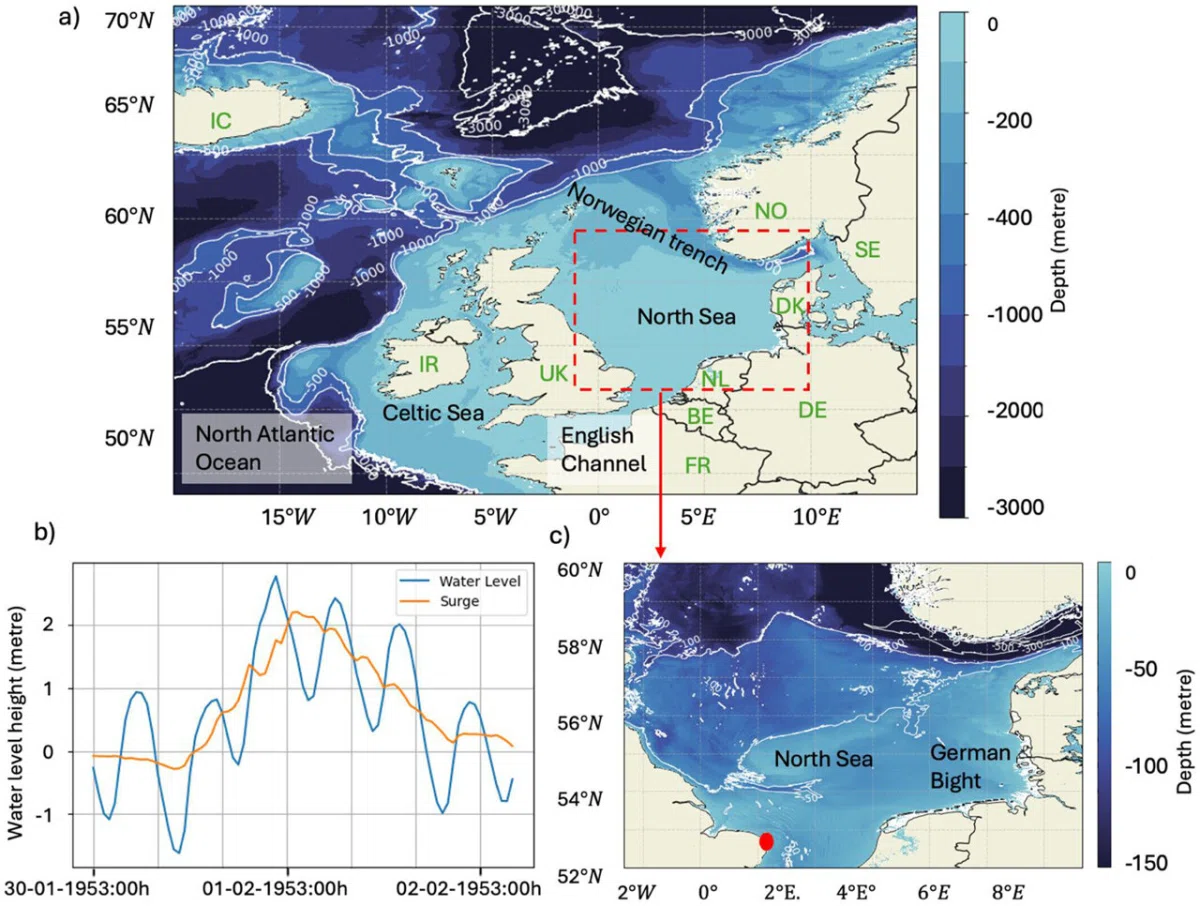
Global climate patterns in the Atlantic, Arctic, and other distant regions decide where a storm surge strikes along the U.K. coastline, according to new research led by Cambridge University. By studying 70 years of sea level data, researchers found that global atmospheric conditions thousands of kilometers away can determine which coastlines bear the brunt of extreme storm surges around the North Sea, English Channel, and Irish Sea.
The study, published in the Journal of Geophysical Research: Oceans, found that the largest influence on storm surge location is the pattern of atmospheric pressure conditions across the Northern Hemisphere, specifically the North Atlantic. When atmospheric pressure is low over Iceland relative to the Azores, storm surges are more likely to occur along northern and central U.K. coastlines because the jet stream moves toward higher latitudes. Conversely, when pressure is anomalously high over Iceland, the jet stream slows and snakes southward, bringing high seas to southern coasts.
Storms that drive extreme surges in southwest England tend to originate in the open Atlantic off the coast of eastern Canada, thousands of kilometers away. In contrast, storms driving surges in the North Sea and Scotland tend to come from further north, off the coast of Greenland.
Identifying these conditions could help forecasters provide flooding warnings to coastal communities further in advance. Lisanne Blok, lead author from Cambridge Earth Sciences, said that if conditions emerging in the Atlantic can be identified that might result in a storm surge in East Anglia, parts of the coast can be pinpointed to prepare for flooding.
Arctic warming is expected to reduce the pressure contrast that powers the jet stream, which may lead to a shift in U.K. storm patterns and where storm surges occur. Ali Mashayek, a senior author from Cambridge Earth Sciences, said that while it is known that Arctic conditions have a big impact on U.K. weather, researchers have not been able to link it to storm surge distribution before.
Key facts
- Atmospheric pressure patterns in the North Atlantic and Arctic influence where U.K. storm surges strike.
- Storms causing surges in southwest England often originate off the coast of eastern Canada.
- Arctic warming may shift future U.K. storm patterns and storm surge locations.
Three perspectives
Neutral
Researchers have linked regional storm surge extremes to distinct large-scale climate patterns across the Northern Hemisphere.
Positive
Identifying these atmospheric patterns could allow forecasters to provide earlier flooding warnings to coastal communities.
Negative
Arctic warming is likely to reduce the pressure contrast that powers the jet stream, potentially shifting storm patterns.
Your week in news, every Wednesday
The biggest stories of the week for your edition, in your inbox every Wednesday morning, your time. Free, and you can unsubscribe at any time.