

Southern Taurid meteor shower to peak Thursday
The annual shower is expected to produce bright fireballs as Earth passes through debris from comet 2P/Encke.
 Space Desk 2 min read
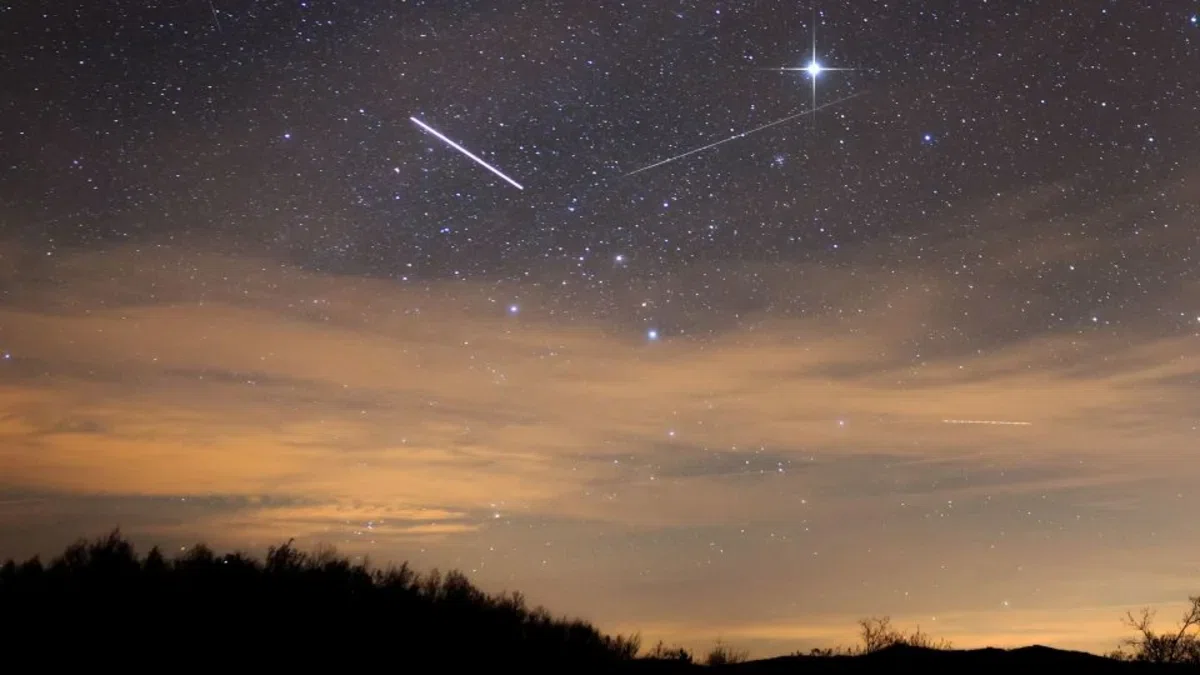
The annual Southern Taurid meteor shower will peak Thursday, bringing bright trails and a chance to see a blazing fireball. Views are expected to be best around midnight Thursday, with the estimated peak around 3 p.m. ET on November 5.
Southern Taurid meteors strike Earth's atmosphere at about 65,000 miles per hour (104,607 kilometers per hour), which makes them slower and visible for longer than those from showers such as the Orionids. The meteors will appear to radiate from the Taurus constellation. The shower produces roughly five meteors per hour and can be seen from almost anywhere in the world except the South Pole.
What makes the Taurids spectacular is that they are rich in bright fireballs, said Bill Cooke, head of NASA's Meteoroid Environment Office. While most debris is the size of dust grains or pebbles, fireballs arise from debris ranging from the size of a marble to a small boulder. These fireballs can be brighter than Venus.
The Southern Taurids occur as Earth passes through debris left by comet 2P/Encke, which has an orbital period of about 3.3 years. Scientists believe comet Encke was part of a larger body that broke up roughly 20,000 years ago.
To find the meteors, astronomer Bethany Cobb Kung suggests identifying the Orion constellation belt first and looking to the right to find Taurus. For an optimal viewing experience, find a dark location and allow eyes at least half an hour to adjust without looking at a phone, according to Cooke.
Key facts
- The Southern Taurid meteor shower peaks around 3 p.m. ET on November 5.
- Meteors in this shower strike the atmosphere at approximately 65,000 miles per hour.
- The shower is caused by debris from comet 2P/Encke.
Three perspectives
Neutral
The Southern Taurid meteor shower is an annual event that produces roughly five meteors per hour.
Positive
The shower offers a chance to see dazzling fireballs that can be brighter than Venus.
Negative
Meteors this year are less frequent than in a denser swarm of Taurid debris predicted for 2032.
Your week in news, every Wednesday
The biggest stories of the week for your edition, in your inbox every Wednesday morning, your time. Free, and you can unsubscribe at any time.