

Gene combination allows early barley maturity without yield loss
Researchers from the Chinese Academy of Agricultural Sciences and Germany’s Leibniz Institute of Plant Genetics and Crop Plant Research have identified a combination of two genes that allows barley to mature early enough for double-season cropping.
 Science Desk 2 min read
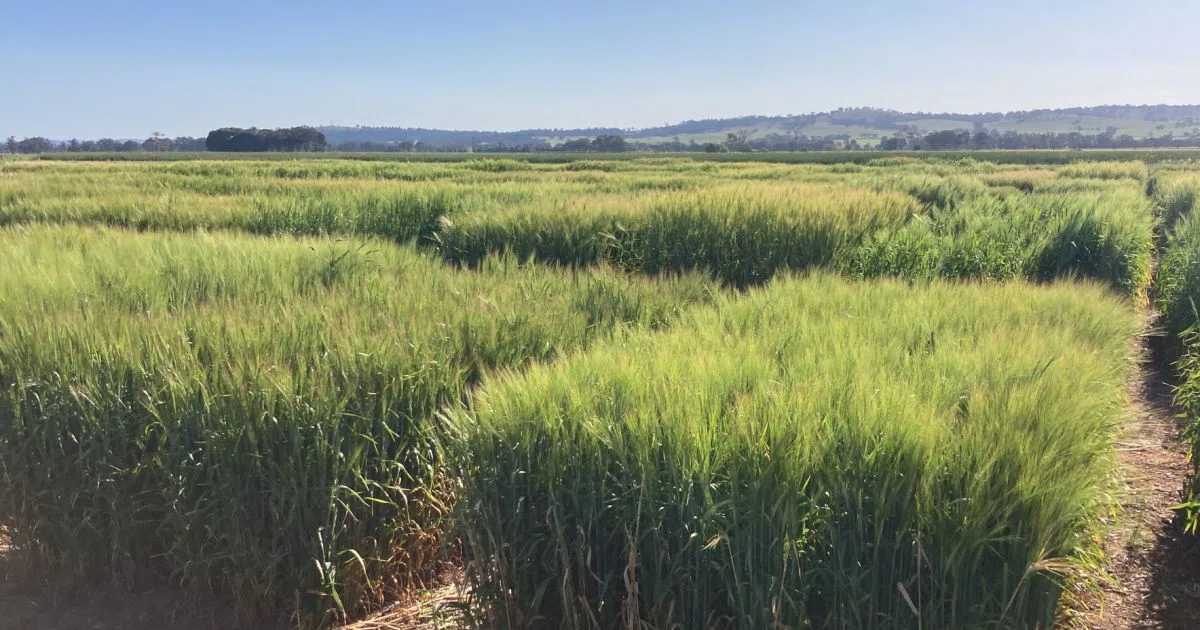
Researchers from the Chinese Academy of Agricultural Sciences and Germany’s Leibniz Institute of Plant Genetics and Crop Plant Research have identified a combination of two genes that allows barley to mature early enough for double-season cropping. This genetic pairing avoids the yield loss typically associated with faster-flowering varieties.
The discovery centers on a single amino acid change in the PHYTOCHROME C (PhyC) gene, which helps plants sense day length and time flowering. While the PhyC change alone causes faster flowering, smaller plants, and lower yields, the yield penalty disappears when it is paired with a winter-type version of the VERNALIZATION 1 (VRN1) gene.
Field trials showed that barley carrying both the early-PhyC change and the winter-VRN1 background matured earlier while still producing a full yield. In contrast, pairing the same early-PhyC variant with a spring-type VRN1 resulted in yield loss.
The team used base editing to confirm that the PhyC gene was responsible for the effect, as this method rewrites a single DNA letter without cutting the double helix.
The findings, led by Dr. Ping Yang of the CAAS Institute of Crop Science, were published in the journal Nature on November 5. The research team included G. Gao, Dr. Martin Mascher, and Dr. Nils Stein.
This discovery provides plant breeders with a genetic marker to identify promising candidates earlier in the breeding pipeline, rather than relying on years of field trials. This is particularly relevant for regions like China’s wheat and barley belt that are expanding double-cropping systems to increase food production on existing land.
Key facts
- A combination of an early-PhyC mutation and a winter-type VRN1 gene enables early barley maturity without yield loss.
- The research was published in the journal Nature on November 5.
Three perspectives
Neutral
Researchers identified a specific genetic pairing in barley that allows for earlier maturity without the typical reduction in grain yield.
Positive
The discovery allows breeders to use genetic tests to identify high-yielding, early-maturing candidates much earlier in the breeding process.
Negative
Using the early-PhyC mutation without the correct VRN1 background results in smaller plants and lower yields.
Your week in news, every Wednesday
The biggest stories of the week for your edition, in your inbox every Wednesday morning, your time. Free, and you can unsubscribe at any time.