




 Singapore
NASA to send Ohalo III crop chamber to the ISS
The prototype will test water delivery and growing-space efficiency in microgravity, with data intended to guide crop systems for lunar and Mars missions.
 Space Desk 2 min read
The launch is scheduled for 10:47 a.m. EST on Sunday, Nov. 29, from Cape Canaveral Space Force Station in Florida.
A SpaceX Falcon 9 will carry Northrop Grumman’s Cygnus XL spacecraft, which is set to deliver about 11,000 pounds of science investigations, crew supplies and equipment to the station. NASA’s live launch coverage is scheduled to begin at 10:25 a.m. EST.
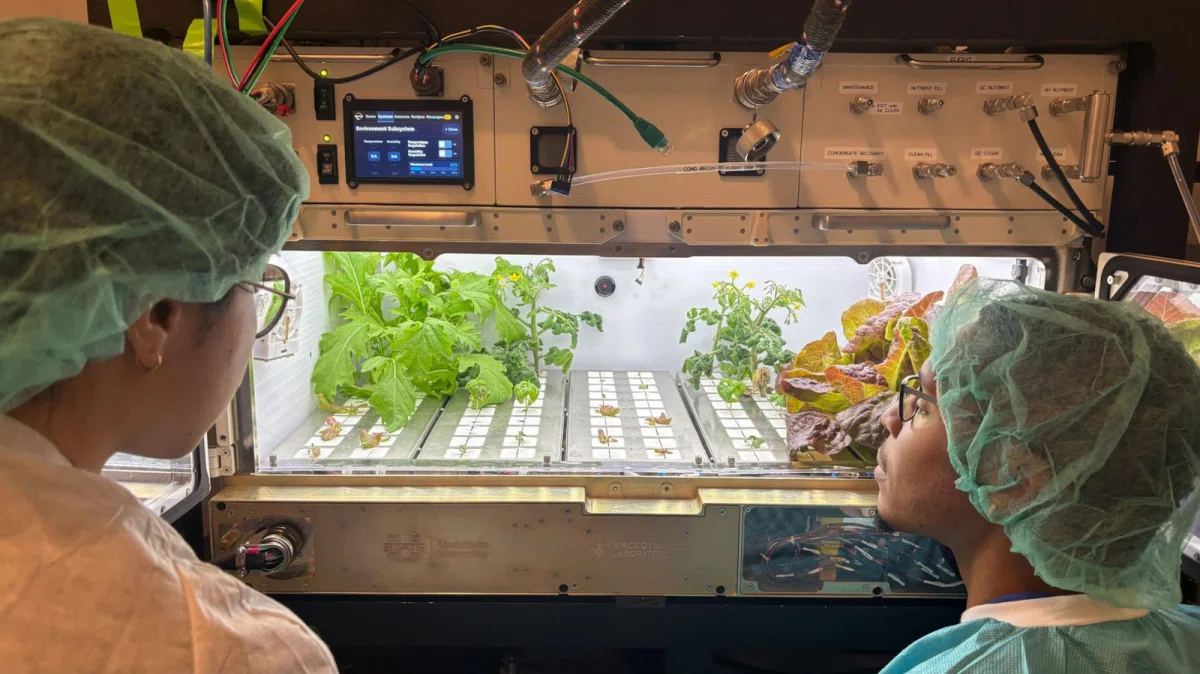
Developed at Kennedy Space Center since 2019, Ohalo III is designed to operate with little crew involvement, recycle water, exchange air and grow multiple crops at once. NASA imagery shows red romaine lettuce alongside tomato, basil and two mustard varieties.
The orbital trial will examine how to deliver water to plants in microgravity and use growing space efficiently. NASA has grown crops aboard the station for years, including tests of the Advanced Plant Habitat, but describes Ohalo III as a step towards a system intended for dependable food production.
NASA says the data could inform crop chambers for lunar habitats and Mars missions, where crews on long stays would need to supplement packaged food. The agency also sees possible applications for vertical farming and indoor growing on Earth, where land and water can be constrained.
Weather forecasts issued ahead of the Sunday launch attempt gave a 75% chance of favourable conditions at the launch site, with a thick cloud layer the main concern. If the attempt is scrubbed, the next launch opportunity is 10:24 a.m. EST on Monday, Nov. 30.
Key facts
- Launch is scheduled for 10:47 a.m. EST on Sunday, Nov. 29.
- Cygnus XL is set to carry approximately 11,000 pounds of cargo.
- Ohalo III is designed to recycle water and grow multiple crops with little crew involvement.
Three perspectives
Neutral
NASA plans to test Ohalo III’s water delivery and growing-space efficiency aboard the International Space Station.
Positive
The trial is intended to provide data for future crop systems in lunar habitats and Mars missions.
Negative
Crews on longer missions would face limited storage space and fewer resupply options.
Your week in news, every Wednesday
The biggest stories of the week for your edition, in your inbox every Wednesday morning, your time. Free, and you can unsubscribe at any time.