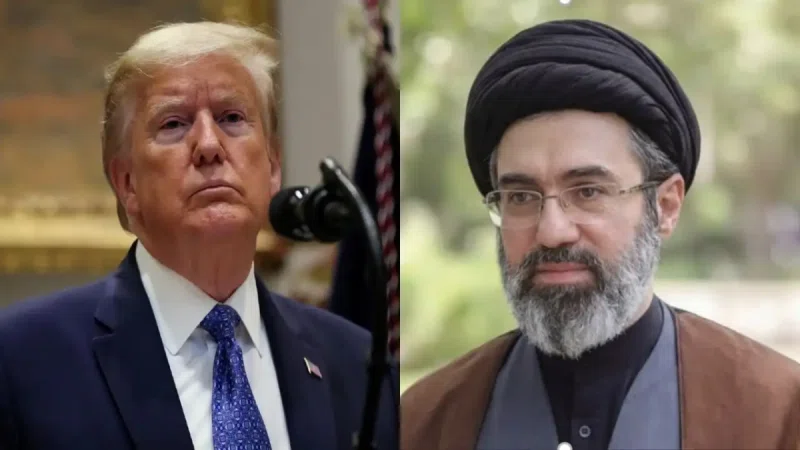
Iran accuses U.S. of threatening attack with massive non-nuclear bomb
President Masoud Pezeshkian criticized the U.S. for pursuing diplomacy through threats while the war in the region causes hundreds of billions in economic damage.
 Politics Desk 3 min read
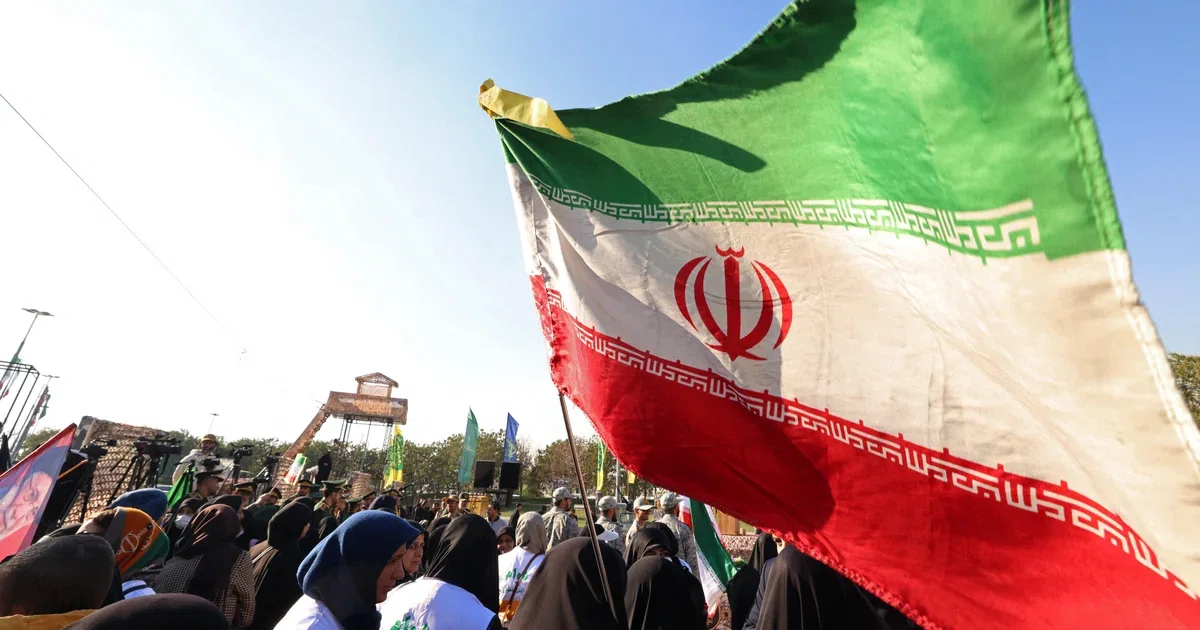
Iranian President Masoud Pezeshkian accused the U.S. on Wednesday of threatening to attack his country with the Massive Ordnance Air Blast Bomb, or MOAB, while claiming to seek a diplomatic resolution to the war. Pezeshkian criticized the U.S. on X for attempting to pursue diplomacy through threats. The MOAB is the largest non-nuclear weapon in the U.S. arsenal, weighing upwards of 30,000 pounds and designed to destroy infrastructure buried deep underground.
The Islamic Revolutionary Guard Corps said Wednesday that two oil tankers struck naval mines and caught on fire in the Strait of Hormuz after attempting to leave the waterway via an unauthorized route under the protection of U.S. fighter jets. This follows daily claims by Iranian forces about attacks on commercial vessels in and around the strategic waterway. The U.K. navy's Maritime Trade Operations center said a tanker reported being hit by a projectile in the strait on Tuesday evening.
An adviser to Iran's supreme leader said Wednesday that the U.S. and Europe have heard the repercussions of the war launched jointly by the U.S. and Israel more than eight months ago. Mohammad Mokhber said in a post on X that other nations participating in the U.S. blockade of Iranian ports committed an act of war that would be recorded in the nation's historical memory. He stated that the consequences of such actions will extend to all participants regardless of geographical boundaries.
The U.S.-Iran war is projected to cost Gulf countries more than $200 billion in physical damage, with economic losses potentially reaching $790 billion by 2030, according to insurer Allianz Trade. The report stated that more than 80 energy facilities were hit in the war, mostly in Kuwait, Qatar and Bahrain, with a third of them severely damaged.
Tehran has refused a U.S. precondition that an initial ceasefire deal include negotiations on the nuclear issue, insisting such discussions can only happen once fighting is formally halted on all fronts, including in Lebanon. A top Iranian security official and Secretary of the Supreme National Security Council Mohsen Rezaei insisted Wednesday that Tehran will not remove even a single particle of enriched nuclear material from the country.
Key facts
- President Masoud Pezeshkian accused the U.S. of threatening Iran with the Massive Ordnance Air Blast Bomb.
- The total cost of the war for the GCC is set to reach $790 billion by 2030.
- The Islamic Revolutionary Guard Corps reported two oil tankers caught fire after striking mines in the Strait of Hormuz.
Three perspectives
Neutral
The U.S. and Iran are engaged in a conflict involving maritime attacks in the Strait of Hormuz and disputes over nuclear material.
Positive
The Trump administration has pushed for a final peace deal that would include Iran agreeing to give up its stockpile of highly-enriched uranium.
Negative
The war has caused more than $200 billion in physical damage to energy infrastructure across the Gulf region.
Your week in news, every Wednesday
The biggest stories of the week for your edition, in your inbox every Wednesday morning, your time. Free, and you can unsubscribe at any time.