 South Africa
Space Force grants SpaceX access to precise satellite collision data
The contract gives Musk's company access to military tracking data, raising concerns about monopoly control over space traffic coordination.
 Space Desk 2 min read
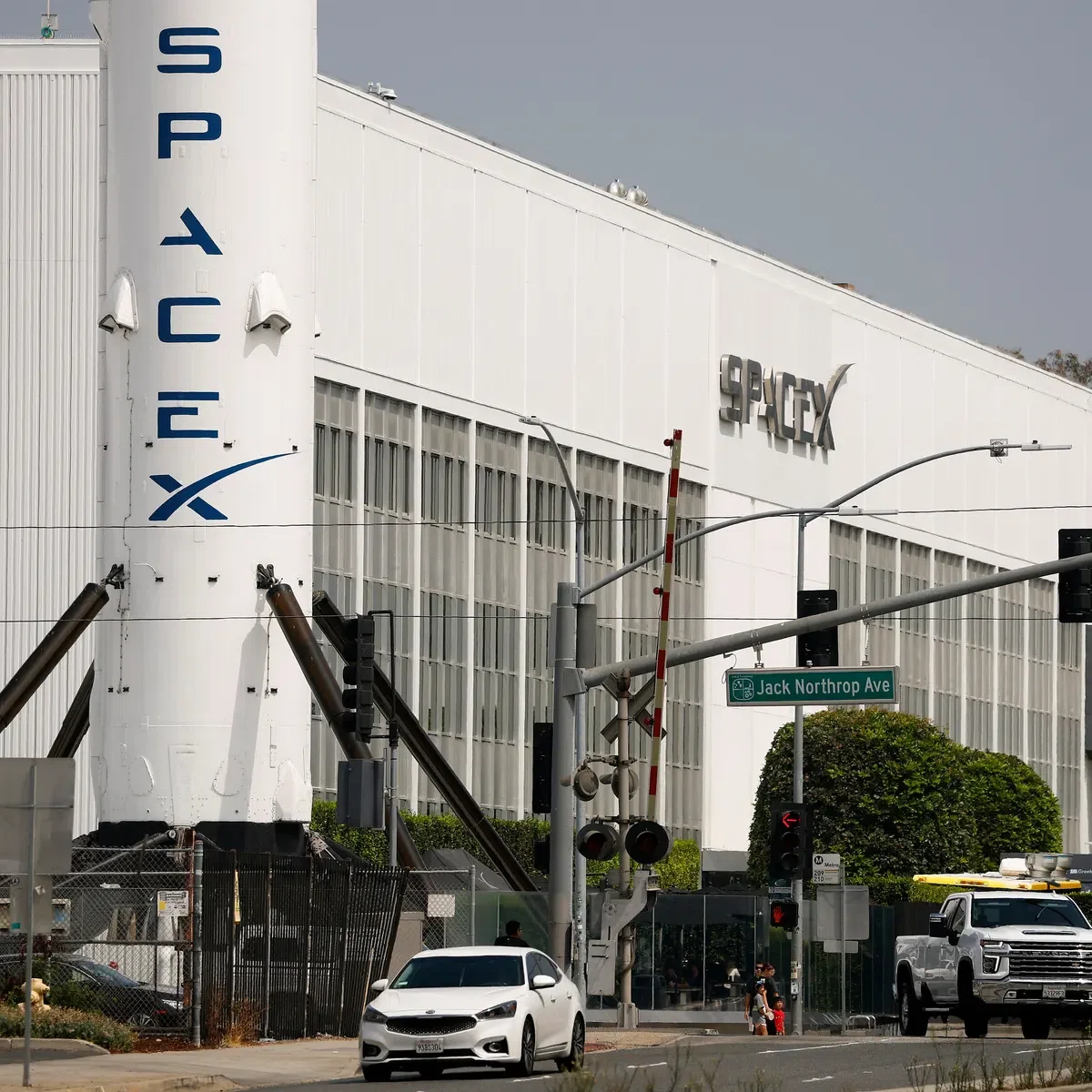
The US Space Force has signed a new contract granting SpaceX access to its most precise data regarding potential collisions between satellites and other space objects. This provides the company with enhanced access to the High Accuracy Catalog of the US Space Command.
The data includes Vector Covariance Messages, which consist of tracking data from military sensors, telescopes, and ground-based radars. These sensors track the paths of satellites and other objects in lower orbit that are as small as 10cm. While the military uses these radars to monitor the positions of other countries' satellites, the data is also used to track commercial spacecraft to avoid collisions.
Cole Donovan, a former Traccs employee now with the non-profit Stand Up for Science, said the move makes SpaceX a de facto source for space traffic coordination within the US. Donovan compared the situation to giving a trucking company control over all traffic lights, which they could switch to red when it is a competitor's turn to go.
The move follows attempts by the administration to defund the Traffic Coordination System for Space (Traccs), a program intended to take over commercial space traffic control from the defense department. Traccs manages thousands of satellites and debris, helping to prevent up to 50,000 near-collisions daily. However, the program has struggled to take root as it has never been fully funded or staffed.
Industry observers have expressed fears of a "vendor lock" scenario where the government becomes overly reliant on SpaceX due to its technological advancement and influence. The commercial US space market is expected to grow to nearly $2tn in value over the next decade.
A former National Oceanic and Atmospheric Administration official, speaking on condition of anonymity, said SpaceX has been remarkably responsive to space safety concerns. The official stated that the government has failed to fulfil its responsibility to establish a coherent space governance framework that provides transparency and a level playing field for all operators.
Key facts
- SpaceX and the Space Force signed a contract for access to the High Accuracy Catalog.
- The military data tracks space objects as small as 10cm.
- The commercial US space market is projected to reach nearly $2tn in value over the next decade.
Three perspectives
Neutral
The Space Force is engaging with several companies to exchange commercial data for access to controlled, unclassified information where it benefits the US government.
Positive
A former National Oceanic and Atmospheric Administration official noted that SpaceX has been remarkably responsive to space safety concerns.
Negative
Industry observers fear the move could lead to a monopoly or a vendor lock scenario where the government is overly reliant on SpaceX.
Your week in news, every Wednesday
The biggest stories of the week for your edition, in your inbox every Wednesday morning, your time. Free, and you can unsubscribe at any time.