

New eukaryotic organism found reproducing at 145 F
Researchers identified Incendiamoeba cascadensis in Northern California, setting a new record for the highest temperature recorded for eukaryotic life.
 Science Desk 2 min read
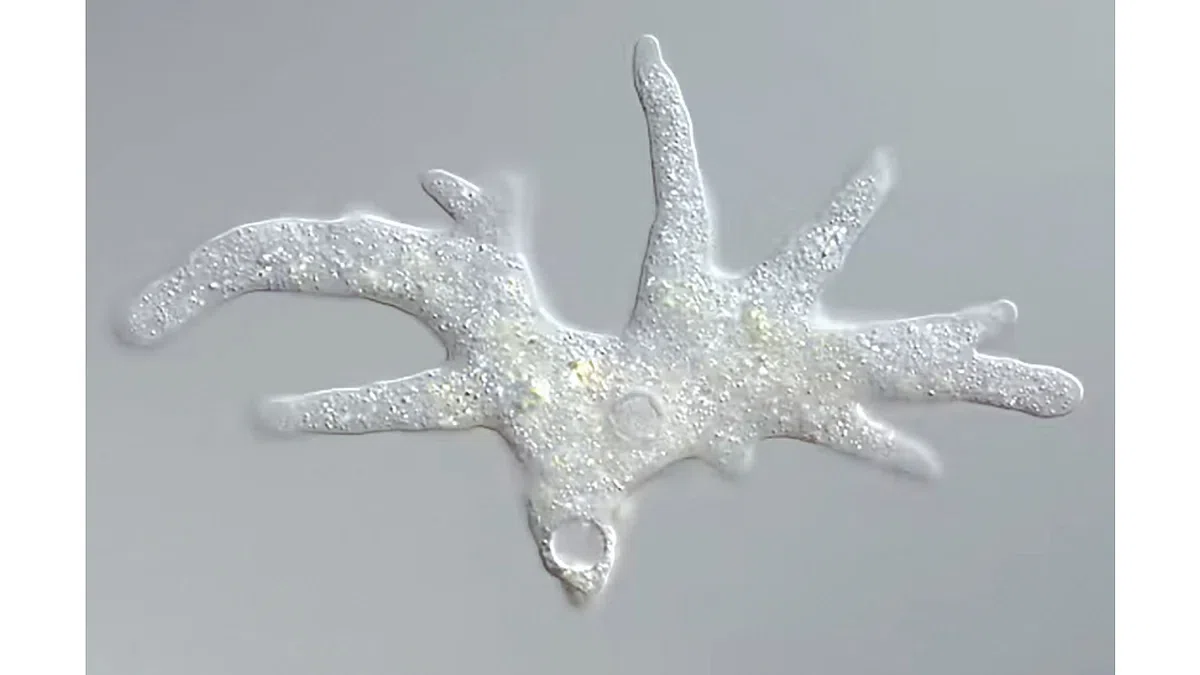
A research team has identified a unicellular eukaryote, Incendiamoeba cascadensis, that can reproduce at 145 F (63 C). This finding marks the highest temperature yet recorded for eukaryotic life.
The team found the organism in geothermal springs in Lassen Volcanic National Park in Northern California. Scientists suspect it might also be found in other geothermal areas worldwide.
Incendiamoeba is a forager, similar to many amoebae that change shape as they move. It can move around to search for food and favourable conditions. The organism actively crawls at 147 F (64 C), but it will enter a protective hibernation-like state if the temperature rises a few degrees more.
Previously, scientists theorised that eukaryotic life was not physically possible beyond 143 F (62 C) based on observations from fungi at 140 F (60 C). While bacteria have been recorded living up to 212 F (100 C), it is unclear why eukaryotic cells are less amenable to high temperatures and other extremes.
Eukaryotes have evolved heat shock proteins to detect and help refold proteins that unfold at higher temperatures. The discovery of Incendiamoeba cascadensis reveals that researchers do not yet know which parts of eukaryotes are generally incompatible with high temperatures.
Key facts
- Incendiamoeba cascadensis can reproduce at 145 F (63 C).
- The organism was found in geothermal springs in Lassen Volcanic National Park.
- This is the highest temperature recorded for eukaryotic life.
Three perspectives
Neutral
Researchers identified a unicellular eukaryote capable of reproducing at 145 F (63 C) in Northern California.
Positive
The discovery of Incendiamoeba cascadensis sets a new record for the highest temperature recorded for eukaryotic life.
Negative
It remains unclear why eukaryotic cells are less amenable to high temperatures and other extremes compared to bacteria.
Your week in news, every Wednesday
The biggest stories of the week for your edition, in your inbox every Wednesday morning, your time. Free, and you can unsubscribe at any time.