Comets unlikely to have seeded life on Earth, study finds
Modeling by University of Cambridge researchers suggests the intense heat of atmospheric entry destroys key organic compounds like hydrogen cyanide.
 Space Desk 2 min read
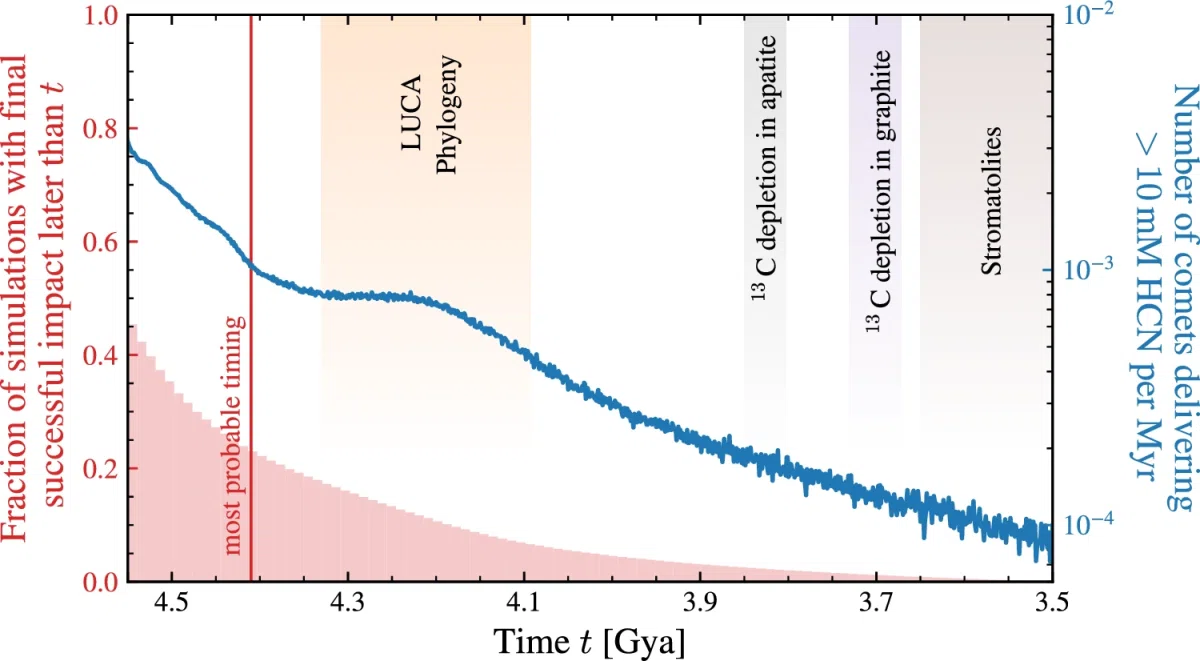
A modeling study led by University of Cambridge researchers finds that when comets slam into Earth, the entry is so intense that key organic compounds are overwhelmingly destroyed. This makes the theory that comets delivered the building blocks of life to Earth highly unlikely, according to lead author Richard Anslow.
The research focused on hydrogen cyanide (HCN), a common prebiotic molecule on comets. Simulations showed a negligible amount of HCN surviving to reach Earth's surface. Researchers calculated that conditions would have to be almost impossibly precise regarding speed, angle, and the aftermath for enough of the molecule to survive and kick off chemistry leading to life.
Because HCN is an especially tough molecule, researchers surmised that if it likely could not survive, neither could any other organic compound. Even if molecules did survive the impact, other influences like hydrolysis would further dilute and degrade them, making their effect on biological activity highly unlikely.
The study suggests that hydrothermal vents near the ocean are a much more likely source of the ingredients and energy needed for the formation of the first biological cells on Earth. These vents provide a rich mixture of chemicals that sustains entire ecosystems unlike those found on the surface.
While the comet-based delivery method was ineffective for Earth, it may have been more successful on a historical Mars that was capable of retaining liquid water. Simulations showed more than five times the successful deliveries of HCN to Mars. The thinner atmosphere of Mars might have offered a gentler landing zone for such molecules, which provides prospects for studying similar bodies like Europa.
Key facts
- University of Cambridge researchers found that cometary impacts likely destroy key organic compounds during atmospheric entry.
- Simulations showed a negligible amount of hydrogen cyanide survives the impact to reach Earth's surface.
- The comet-based delivery method was over five times more effective for delivering hydrogen cyanide to historical Mars.
Three perspectives
Neutral
Researchers suggest that hydrothermal vents are a more probable source for the ingredients of life on Earth than comets.
Positive
The findings provide exciting prospects for exploring similar bodies like Europa once its oceans are studied.
Negative
The intense conditions of atmospheric entry make the comet-delivery theory for life's building blocks highly unlikely.
Your week in news, every Wednesday
The biggest stories of the week for your edition, in your inbox every Wednesday morning, your time. Free, and you can unsubscribe at any time.