

West coast health officials urge CDC to validate high-volume measles test
Health officials from California, Hawaii, Oregon, and Washington are asking the CDC to reconsider its focus on emerging technologies and validate rapid testing for measles outbreaks.
 Health Desk 2 min read
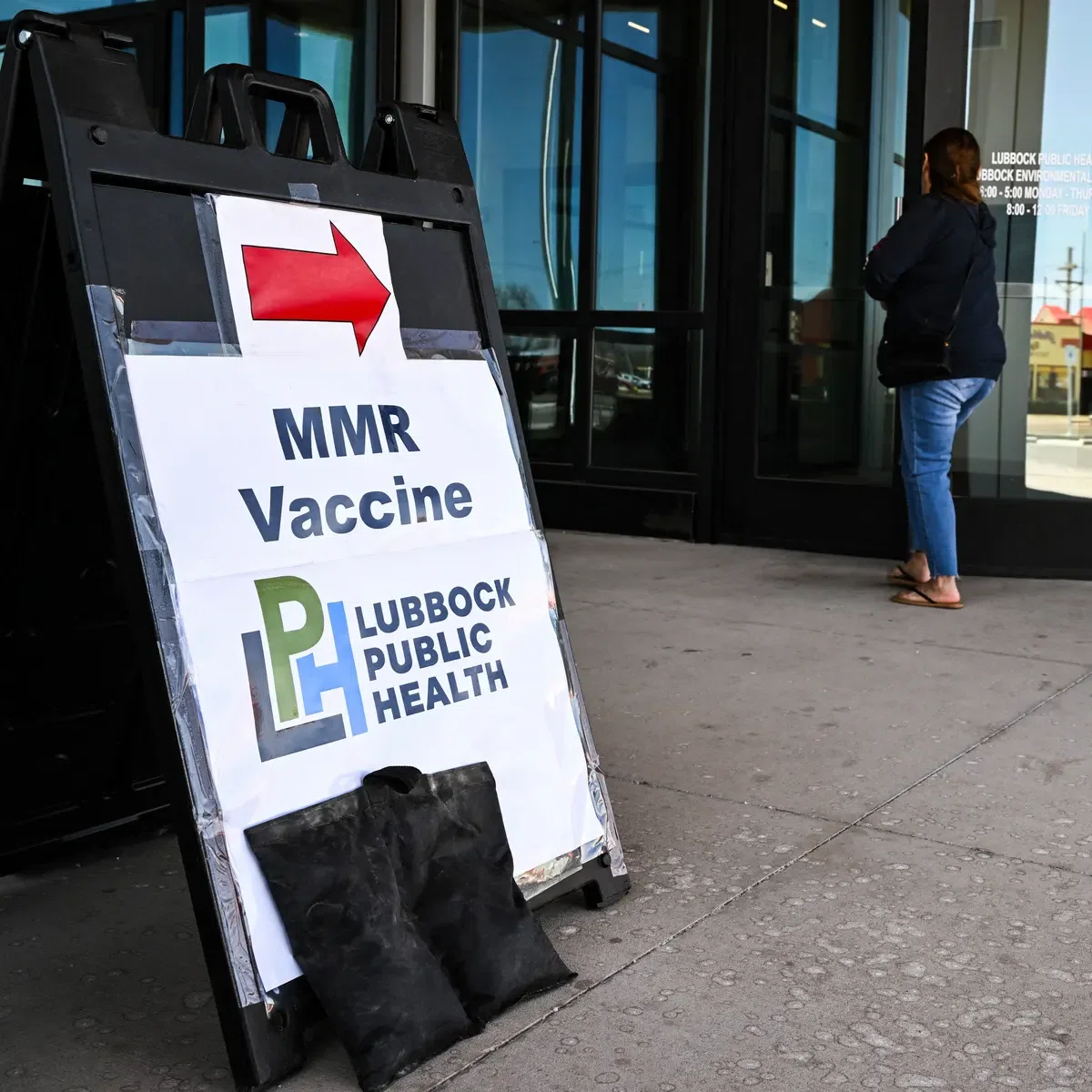
Health officials in California, Hawaii, Oregon, and Washington have asked the CDC to reconsider its prioritization of emerging technologies and instead validate a rapid, high-volume measles test. The alliance requested that the CDC develop an assay for measles diagnostic testing on the Panther Fusion and publish the protocol so any laboratory can run the tests.
Currently, laboratories rely on lower-volume tests for measles, such as individual polymerase chain reaction (PCR) tests. There is no high-throughput test to diagnose measles that has been validated by the CDC. In contrast, during the Covid pandemic, many public health labs used high-volume equipment like the Hologic Panther Fusion, which can process up to 500 tests in eight hours.
The CDC is ensuring state and local health departments have support to strengthen measles detection and outbreak response. An agency spokesperson, Emily Hilliard, said the CDC is prioritizing emerging technologies to respond to the measles outbreak.
Benjamin Bradley, an assistant professor of pathology at the University of Utah and medical director of virology at ARUP, said one measles patient can infect 12 to 18 other unvaccinated people. He noted that the virus can linger in the air for two hours and that cases can go from a handful to an entire community exponentially.
Quicker tests could help identify and isolate positive patients and lead to faster contact tracing. If vaccines are taken within 72 hours of exposure, they can prevent infection.
Texas state laboratories developed a high-volume test during a measles outbreak in west Texas last year, but they have not distributed or published the protocol. ARUP Laboratories published an assay for measles in the Journal of Clinical Microbiology in December. West coast officials stated the CDC has reportedly completed studies on the assays from Texas and ARUP, but these were not full validations or a comprehensive comparison.
Key facts
- Health officials in California, Hawaii, Oregon, and Washington are asking the CDC to validate a high-volume measles test.
- The CDC is currently prioritizing emerging technologies to respond to the measles outbreak.
- There is currently no high-throughput measles test validated by the CDC.
Three perspectives
Neutral
Health officials from four states are requesting that the CDC validate high-volume measles testing protocols to prepare for potential outbreaks.
Positive
High-throughput tests could allow laboratories to process large batches of samples quickly, helping to identify and isolate patients during an outbreak.
Negative
Without high-throughput capacity, a large outbreak could make it difficult to scale up diagnostic testing, which may impair patient care and public health investigations.
Your week in news, every Wednesday
The biggest stories of the week for your edition, in your inbox every Wednesday morning, your time. Free, and you can unsubscribe at any time.