

India reaffirms biodiversity commitment at COP-17 in Armenia
Union Minister Bhupender Yadav called for predictable finance and technology transfer to implement the Kunming-Montreal Global Biodiversity Framework.
 Climate Desk 2 min read
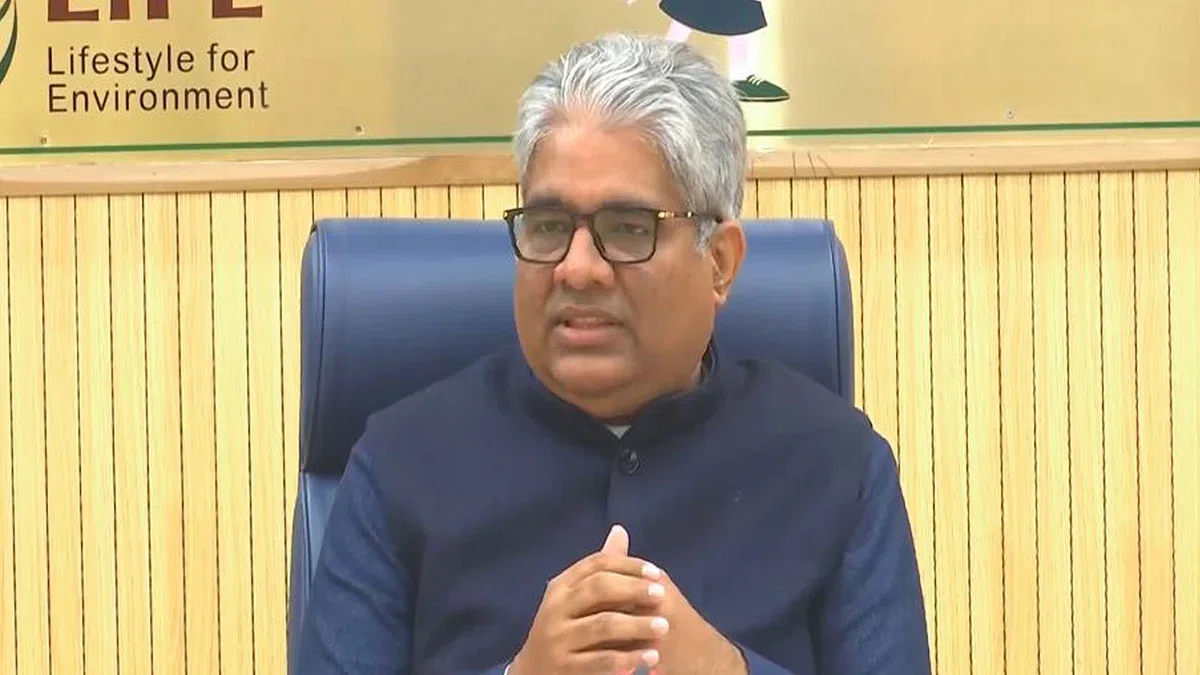
Union Minister for Environment, Forest and Climate Change, Bhupender Yadav, delivered India’s National Statement at the High-Level Segment of the 17th Conference of the Parties to the Convention on Biological Diversity (CBD COP-17) in Yerevan, Armenia. He reaffirmed India’s commitment to conserving biodiversity and strengthening collective efforts to live in harmony with nature.
Yadav said the implementation of the Kunming-Montreal Global Biodiversity Framework must align with national priorities, circumstances, and legislation. He stated that the framework should be supported by adequate and predictable finance, capacity building, and technology transfer from developed countries.
India's updated National Biodiversity Strategy and Action Plan translates the Global Biodiversity Framework into 23 National Biodiversity Targets and 142 indicators, Yadav said. The minister noted that India has 1,134 protected areas, 103 Ramsar sites, 57 biodiversity heritage sites, and 18 biosphere reserves, including 13 designated by UNESCO’s Man and the Biosphere Network.
The minister highlighted initiatives such as the Mangrove Initiative for Shoreline Habitats and Tangible Incomes (MISHTI) for mangrove restoration, Amrit Dharohar for wetland conservation, and the Soil Health Card Scheme for sustainable soil management. He also mentioned the Mission 'LiFE and Ek Ped Maa Ke Naam' initiatives and noted that India leads the International Big Cat Alliance (IBCA).
Regarding genetic resources, India supports benefit-sharing from digital sequence information through a multilateral mechanism, including the Cali Fund. Yadav advocated for a science-based, risk-proportionate, and precautionary approach to synthetic biology and biosafety.
The Kunming-Montreal Global Biodiversity Framework is a non-legally binding global agreement adopted on December 19, 2022, during the UN Biodiversity Conference (COP15) in Montreal, Canada. Its goal is to take urgent action to halt and reverse biodiversity loss by 2030.
Key facts
- India has 1,134 protected areas and 103 Ramsar sites.
- The Kunming-Montreal Global Biodiversity Framework aims to halt and reverse biodiversity loss by 2030.
- India's National Biodiversity Strategy and Action Plan includes 23 National Biodiversity Targets and 142 indicators.
Three perspectives
Neutral
Bhupender Yadav delivered India's National Statement at the CBD COP-17 in Yerevan, Armenia, regarding biodiversity conservation.
Positive
India is advancing ecosystem restoration through initiatives like the MISHTI mangrove restoration and the Amrit Dharohar wetland conservation program.
Negative
The Kunming-Montreal Global Biodiversity Framework, which aims to reverse biodiversity loss by 2030, is a non-legally binding agreement.
Your week in news, every Wednesday
The biggest stories of the week for your edition, in your inbox every Wednesday morning, your time. Free, and you can unsubscribe at any time.