 South Africa
SpaceX catches Starship upper stage with mechanical arms in Texas
The 52m spacecraft returned from a 22.5-hour orbit to be caught by the Mechazilla tower arms, marking a milestone in the push for fully reusable rockets.
 Space Desk 2 min read
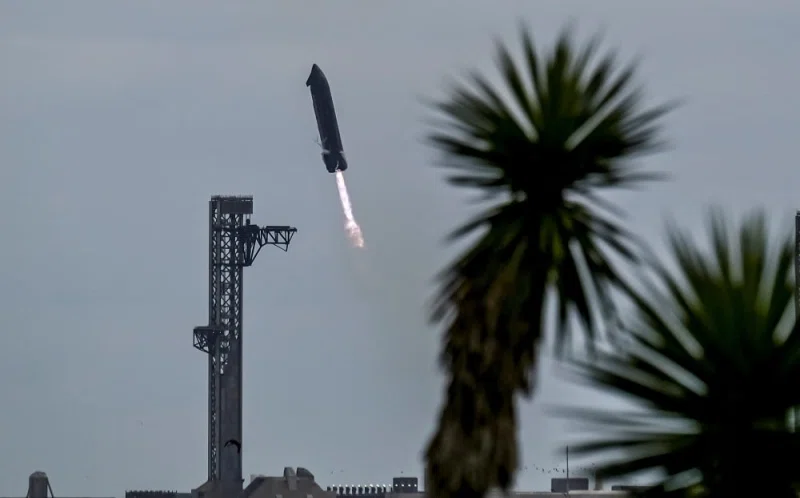
SpaceX successfully recovered the upper portion of its Starship launch system after a 22.5-hour mission. The 52m Starship spacecraft descended through thick clouds over the Starbase launch site in Texas and was caught by the mechanical arms of the Mechazilla tower. The ship reignited its engines to turn vertical before the arms grasped it, allowing the vessel to hang several hundred metres above the ground.
The mission began on Friday when the Super Heavy booster carried Starship into space from the Texas facilities. While the Starship upper stage successfully orbited Earth 14 times and deployed 26 Starlink satellites at an altitude of 260km, the booster failed to make a similar return to the launch pad 10 minutes after liftoff. This prevented SpaceX from recovering both parts of the rocket system during this flight.
Elon Musk and SpaceX engineers began inspecting the spacecraft, referred to as Ship 42, within hours of the catch. Musk posted photos and videos of the ship on X, stating that it looks great.
Dan Huot, a SpaceX mission commentator, described the successful catch on Saturday as the holy grail of spaceflight and the missing link. The achievement is a step toward Elon Musk's goal of creating a rocket system that operates with the frequency and manner of commercial aircraft, requiring minimal refurbishment between flights.
Additionally, the heat shield, which uses hundreds of black hexagonal tiles to protect the ship during atmospheric reentry, is not yet fully reusable.
SpaceX has invested more than $15bn in the development of Starship. The company also holds a contract with Nasa valued at more than $4bn, with $3.2bn provided to support the Artemis programme's goal of returning humans to the moon. Nasa expects Starship to begin crewed moon flights in 2028, provided SpaceX can demonstrate complex fuel transfers between tanker rockets in orbit.
Key facts
- SpaceX caught the 52m Starship upper stage using the Mechazilla mechanical arms in Texas.
- The Starship spacecraft completed a 22.5-hour mission and orbited Earth 14 times.
- SpaceX has spent more than $15bn on the development of Starship.
Three perspectives
Neutral
The Starship upper stage was caught by mechanical arms at the Texas tower following a 22.5-hour orbital mission.
Positive
The successful catch marks a key engineering milestone in the development of a fully reusable rocket.
Negative
The Super Heavy booster failed to return to the launch pad during the mission, and the Starship heat shield is not yet fully reusable.
Your week in news, every Wednesday
The biggest stories of the week for your edition, in your inbox every Wednesday morning, your time. Free, and you can unsubscribe at any time.