

 Australia
Physicists model new state of matter called time liquid
Researchers suggest a discrete time liquid could retain short-range temporal order even as long-range coherence dissolves.
 Science Desk 2 min read
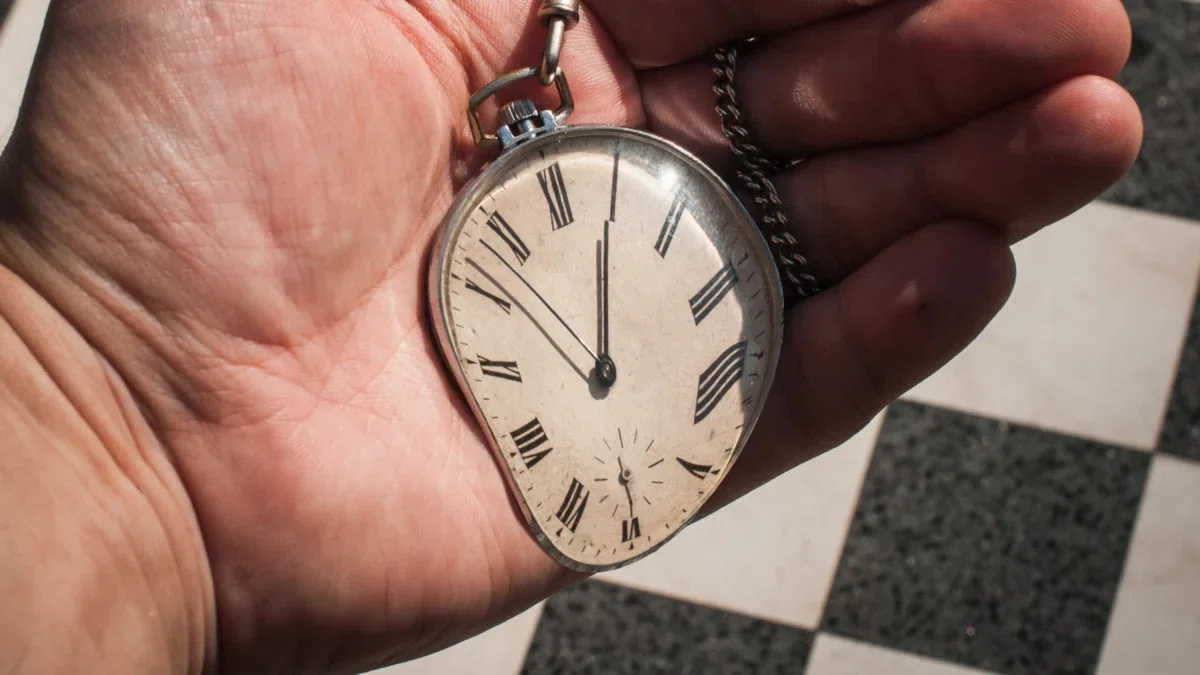
Physicists have developed a theoretical model for a state of matter known as a time liquid. This state could occur if a time crystal melts, retaining short-range temporal order even as its long-range coherence dissolves.
The researchers, led by Zuo Wang and Marios H. Michael of the Max Planck Institute for the Physics of Complex Systems in Germany, modelled their work on discrete time crystals. A discrete time crystal's repeating pattern is driven by an external source, such as a laser, but ticks to a different beat than the source.
The team developed a model consisting of a two-dimensional lattice of interacting spins coupled with an electromagnetic cavity. In their simulations, random thermal fluctuations in the electromagnetic field caused the spins to tick at half the cavity's frequency, despite the fluctuations being unpredictable.
While the spins maintained an overall rhythm, they occasionally switched between two equivalent versions of their repeating pattern. The researchers call these interruptions time-solitons, which are defects in temporal order that disrupt long-range coherence without destroying the underlying rhythm.
If experimentally demonstrated, the time liquid could allow physicists to investigate how matter responds to environmental fluctuations and how order can emerge from disorder.
Key facts
- Physicists led by Zuo Wang and Marios H. Michael modelled a discrete time liquid.
- The time liquid retains short-range temporal order even when long-range coherence dissolves.
Three perspectives
Neutral
Physicists have proposed a theoretical model for a discrete time liquid that maintains local temporal order through thermal fluctuations.
Positive
If experimentally demonstrated, the time liquid could offer physicists a new way to investigate how order can emerge from disorder.
Negative
The researchers' findings have yet to be peer-reviewed.
Your week in news, every Wednesday
The biggest stories of the week for your edition, in your inbox every Wednesday morning, your time. Free, and you can unsubscribe at any time.