

 United Kingdom
Orionid meteor shower to peak over 21-22 October
Observers may see 10-20 fragments per hour as Earth passes through dust left by Halley’s comet.
 Space Desk 2 min read
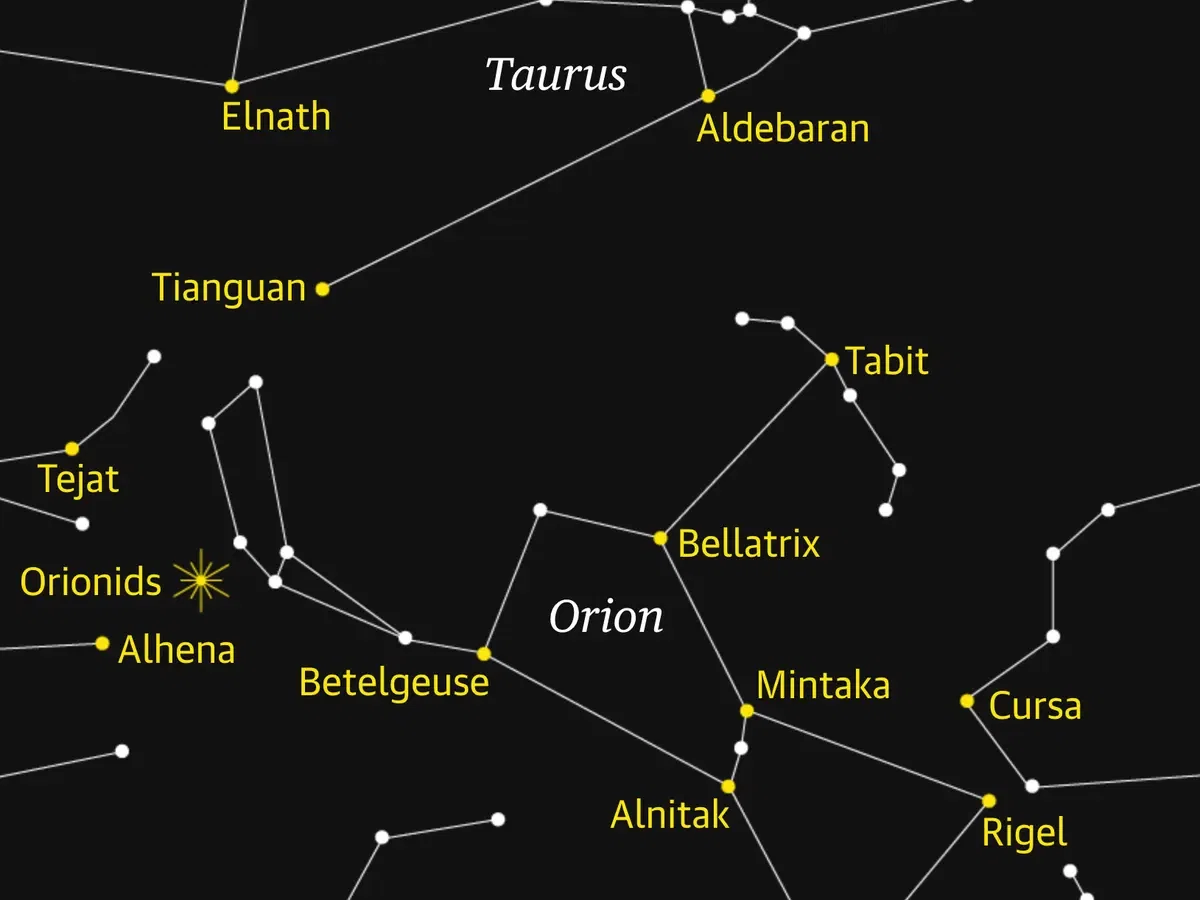
The Orionid meteor shower is expected to reach its peak during the night of 21–22 October. As Earth passes through a stream of dust left behind by Halley’s comet, observers may see between 10 and 20 Orionid meteors per hour under ideal conditions.
The meteors occur when tiny particles plunge into Earth’s atmosphere at about 66 kilometres per second. These particles heat the surrounding air to produce fleeting streaks of light. The meteors appear to radiate from a point near Orion.
However, conditions improve during the early hours of the morning.
The moon sets at about 03:00 BST, leaving a few hours of darker sky before dawn as Orion climbs high into the sky. To view the shower, find a safe location with as wide a view of the heavens as possible and watch with the naked eye.
Key facts
- The Orionid meteor shower is expected to peak during the night of 21–22 October.
- Observers may see 10-20 fragments per hour under ideal conditions.
- The moon sets at approximately 03:00 BST, providing darker skies before dawn.
Three perspectives
Neutral
The Orionid meteor shower occurs every October as Earth passes through dust left by Halley’s comet.
Positive
Conditions for viewing improve during the early hours of the morning after the moon sets at about 03:00 BST.
Negative
A bright waxing gibbous Moon will drown out many of the fainter meteors this year.
Your week in news, every Wednesday
The biggest stories of the week for your edition, in your inbox every Wednesday morning, your time. Free, and you can unsubscribe at any time.