

Nuclear blast in low Earth orbit could destroy most satellites
A single one-megaton explosion could create a radiation belt that disables 98% of satellites within a week, according to research simulations.
 Space Desk 2 min read
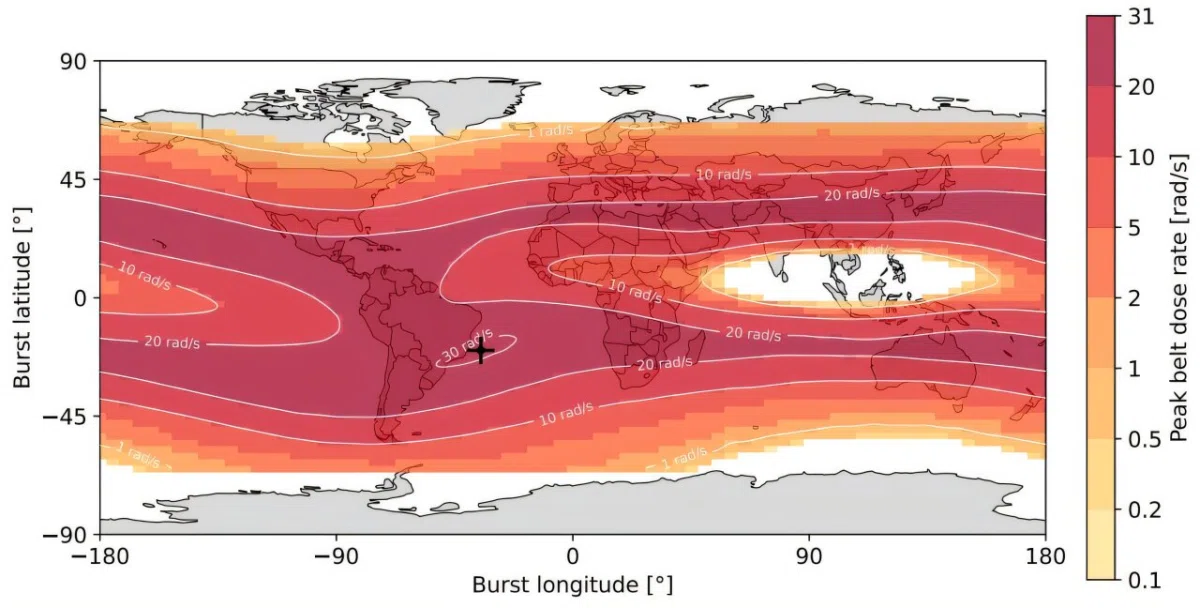
Simulations conducted by researchers suggest a single explosion could knock out 98% of satellites in just seven days.
Zachary Petersen of the University of Wisconsin–Madison and colleagues used computer simulations to model a one-megaton nuclear explosion 500 kilometers above the South Atlantic Ocean. The study found that the initial burst of radiation would disable approximately 3% of satellites. Within 24 hours, 25% of the fleet would go dark, rising to 78% by the third day.
The long-term damage results from radioactive material releasing electrons that become trapped in Earth's magnetic field. This process creates an artificial radiation belt. As satellites pass through this belt, they face repeated radiation exposure that causes them to fail. Even if satellites were equipped with advanced shielding, 99% would still be destroyed within a month.
Disabled satellites would be unable to maneuver, potentially leading to about 20 collisions within two years and creating more space debris. While many dead satellites would eventually reenter the atmosphere, replacing them would be difficult because new spacecraft would have to survive the lingering radiation and debris.
Key facts
- A one-megaton nuclear blast could disable 98% of satellites within one week.
- The explosion would create an artificial radiation belt by trapping electrons in Earth's magnetic field.
- Researchers estimated approximately 20 satellite collisions could occur within two years following the blast.
Perspectives
Neutral
Simulations show that a nuclear explosion in low Earth orbit would create an artificial radiation belt that disables satellites over time.
Negative
A nuclear detonation in space could trigger a fleet-wide failure of satellites, causing chaos and setting human civilization back decades.
Your week in news, every Wednesday
The biggest stories of the week for your edition, in your inbox every Wednesday morning, your time. Free, and you can unsubscribe at any time.