

 Australia
CERN scientists find evidence of rare subatomic particle decay
Evidence of ultra-rare B0 meson decays into two muons at the Large Hadron Collider tests the Standard Model.
 Science Desk 2 min read
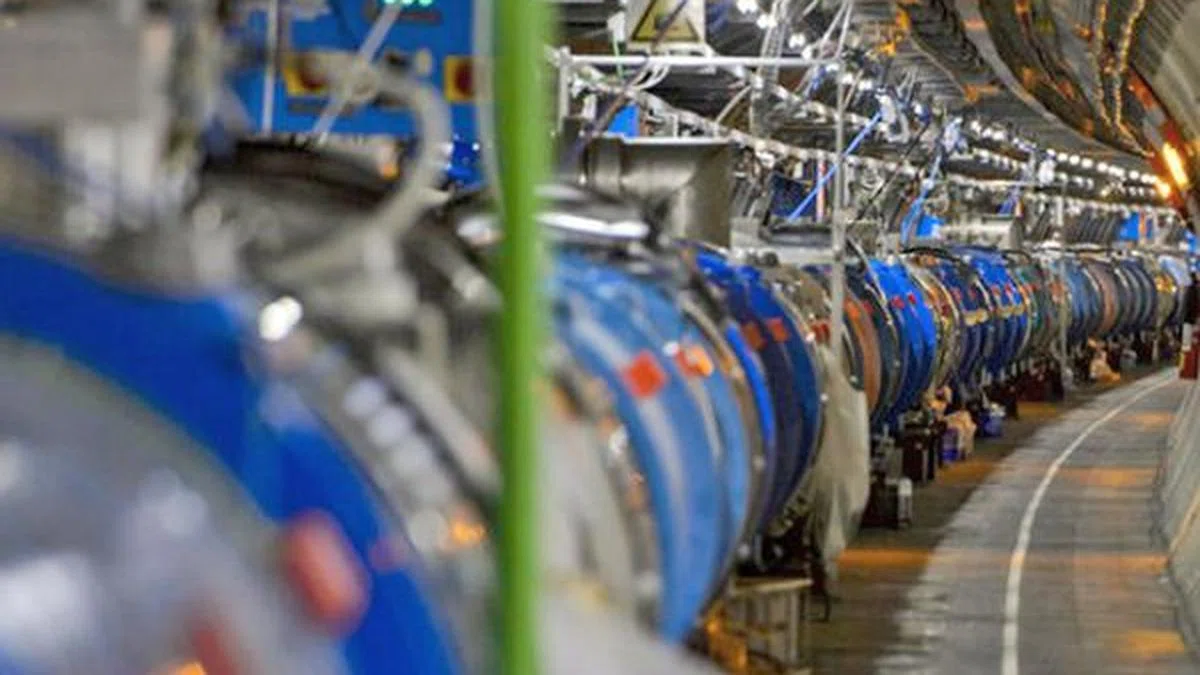
Scientists at the European nuclear research facility CERN have reported evidence of an extremely rare phenomenon in which one kind of subatomic particle transforms into two other particles. This involves ultra-rare B0 meson decays into two muons.
The finding was made using data collected by the Large Hadron Collider.
This evidence tests the Standard Model and guides new physics theories. The discovery could offer a more precise way to test the understanding of how the universe and its particles work.
Physicists refer to the many subatomic particles that make up matter as the particle zoo. While matter is known to be made of protons, neutrons, and electrons, it is technically made of many more subatomic particles.
Key facts
- CERN reported evidence of ultra-rare B0 meson decays into two muons.
- The phenomenon was identified using data from the Large Hadron Collider.
- The finding tests the Standard Model and guides new physics theories.
Perspectives
Neutral
Scientists at CERN have reported evidence of an unusual subatomic phenomenon involving B0 meson decays into two muons.
Positive
The finding could offer a more precise way to test the understanding of how the universe and its particles work.
Your week in news, every Wednesday
The biggest stories of the week for your edition, in your inbox every Wednesday morning, your time. Free, and you can unsubscribe at any time.