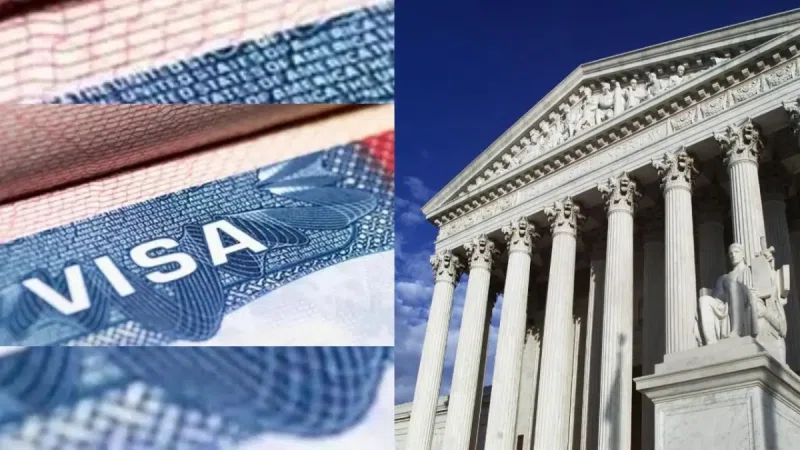
US Proposes Stricter H-1B Visa Renewals
The US Department of Homeland Security has proposed a rule to eliminate deference to prior approvals for H-1B visa holders and other workers with temporary status, which could lead to tougher scrutiny of renewal applications.
 Politics Desk 2 min read
The US Department of Homeland Security has proposed a rule to eliminate deference to prior approvals for H-1B visa holders and other workers with temporary status.
The proposed rule would require US Citizenship and Immigration Services officers to review each extension application on its own merits, even if nothing has changed.
The policy of deferring to previous approvals was restored by the Biden administration in 2021 and codified in 2024.
Stuart Anderson, executive director of the National Foundation for American Policy, said that eliminating deference for prior approvals means that USCIS will adjudicate and challenge again facts it already determined to be true.
Anderson added that this could lead to time-consuming and expensive Requests for Evidence and denials of H-1B renewals for many companies' long-tenured employees.
The proposed rule is part of the Trump administration's efforts to alter the H-1B program amid concerns of long-term abuse by tech companies that leads to the exclusion of American-born workers.
The Department of Homeland Security argued that the current policy weakens oversight and may allow errors or fraud to continue into the new visa period.
Key facts
- The US Department of Homeland Security has proposed a rule to eliminate deference to prior approvals for H-1B visa holders and other workers with temporary status.
- The proposed rule would require US Citizenship and Immigration Services officers to review each extension application on its own merits.
- The policy of deferring to previous approvals was restored by the Biden administration in 2021 and codified in 2024.
- The proposed rule is part of the Trump administration's efforts to alter the H-1B program.
Three perspectives
Neutral
The proposed rule is subject to change and may have significant implications for H-1B visa holders and US companies that rely on them. The outcome of the proposal is uncertain, and it is unclear how it will affect the H-1B program. The situation will likely be closely watched by stakeholders.
Positive
The proposed rule could lead to increased oversight and reduced errors or fraud in the H-1B program. It may also help to address concerns about long-term abuse by tech companies. The rule could potentially benefit American-born workers by creating more job opportunities.
Negative
The proposed rule could lead to tougher scrutiny of renewal applications, which could result in denials and disruptions to businesses. It may also increase the burden on US Citizenship and Immigration Services officers, leading to longer processing times. The rule could potentially harm US companies that rely on H-1B visa holders.
Your week in news, every Wednesday
The biggest stories of the week for your edition, in your inbox every Wednesday morning, your time. Free, and you can unsubscribe at any time.