

 Singapore
Stanford researchers discover way to reverse coral bleaching through physical contact
Healthy coral can pass symbiotic algae to bleached coral by forming a nutrient bridge through direct contact.
 Science Desk 2 min read
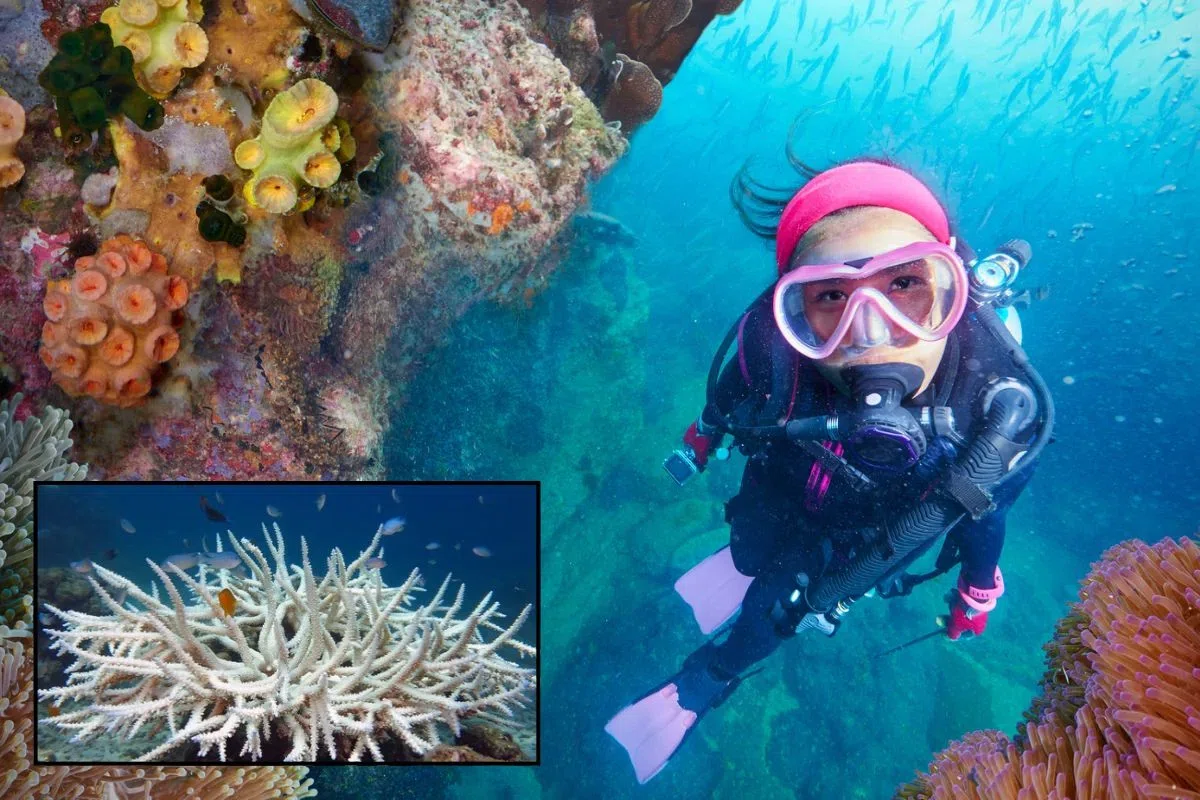
Stanford marine scientists have discovered a way to reverse coral bleaching through direct physical contact. The researchers observed that healthy coral can pass symbiotic algae to unhealthy coral by fusing together and forming a nutrient bridge.
The discovery occurred when two coral samples from the same colony, one healthy and one bleached, fell into each other inside a tank. Color began to return to the bleached coral specifically at the point of contact. Danny Collins, a fellow Stanford marine scientist, said he watched the color of the healthy coral slowly spread into the bleached coral.
Testing showed that one week of contact allowed the bleached coral to build up enough algae to fully recover in about seven weeks. Direct physical contact is required, as the process does not work if the pieces are even a few millimetres apart.
In the wild, bleached coral can recover if ocean temperatures improve, but this process often takes months and most severely bleached coral dies before then. The researchers, including professor of marine sciences Steve Palumbi, informally refer to the technique as helping hands.
The research was recently published in Science Advances.
The technique could potentially be used in emergencies to save critically endangered reefs, but it is likely to be a slow and labour-intensive process. Without ocean warming stopping or reversing course, coral bleaching is likely to continue and worsen.
Key facts
- Healthy coral can pass symbiotic algae to bleached coral through direct physical contact.
- One week of contact can lead to full recovery in about seven weeks.
- The researchers observed the corals fusing to form a nutrient bridge.
Three perspectives
Neutral
The technique could potentially be used in emergencies to save critically endangered reefs, but researchers do not know if it can be replicated in the wild.
Positive
The discovery of a way to reverse coral bleaching through a nutrient bridge could help save dying coral.
Negative
Without ocean warming stopping or reversing course, coral bleaching is likely to continue and worsen.
Your week in news, every Wednesday
The biggest stories of the week for your edition, in your inbox every Wednesday morning, your time. Free, and you can unsubscribe at any time.