Pink penguin guano from space reveals Antarctic diet changes
Researchers used satellite images to link the color of Adélie penguin guano to their consumption of krill and fish, tracking how climate change affects the Southern Ocean food web.
 Science Desk 2 min read
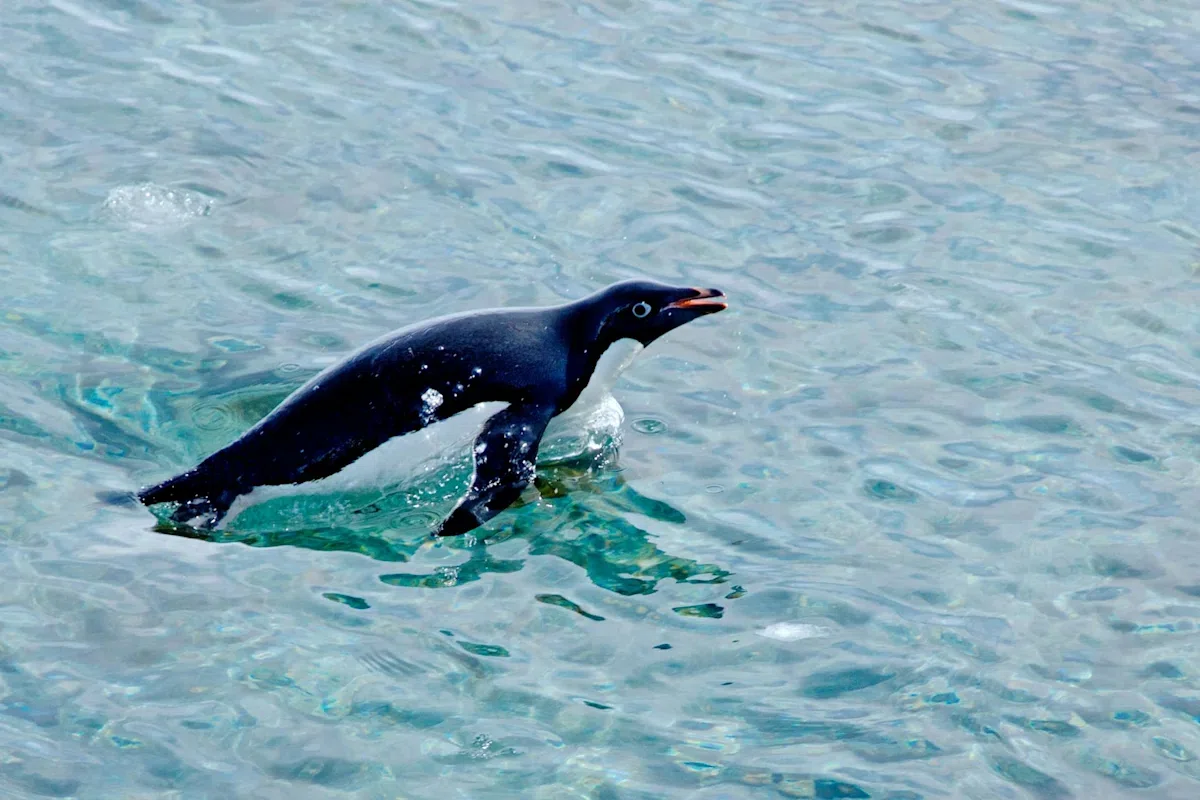
The color of penguin guano seen from space is providing a new way to monitor how the ecology and environment of Antarctica are changing. Scientists have developed a quantitative approach that examines guano color to determine the share of a penguin's diet consisting of krill. Because krill have a pink exoskeleton that penguins do not fully digest, their consumption contributes a rosy shade of pink to the guano.
A multidisciplinary group of scholars used thousands of satellite images dating back to the 1980s to examine patches of guano from Adélie penguins. By analyzing the color of the guano as seen by satellites, the team determined what the birds are eating and how environmental changes affect their survival. This represents the first effort to directly monitor what animals are eating from space.
The research found that Adélie penguin diets vary across the Antarctic continent and change throughout the year. When sea ice is abundant at a colony, penguins tend to eat more fish rather than krill. Conversely, when there is less sea ice, they depend more on krill.
Since the 2010s, sea ice has declined precipitously around the continent. Less sea ice means fewer fish, which is problematic because Adélie penguin chicks are typically heavier when fed fish as opposed to krill, and heavier chicks are more likely to survive into adulthood. In locations where penguins eat less fish, the number of penguins has declined over the past few decades across the species' entire range. Colonies that eat more fish are more likely to be stable or increasing.
Adélie penguins face additional pressures as large-scale declines in sea ice are projected to continue. They face increased competition for food from baleen whales, which have rebounded in the Antarctic Peninsula region, and from Gentoo penguins that are shifting their range southward as the climate warms. Additionally, fishing trawlers harvest large quantities of krill for fish feed and human dietary supplements.
Key facts
- Krill consumption gives penguin guano a pink color that can be identified via NASA's Landsat satellites.
- Adélie penguins eating more fish are more likely to have stable or increasing colony numbers.
- Sea ice has declined precipitously around Antarctica since the 2010s.
Three perspectives
Neutral
Researchers used satellite imagery to link the color of penguin guano to their diet of krill and fish.
Positive
The use of satellite technology provides a way to monitor wildlife in remote, hard-to-reach areas of Antarctica.
Negative
Declining sea ice and increased competition from whales, other penguin species, and fishing trawlers are putting pressure on Adélie penguins.
Your week in news, every Wednesday
The biggest stories of the week for your edition, in your inbox every Wednesday morning, your time. Free, and you can unsubscribe at any time.