Deep-sea mining impacts still detectable 44 years after test
Research shows that a 1979 mining test in the Clarion-Clipperton Zone left lasting changes to organic matter and organism abundance on the seafloor.
 Science Desk 2 min read
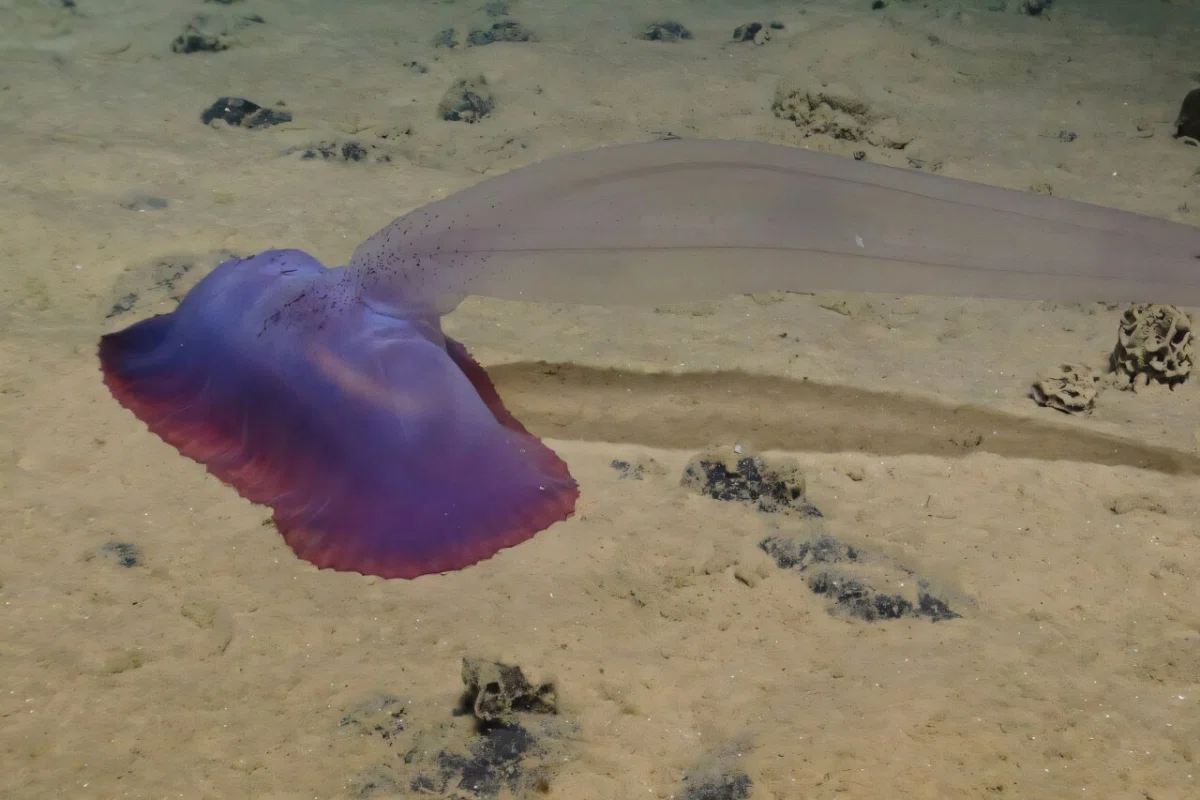
Effects of deep-sea mining on the organic matter that supports seafloor life can still be found more than four decades later. Researchers from the SMARTEX project investigated a test site in the Clarion-Clipperton Zone of the Pacific Ocean that was used by the Ocean Minerals Company in 1979. The tracks of the 100-ton mining machine remain visible on the seafloor.
The team spent one month collecting sediment samples at a depth of about 4,800 meters (15,750 feet) within and around the historical mining disturbance and at an undisturbed control site. They analyzed the quantity and quality of particulate organic matter, which serves as an important food source for organisms and provides essential nutrients like omega-3 fatty acids.
The study found differences in organic matter composition and particle size, along with lower quantity and quality of organic matter at the historic mining site. Using still and video images, the project identified lower abundances of single-celled organisms and larger animals living in the sediments affected by the test mining. These lower abundances were linked to the depleted organic matter.
Dr. Rachel Jeffreys, a marine biologist at the University of Liverpool and lead author, said the study provides long-term evidence of changes in organic matter following a major disturbance to the seabed. She noted that the effects of the mining test can still be detected 44 years after it took place.
The Clarion-Clipperton Zone is located in the eastern and central Pacific Ocean between Hawaii and Mexico. There is significant interest in mining its polymetallic nodules, which contain rare and critical metals used in modern electronics, such as touch screens and rechargeable batteries.
Dr. Jeffreys said changes in the quantity and quality of organic matter could affect food availability for organisms and influence how ecosystems recover from disturbance. She said the findings highlight the need for long-term monitoring and for the potential impacts of changes to organic matter to be considered in the regulation of deep-sea mining.
Key facts
- The effects of a 1979 deep-sea mining test are still detectable 44 years later.
- Mining disturbed areas showed lower quantity and quality of organic matter and lower abundances of organisms.
- The study was conducted in the Clarion-Clipperton Zone at a depth of approximately 4,800 meters.
Three perspectives
Neutral
Researchers investigated the long-term effects of a 1979 deep-sea mining test on organic matter and organism abundance in the Clarion-Clipperton Zone.
Positive
The study provides long-term evidence that can help inform the environmental management and regulation of deep-sea mining.
Negative
The research shows that mining disturbances can lead to lower abundances of both larger animals and single-celled organisms.
Your week in news, every Wednesday
The biggest stories of the week for your edition, in your inbox every Wednesday morning, your time. Free, and you can unsubscribe at any time.