

Prabowo Reshuffles Cabinet
Indonesian President Prabowo Subianto has carried out his seventh and largest Cabinet reshuffle to date, appointing new ministers and deputy ministers in key portfolios, as he approaches his two-year mark in office. The move is seen as a consolidation of his authority and an effort to manage the broad coalition of interests surrounding his presidency.
 Global Newsflix 2 min read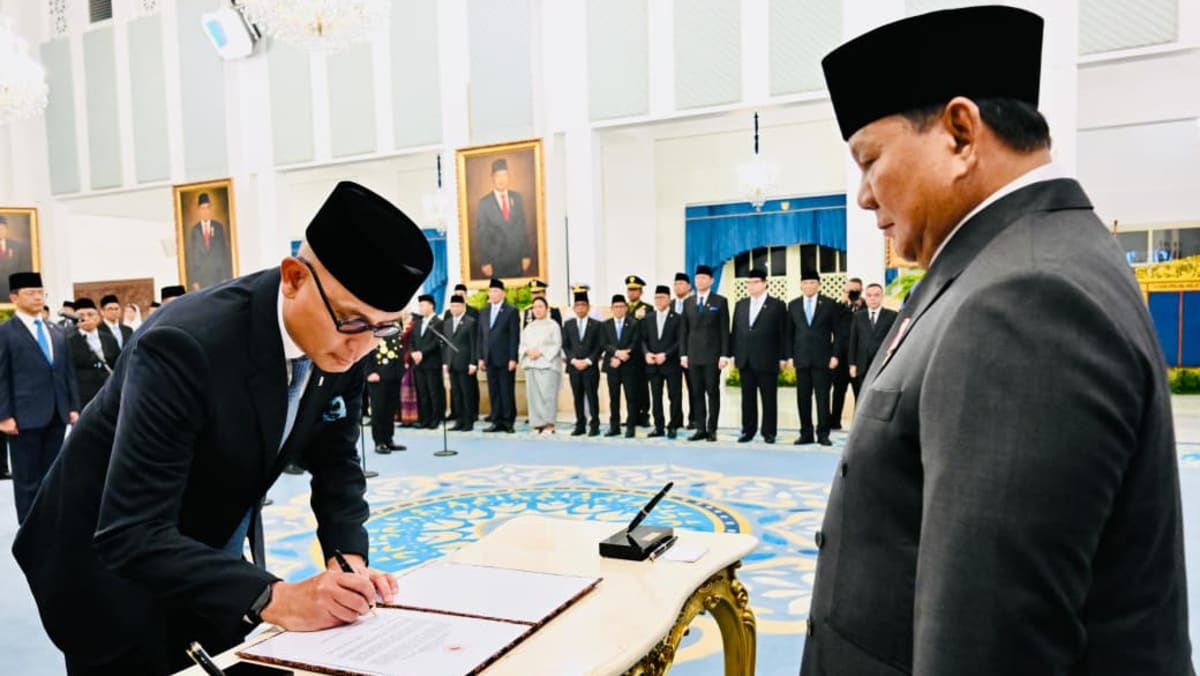
President Prabowo Subianto has appointed Arrmanatha Nasir as the new foreign minister, replacing Sugiono. The appointment is part of a larger Cabinet reshuffle that involved 10 ministerial and deputy ministerial appointments, as well as eight other agency leadership roles.
The reshuffle is seen as an effort by Prabowo to consolidate his authority ahead of his second anniversary in office. Analysts say the move is aimed at keeping ministers on their toes and maintaining coalition support.
The new foreign minister, Arrmanatha Nasir, is a seasoned diplomat who has previously served as deputy minister and ambassador to Paris and the United Nations. His appointment is expected to bring a more conventional approach to Indonesian diplomacy.
The reshuffle also saw the elevation of Golkar Party chairman Bahlil Lahadalia to coordinating minister for downstreaming and energy transition, while retaining his post as energy and mineral resources minister. This move is seen as an effort by Prabowo to reinforce ties with coalition parties ahead of the 2029 elections.
Political researcher Arya Fernandes said the reshuffle could be viewed as an effort by Prabowo to secure the loyalty of parties in his ruling coalition. The move is also seen as an attempt to maintain coalition support as lawmakers consider revisions to the General Elections Law.
The reshuffle has been met with varying reactions from analysts, with some seeing it as a positive move to consolidate Prabowo's authority, while others view it as a sign of instability and uncertainty.
The changes are expected to have significant implications for Indonesia's domestic and foreign policy, particularly in the lead-up to the 2029 elections.
Key facts
- President Prabowo Subianto has carried out his seventh and largest Cabinet reshuffle to date.
- The reshuffle involved 10 ministerial and deputy ministerial appointments, as well as eight other agency leadership roles.
- Arrmanatha Nasir has been appointed as the new foreign minister, replacing Sugiono.
- Golkar Party chairman Bahlil Lahadalia has been elevated to coordinating minister for downstreaming and energy transition.
Three perspectives
Neutral
The Cabinet reshuffle is a significant development in Indonesian politics, with implications for the country's domestic and foreign policy. The move is seen as an effort by Prabowo to consolidate his authority and manage the broad coalition of interests surrounding his presidency. As the 2029 elections approach, the loyalty of coalition parties will be crucial to Prabowo's success.
Positive
The appointment of Arrmanatha Nasir as foreign minister is seen as a positive move, bringing a more conventional approach to Indonesian diplomacy. The reshuffle also demonstrates Prabowo's ability to manage the complex coalition dynamics and maintain support from key parties.
Negative
The reshuffle has raised concerns about instability and uncertainty in the Indonesian government. The sudden and unexpected changes have caught many by surprise, and the implications for the country's policy direction are still unclear. The move has also been seen as an attempt by Prabowo to consolidate his power and reinforce his authority.
Your week in news, every Wednesday
The biggest stories of the week for your edition, in your inbox every Wednesday morning, your time. Free, and you can unsubscribe at any time.