

Scientists find evidence of tipping point for West Antarctic glaciers
New findings from ocean floor mud cores suggest the Thwaites and Pine Island glaciers may have reached a historic melting point during past warm periods.
 Climate Desk 3 min read
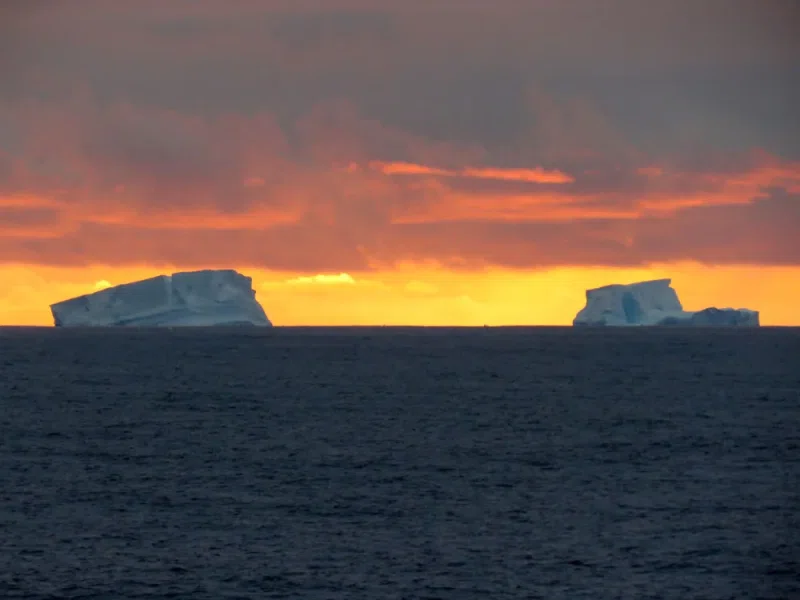
Scientists have uncovered evidence that some of Antarctica’s most vulnerable glaciers, including the Thwaites Glacier, are set to reach a tipping point soon. The Thwaites Glacier is nicknamed the ‘doomsday’ glacier because its collapse could trigger catastrophic sea level rise. It is held in place by an ice shelf that acts like a cork, providing a defence against rising sea levels, but the ice shelf is extremely vulnerable as the ocean warms.
An international team led by the British Antarctic Survey (BAS) identified a distinctive mineral called kaolinite in sediment cores recovered from 4,000m below the sea surface. During every interglacial period over the past 800,000 years, levels of kaolinite in the sediment fell to almost zero. Dr Claus-Dieter Hillenbrand, a BAS marine geologist, said the collapse of the kaolinite signal tells researchers that marine-based ice in the Amundsen Sea sector, including Thwaites and Pine Island glaciers, must have melted and retreated far back into the continent’s interior.
The researchers found that warm deep-water currents likely carried a magnesium-rich variety of clay called smectite south towards Antarctica. These currents would have brought warmer water onto the West Antarctic continental shelf, melting grounded ice and reducing the erosion that produces kaolinite-rich sediment. Analysis of fossilised diatoms, or microscopic marine algae, revealed that waters around West Antarctica became significantly warmer than the global average during past interglacials.
While global temperatures during past warm periods were between 1C and 1.5C above pre-industrial levels, waters in front of the ice sheet reached between 1C and 3C above today’s near-freezing baseline. Dr Hillenbrand said that under natural conditions, the disappearance of Thwaites Glacier could have taken several thousand years. However, human-caused greenhouse gas emissions are warming the oceans at an unprecedented rate, potentially compressing that process into just centuries.
A complete collapse of Thwaites Glacier would add about 65cm to global sea levels, while the neighbouring Pine Island Glacier could contribute a further 51cm. If wider areas of the West Antarctic Ice Sheet were to collapse, sea levels could rise by as much as three to five metres. Dr Rob Larter, a BAS marine geophysicist, said he is convinced that future generations will see substantial sea-level rise.
Key facts
- Thwaites Glacier collapse could add 65cm to global sea levels.
- Pine Island Glacier could contribute a further 51cm to sea level rise.
- Wider West Antarctic Ice Sheet collapse could raise sea levels by three to five metres.
- Past interglacial waters near the ice sheet were 1C to 3C warmer than today's baseline.
Three perspectives
Neutral
An international team led by the British Antarctic Survey has used mud cores to study how the West Antarctic Ice Sheet responded to previous warm periods.
Positive
The study published in Nature Communications could help researchers understand how the ice sheet might respond to continued global warming.
Negative
Human-caused greenhouse gas emissions are warming the oceans at an unprecedented rate, potentially compressing a process that once took millennia into just centuries.
Your week in news, every Wednesday
The biggest stories of the week for your edition, in your inbox every Wednesday morning, your time. Free, and you can unsubscribe at any time.