 Gambia
Navi Pillay Wins Nobel Peace Prize
Navi Pillay, a South African-born jurist, has been awarded the Nobel Peace Prize for her work in international justice, spanning from defending Nelson Mandela to leading a panel on genocide and sexual violence.
 Global Newsflix 2 min read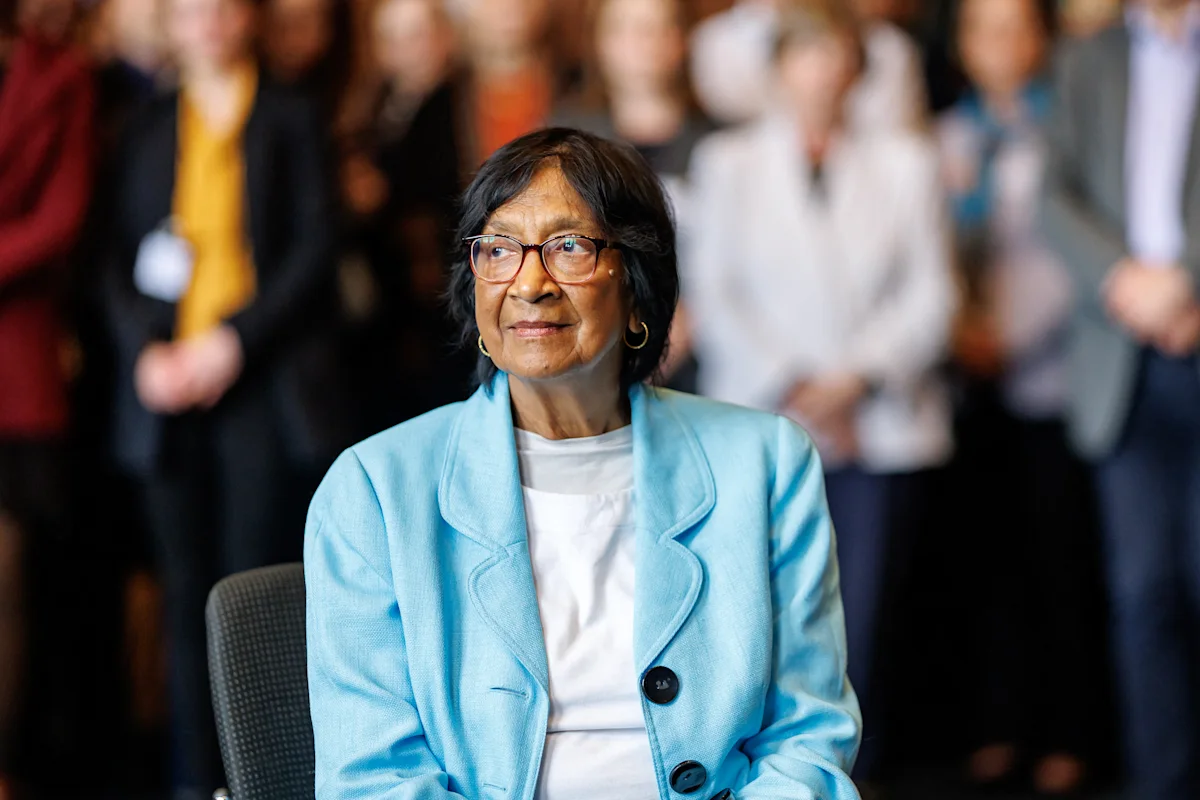
The Norwegian Nobel Committee announced Navi Pillay as the 2026 winner of the Nobel Peace Prize. Pillay has had a long career as a human rights lawyer, serving as president of the International Criminal Tribunal for Rwanda and as a judge on the International Criminal Court.
Pillay said she was deeply honored to receive the award and dedicated it to survivors of international crimes and defenders of international justice. She emphasized the importance of defending international law, which is under significant political attack.
The Nobel committee stated that the system of international law is under tremendous pressure and its institutions are under attack. They noted a shift towards power politics at the expense of legal frameworks and global respect for law and justice.
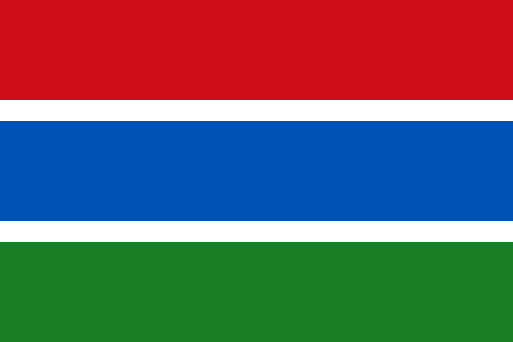
Pillay has been a judge ad hoc of the International Court of Justice, designated by The Gambia in the case The Gambia v. Myanmar concerning alleged violations of the Genocide Convention. She has also chaired the Independent International Commission of Inquiry on the Occupied Palestinian Territory.
Philippe Bolopion, executive director at Human Rights Watch, said Pillay has promoted respect for human rights and sought justice for the world's worst crimes throughout her career. He noted that she has been a stalwart proponent of the international rule of law and impartial human rights work.
Pillay's win is seen as a rebuke to leaders who have rejected international law, including US President Donald Trump and Israeli Prime Minister Benjamin Netanyahu. The Nobel committee's citation did not reference Trump or Israel specifically.
The award highlights the importance of maintaining an organized international order and promoting international law as it comes under attack. Pillay's work has had a profound influence in South Africa, Rwanda, and the Occupied Palestinian Territory.
Key facts
- Navi Pillay has been awarded the 2026 Nobel Peace Prize
- Pillay is a South African-born jurist and former UN human rights chief
- She has worked on international justice cases, including defending Nelson Mandela
- Pillay is currently a judge ad hoc of the International Court of Justice
Three perspectives
Neutral
The Nobel Peace Prize award to Navi Pillay recognizes her contributions to international justice. The award comes at a time when international law is under attack. The international community will be watching how leaders respond to this award.
Positive
Navi Pillay's win is a testament to her dedication to human rights and international justice. Her work has had a profound impact on promoting accountability and justice worldwide. The award is a recognition of her tireless efforts to defend international law.
Negative
The award to Navi Pillay may be seen as a challenge to leaders who have rejected international law. The Nobel committee's citation did not reference specific leaders, but the award is likely to be perceived as a rebuke to those who have undermined international justice.
Your week in news, every Wednesday
The biggest stories of the week for your edition, in your inbox every Wednesday morning, your time. Free, and you can unsubscribe at any time.