

 Sri Lanka
Martin Wickramasinghe
Martin Wickramasinghe was a Sri Lankan journalist and author often acclaimed as the father of modern Sinhala literature.
 Biography DeskOctober 29, 2026
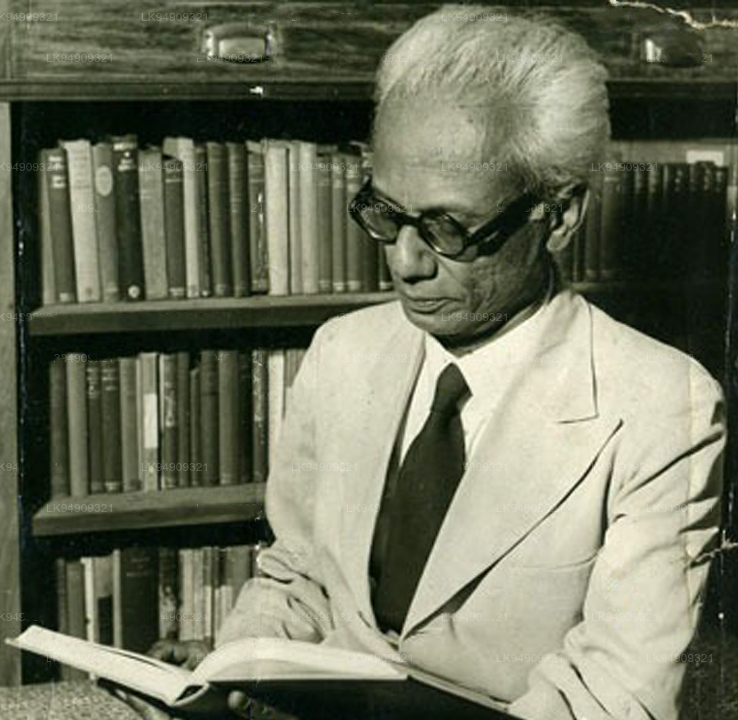
Lama Hewage Don Martin Wickramasinghe was born on 29 May 1890 in Koggala, Galle District. He was the only son of Lamahewage Don Bastian Wickramasinghe and Magalle Balapitiya Liyanage Thochchohamy.
He learned the Sinhala alphabet from a monk named Andiris Gurunnanse and could recite sections of the Hitopadesa. After attending a vernacular school, he studied at Buona Vista in Galle where he became fluent in English and Latin.
Wickramasinghe worked as a book-keeper in Colombo in 1906 and later joined a commissions agency. Following the 1915 Sinhalese-Muslim riots, he returned to Koggala and worked as a book-keeper in Batticaloa.
He began writing for the daily Dinamina in 1916 under the penname Hethu Vaadi. He later served as the editor of Silumina in 1931 and the editor of Dinamina from 1932 until 1946.
His literary works include the novel Leela in 1914 and the trilogy consisting of Gamperaliya in 1944, Yuganthaya in 1948, and Kaliyugaya in 1957. His 1956 novel Viragaya is considered a seminal work of Sinhalese fiction.
He was a practitioner of nisandas poetry and was part of the Peradeniya School. He later contested the movement, accusing writers like Ediriweera Sarachchandra and Gunadasa Amarasekara of imitating western and Japanese literature.
Wickramasinghe was appointed to the Radio Broadcasting Commission in 1953 and received an MBE in 1953. He was nominated for the Nobel Prize in Literature by Ediriweera Sarachchandra in 1973.
He died on 23 July 1976. His home in Koggala is now a folk museum operated by the Martin Wickramasinghe Trust.
Key facts
- Martin Wickramasinghe was born on 29 May 1890 in Koggala.
- He wrote the famous trilogy Gamperaliya, Yuganthaya, and Kaliyugaya.
- He was appointed a Member of the Order of the British Empire in 1953.
- He died on 23 July 1976.