

Voyager 1 to reach one light-day distance from Earth on Nov. 18
NASA's farthest human-made object will be more than 16 billion miles away, marking a milestone that the agency will celebrate with a global light-signaling event.
 Space Desk 2 min read
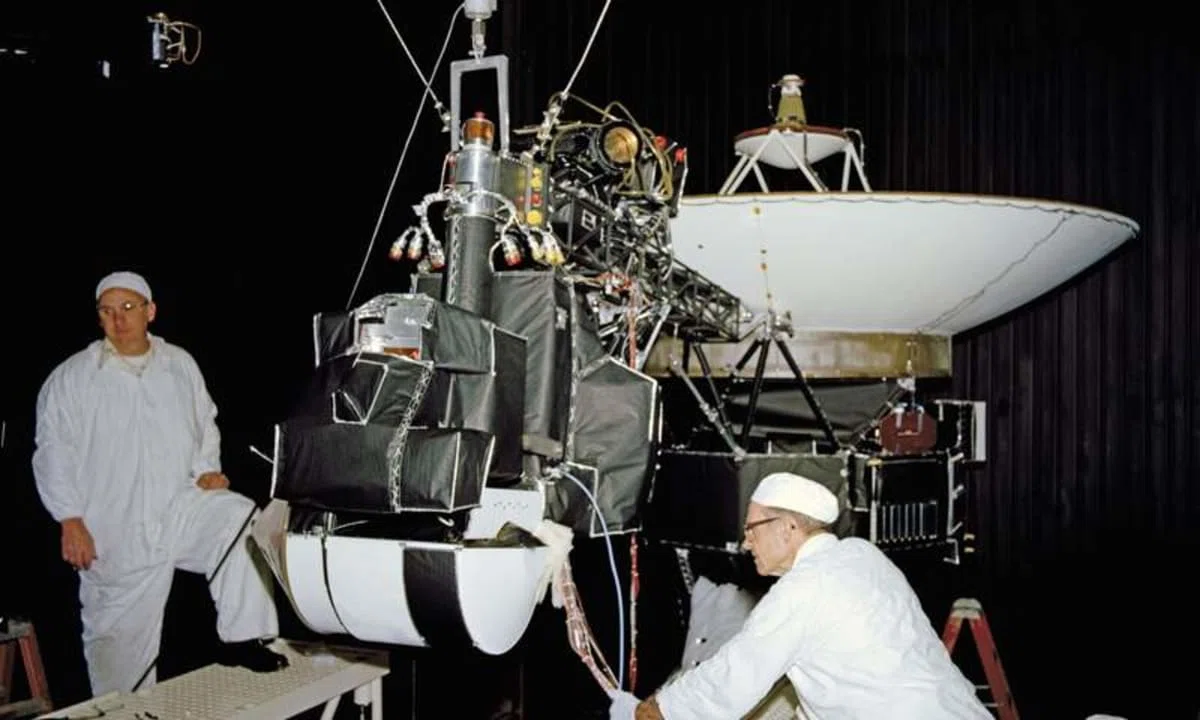
NASA's Voyager 1 spacecraft will reach the one light-day distance milestone at 5:16 a.m. ET on Wednesday, Nov. 18. One light-day is the distance light travels over 24 hours. At that time, the probe will be more than 16 billion miles away.
NASA has provided an online flasher to assist with the signal.
Mission leaders and NASA science officials will meet at the Jet Propulsion Laboratory in Southern California at noon ET on Thursday, Nov. 19. The meeting will be streamed on NASA+ and YouTube to discuss how the spacecraft are performing and how engineers maintain the hardware.
Voyager 1 left Earth in 1977 to explore the giant outer planets. It entered interstellar space in 2012 after leaving the heliosphere. The probe continues to move at nearly 38,000 mph.
The mission faces power limitations as the spacecraft's nuclear power sources deplete. Since 2024, the team has shut off two science instruments on each spacecraft to extend its operation.
Key facts
- Voyager 1 will be one light-day away on Nov. 18 at 5:16 a.m. ET.
- The spacecraft is more than 16 billion miles from Earth.
- NASA will host a public discussion on Nov. 19 at noon ET.
Three perspectives
Neutral
Voyager 1 will reach a distance from Earth equivalent to one light-day on Nov. 18.
Positive
NASA engineers implemented a power-saving swap to keep the spacecraft running for at least another year.
Negative
The spacecraft are running low on nuclear power, and the team will eventually lose the ability to communicate with them.
Your week in news, every Wednesday
The biggest stories of the week for your edition, in your inbox every Wednesday morning, your time. Free, and you can unsubscribe at any time.