 Zimbabwe
Francis Halzen Wins Nobel Prize
University of Wisconsin, Madison Professor Francis Halzen recognized for pioneering work on neutrinos from deep space.
 Global Newsflix 1 min read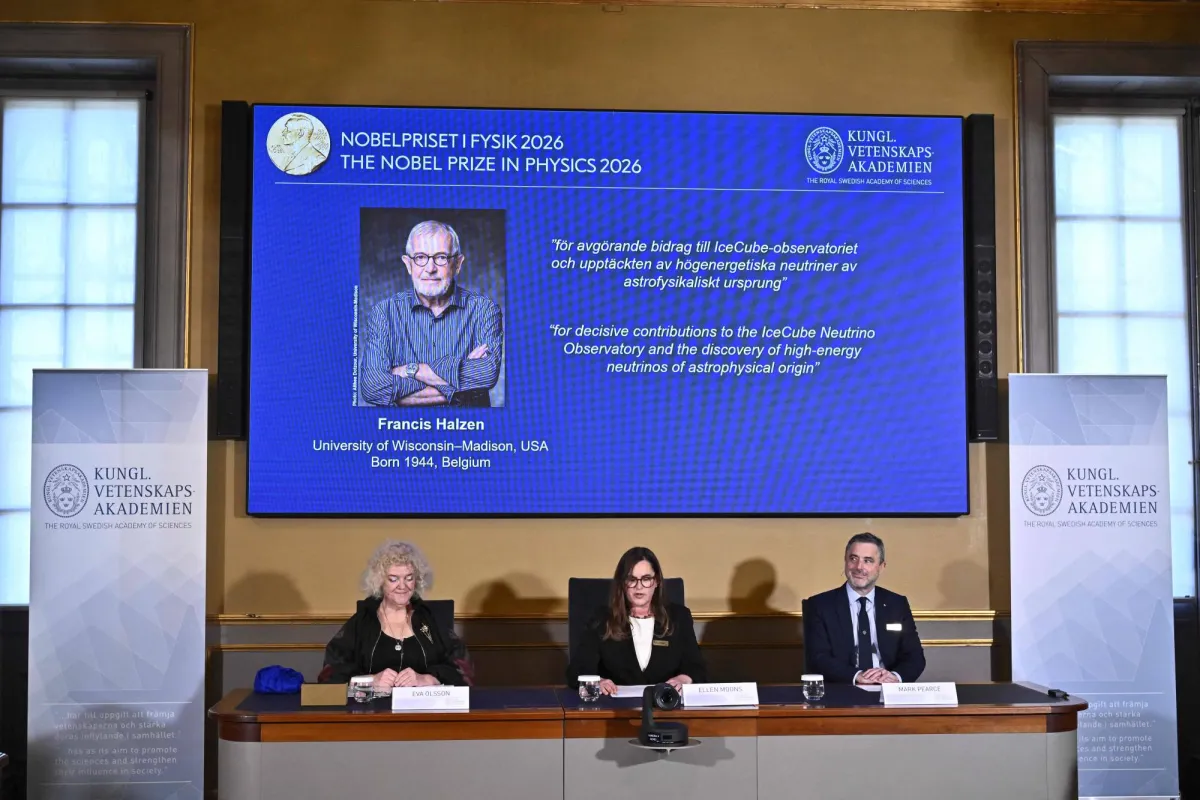
Francis Halzen has been named Nobel laureate in physics. He was recognized for his work on 'ghost particles', also known as neutrinos, which are tiny particles coming from deep space. Halzen's research was conducted using IceCube, a project that built on decades of research into these particles.
Key facts
- Francis Halzen is a professor at the University of Wisconsin, Madison
- He was named Nobel laureate in physics
- His work focused on 'ghost particles' or neutrinos from deep space
- IceCube was the first to find neutrinos coming from deep space
Three perspectives
Neutral
The Nobel laureate in physics award was given to Halzen for his pioneering work. The award recognizes his contributions to particle physics. Halzen's achievement is a significant milestone in the field of physics.
Positive
Halzen's work on neutrinos has significantly advanced our understanding of particle physics. His research has opened up new avenues for further study. The Nobel laureate award is a testament to his dedication and hard work.
Negative
Some of Halzen's work may be difficult for non-experts to understand. The concept of 'ghost particles' may require additional explanation for clarity. Further research is needed to fully understand the implications of Halzen's findings.
Your week in news, every Wednesday
The biggest stories of the week for your edition, in your inbox every Wednesday morning, your time. Free, and you can unsubscribe at any time.