

NASA Awards $300,000 for Mars Food Idea
A Nigerian-American student has won a NASA contest with a sustainable food concept for astronauts on Mars. The idea can be developed indoors with minimal reliance on Earth-based supplies.
 Global Newsflix 2 min read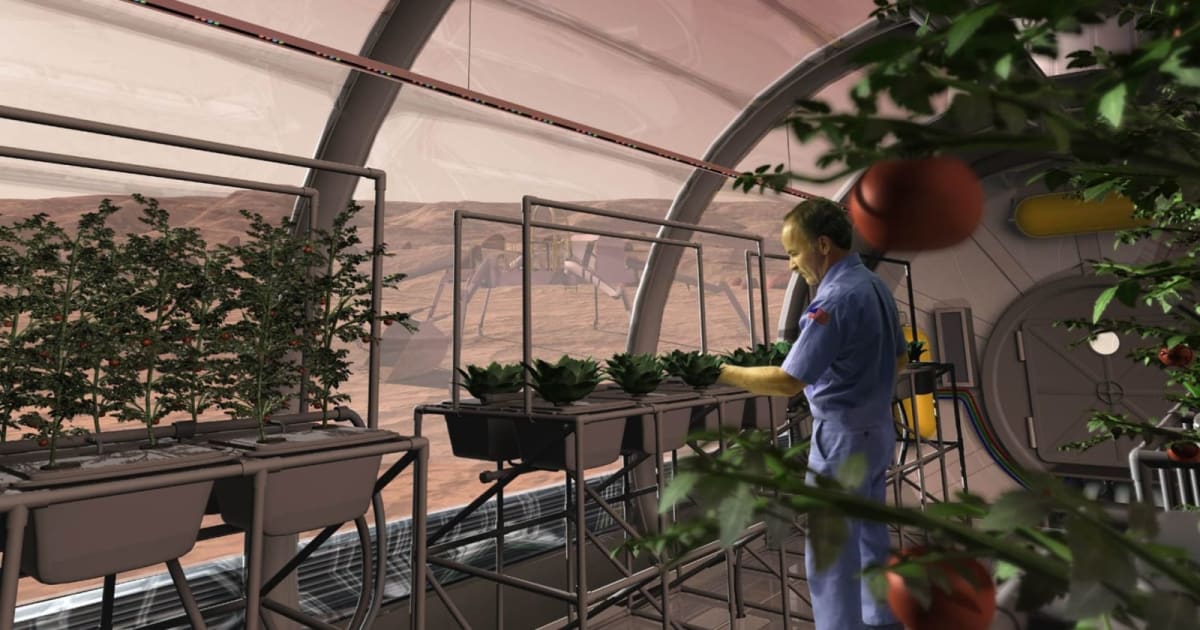
Chinyere Ukeje, a 25-year-old engineering student, won the top prize of $300,000 in NASA's Deep Space Food Challenge. Her project was chosen from 113 competitors from 28 states.
Ukeje's concept involves developing food indoors with sustainable components, reducing the need for supplies from Earth. This is crucial for long-term missions to Mars, where resupply missions from Earth are not feasible.
Another concept, called AEGIS, was developed by Autonomic Resilience Collective in Tulsa. The AEGIS system, or Adaptive Endurance and Growth through Integrated Sustenance, was awarded a $50,000 prize by NASA.
The AEGIS system is designed to grow food without using Martian soil, which is contaminated with toxic substances. Instead, it uses a closed-loop system to recycle water and nutrients, making it a viable option for sustaining astronauts on Mars.
Kyle Johnson, director of operations at Autonomic Resilience Collective, said the AEGIS system is designed to shield astronauts from the harsh Martian environment. The system's name, AEGIS, is Latin for 'shield'.
NASA's Mars to Table Challenge aimed to find innovative solutions to feed astronauts on long-term missions to Mars. The challenge received 113 submissions from 33 countries and 28 US states.
The winning concepts will be further developed by NASA, with the goal of providing sustainable food systems for future Mars missions.
Key facts
- Chinyere Ukeje won $300,000 for her sustainable food concept for Mars astronauts
- The AEGIS system was awarded $50,000 for its innovative approach to growing food on Mars
- NASA's Mars to Table Challenge received 113 submissions from 33 countries and 28 US states
- The challenge aims to find solutions to feed astronauts on long-term Mars missions
Three perspectives
Neutral
The NASA contest has sparked interest in developing sustainable food systems for space missions. As space agencies plan for longer missions to Mars and beyond, finding reliable and sustainable food sources will be essential. The winning concepts will be further developed by NASA.
Positive
The contest has shown that innovative solutions can be found with the help of talented individuals and organizations. The winning concepts have the potential to make a significant impact on the success of future Mars missions. The development of sustainable food systems will be a crucial step in establishing a human presence on Mars.
Negative
The challenge of feeding astronauts on long-term missions to Mars is significant, and the solutions proposed so far may not be enough. The lack of reliable and sustainable food sources could pose a major risk to the success of future missions. Further research and development are needed to address this critical issue.
Your week in news, every Wednesday
The biggest stories of the week for your edition, in your inbox every Wednesday morning, your time. Free, and you can unsubscribe at any time.