

Netanyahu and Eisenkot fail to secure majority in Israeli election
Exit polls show the Netanyahu bloc at 54 seats and the opposition Change bloc at 49, leaving both sides short of the 61 seats needed to govern.
 Politics Desk 2 min read
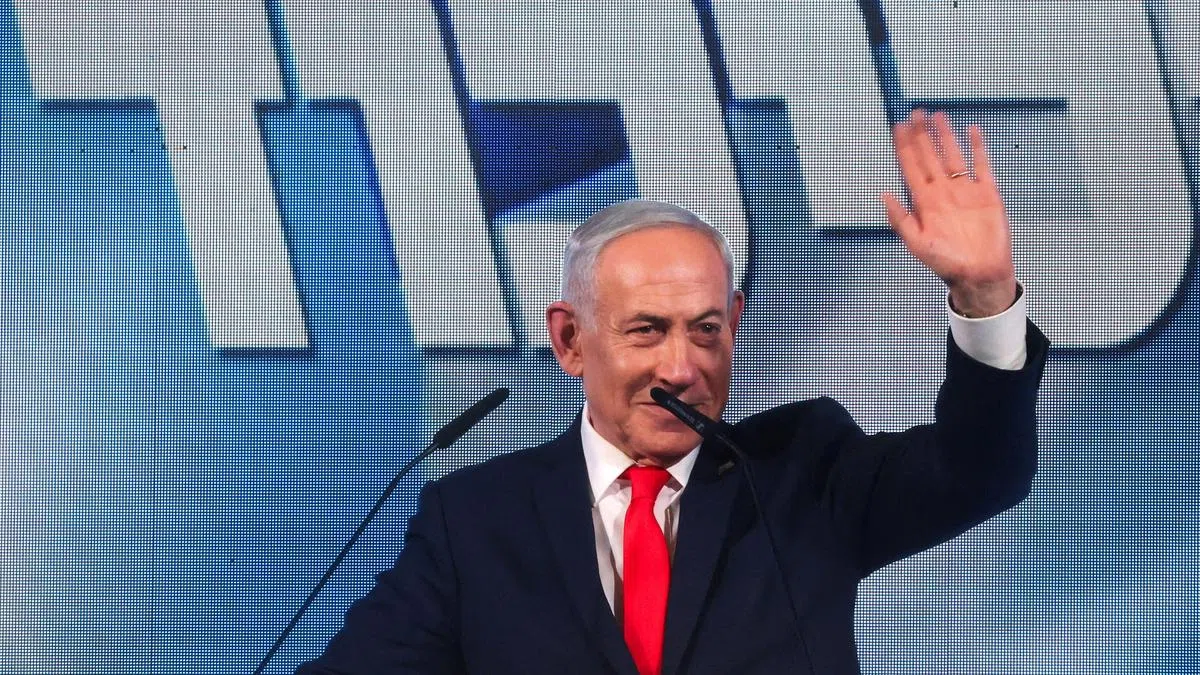
Israeli Prime Minister Benjamin Netanyahu and rival Gadi Eisenkot both vowed on Wednesday, October 28, 2026, to form a government after neither secured a majority in the national election. Exit polls showed the Netanyahu bloc at 54 seats, while the anti-Netanyahu Change bloc, including Gadi Eisenkot’s Yashar and Naftali Bennett’s Together party, reached 49 seats. Both sides fell short of the 61 seats required for a majority in the 120-seat Knesset.
Netanyahu, greeting supporters at a Jerusalem convention centre after 3 a.m. The 77-year-old Prime Minister did not directly claim victory and instead listed leaders Israel has killed under his orders, hinting at a readiness for a third bombing campaign against Iran alongside U.S. President Donald Trump.
In Tel Aviv, Eisenkot addressed his supporters and issued a warning to Netanyahu not to use Israel's security for political needs. The 66-year-old Eisenkot, a former military chief, vowed to work "swiftly" to form a government and said the public had voted for change.
Israeli Arab lists were projected to win 17 to 18 seats, a sharp gain, with Palestinian parties' seats revised to 17. Mansour Abbas said the right had "suffered a major loss" and expressed openness to working with Eisenkot. While Arab lawmakers could support a minority government to maintain Eisenkot's bloc, Eisenkot had previously said during the campaign he would not govern with Israeli Arab lawmakers.
The election saw a turnout of nearly 78%, the highest since 1999. This vote follows the October 7, 2023, attack and comes as Israel faces international isolation due to wars in Gaza and Iran, as well as rising settlement construction and violence in the West Bank.
Key facts
- The Netanyahu bloc secured 54 seats, short of the 61 needed for a majority.
- The opposition Change bloc reached 49 seats.
- Voter turnout was nearly 78%, the highest since 1999.
Three perspectives
Neutral
The election resulted in a split parliament where neither the Netanyahu bloc nor the opposition Change bloc secured the 61 seats necessary to form a government.
Positive
Gadi Eisenkot vowed to work swiftly to form a government and create a more inclusive atmosphere inside Israel.
Negative
Benjamin Netanyahu faces an arrest warrant from the International Criminal Court over Gaza and domestic corruption charges.
Your week in news, every Wednesday
The biggest stories of the week for your edition, in your inbox every Wednesday morning, your time. Free, and you can unsubscribe at any time.