

 Canada
Japan's MMX mission seeks to solve mystery of Martian moons
The Martian Moons Exploration mission aims to collect soil samples from Phobos to determine if the moon formed from asteroid capture or a giant impact on Mars.
 Space Desk 2 min read
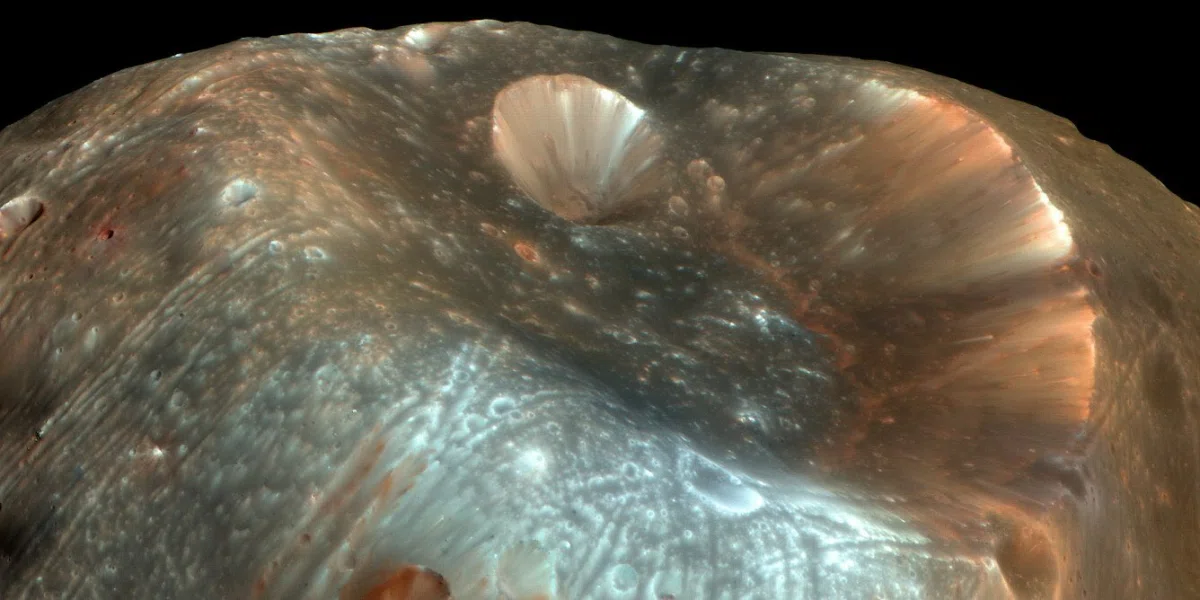
Japan's Martian Moons Exploration (MMX) mission aims to solve the mystery of Mars' two small moons, Phobos and Deimos, by collecting soil samples from Phobos. The mission will investigate both moons to determine if they were asteroids captured by Mars' gravity or if they formed from debris following a giant impact on the planet.
The MMX spacecraft launched on Oct. 19 atop an H3 rocket from the Tanegashima Space Center in southern Japan. Ground controllers received the first signal from the spacecraft about two weeks ago, confirming it is communicating normally.
Scientists are using laboratory experiments in the U.K. to prepare for interpreting findings from the mission. An experimental campaign at the University of Kent used a light-gas gun to fire projectiles at material designed to simulate the Phobos surface. These tests investigated how crater formation depends on impact velocity and object size, and whether material ejected from Mars could contaminate Phobos.
The experiments demonstrated that material from a colliding planetary body can be left on a target's surface even at relatively low impact velocities. This research, which is being submitted to the journal Monthly Notices of the Royal Astronomical Society (MNRAS), also investigated whether MMX instruments could remotely detect grains of Martian material within the Phobos surface layer.
If the captured-asteroid theory is correct, MMX will investigate a primitive object from the outer solar system. If the moons formed following a giant impact on Mars, they could contain fragments of rock from Mars and the object that collided with it.
Key facts
- The MMX mission launched on Oct. 19 atop an H3 rocket from Japan's Tanegashima Space Center.
- MMX aims to collect soil samples from Phobos to understand the origins of Mars' moons.
- Laboratory tests at the University of Kent showed that material from Mars could potentially contaminate Phobos.
Perspectives
Neutral
The MMX mission will collect soil samples from Phobos to investigate whether the moon formed from captured asteroids or impact debris.
Positive
The MMX mission aims to solve the mystery of the Martian moons' origins by returning samples to Earth.
Your week in news, every Wednesday
The biggest stories of the week for your edition, in your inbox every Wednesday morning, your time. Free, and you can unsubscribe at any time.