Ethiopia
Planet Forms After Star Death
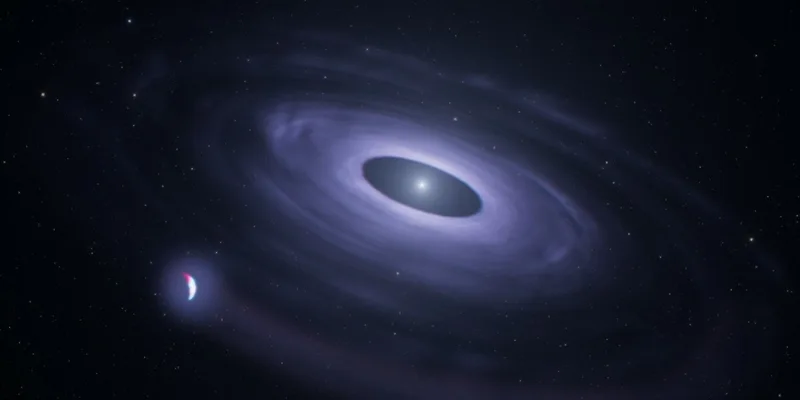
Astronomers discover a second-generation planet orbiting a white dwarf, a dense remnant of a star. The planet may have formed from the star's leftover gas and dust.
 Global Newsflix 2 min read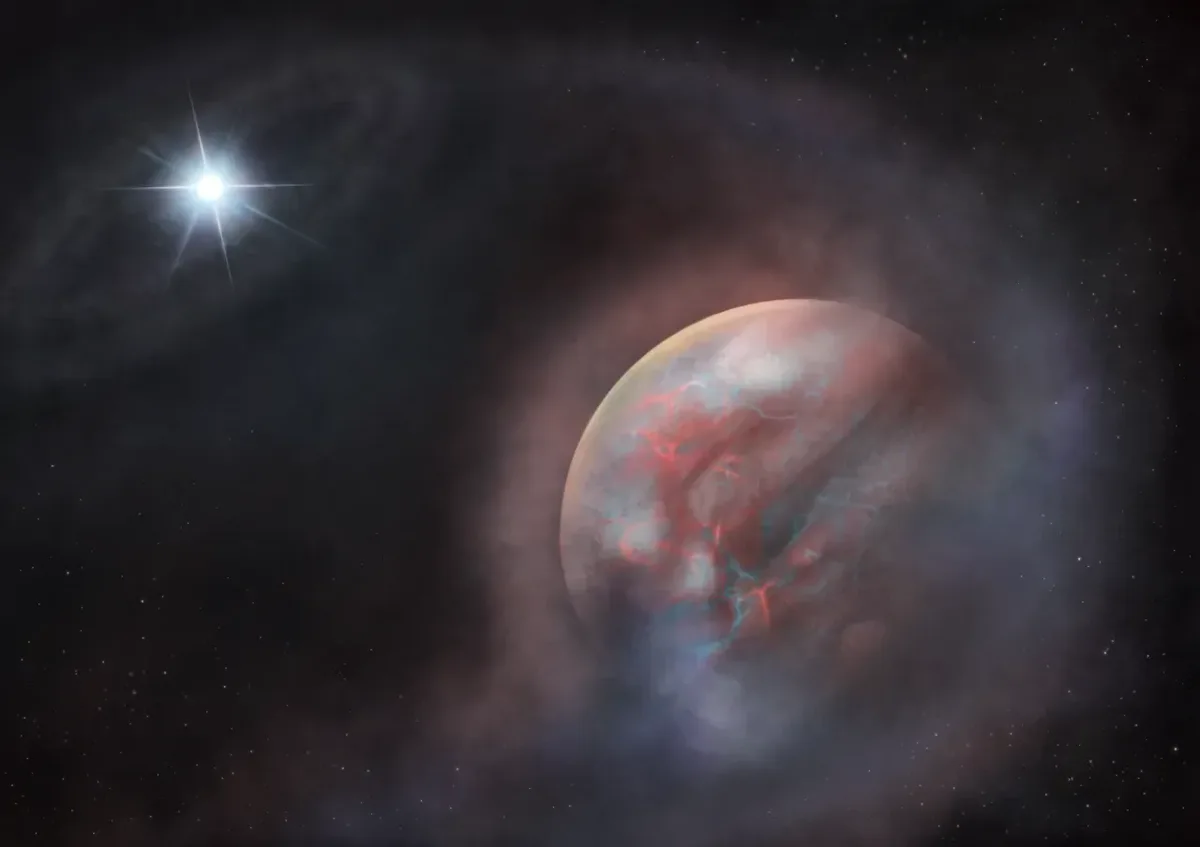
Astronomers have found evidence of a planet forming after its host star died. The discovery was made using data from the Hubble Space Telescope, which observed a white dwarf, a dense remnant of a star, in 1999.
The data showed around 100 mysterious chemical features in the white dwarf's atmosphere, which were unidentified at the time. Jamie Williams, an astronomer at the University of Warwick, re-examined the data and found signatures of the element niobium.
Niobium is a heavy element that forms in the exotic conditions inside dying stars. Its presence is a sign of the star's death throes, and the expulsion of its innards into space. The researchers believe that the niobium-enriched material was ejected into space and formed into a gas giant planet.
The planet is thought to have formed from the accretion of the star's lost gas and dust, like a phoenix rising from the ashes. This process is rare, and the planet would be the first of its kind known to researchers if the findings are confirmed.
The discovery provides insight into a potential future for our own solar system. When a small star runs out of nuclear fuel, it sheds its outer layers, leaving behind a core known as a white dwarf.
The research was published in Nature Astronomy, and the team suggests that the gravity of another star was probably necessary to shape the expelled material into a planet-birthing disk.
Nicholas Stone, a theoretical astrophysicist at the University of Wisconsin-Madison, said that the element niobium is different from most elements that form inside stars due to nuclear fusion.
Key facts
- Astronomers found evidence of a planet forming after its host star died.
- The planet orbits a white dwarf, a dense remnant of a star.
- The planet may have formed from the star's leftover gas and dust.
- The discovery was made using data from the Hubble Space Telescope.
Three perspectives
Neutral
The discovery of a second-generation planet orbiting a white dwarf provides new insights into the potential future of our own solar system. Further research is needed to confirm the findings. The study's results will be closely watched by astronomers and astrophysicists.
Positive
The discovery of a planet forming after its host star died is a significant breakthrough in the field of astronomy. It provides new insights into the potential future of our own solar system and the formation of planets. The research team's findings are a major contribution to our understanding of the universe.
Negative
The discovery of a second-generation planet orbiting a white dwarf is still a theoretical finding and requires further confirmation. The process of planet formation after a star's death is rare and not well understood. More research is needed to fully understand the implications of this discovery.
Your week in news, every Wednesday
The biggest stories of the week for your edition, in your inbox every Wednesday morning, your time. Free, and you can unsubscribe at any time.