Canada
Space
Amateur astronomers join NASA's Kilonova Catcher network to track cosmic flashes
The volunteer network helps follow fading light from gravitational-wave alerts and is preparing for alerts from the Nancy Grace Roman Space Telescope.
 Space
The volunteer network helps follow fading light from gravitational-wave alerts and is preparing for alerts from the Nancy Grace Roman Space Telescope.
The quasar J1504+6252, nicknamed Dún Aonghasa, was seen 630 million years after the Big Bang.
 China
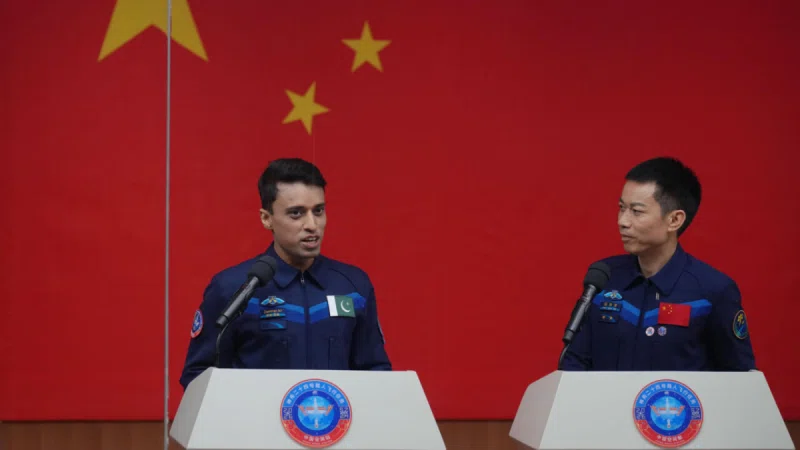
Muhammad Zeeshan Ali will join the Shenzhou-24 mission launching Wednesday from the Gobi Desert.
The spacecraft overcame a last-minute glitch to become only the second craft to orbit the planet closest to the sun.
Dust in the supernova remnant suggests the star's interior changed, possibly just hours before it died.
The Hera mission has reached the Didymos and Dimorphos asteroid system to study the aftermath of NASA's DART collision.
The November full Moon marks the beginning of a sequence of four consecutive supermoons ending in February 2027.
The European Space Agency said the spacecraft is safe and is investigating a software issue that shortened the burn.
New research shows how a spherical black hole and a surrounding ring-shaped black hole can rotate independently in two planes.
 Iceland
The American astronaut, who travelled around the Moon in April on Artemis II, received the main award at the 12th Explorers Festival.
The smallest planet in the solar system is well placed for observation following its greatest western elongation.
 Norway
The new system at the Ny-Ålesund Geodetic Observatory provides faster and more precise tracking of satellites and Earth's surface changes.
Researchers say a hypothetical world they call Planet X2 could explain odd orbits of distant icy bodies such as Sedna, but it has not been detected.
Twelve interplanetary dust particles collected by NASA's ER-2 aircraft contain minerals formed in a distinct icy reservoir in the Kuiper Belt.
The joint ESA and JAXA mission will perform a high-stakes manoeuvre to study the planet's ice, mysterious surface hollows, and large metal core.
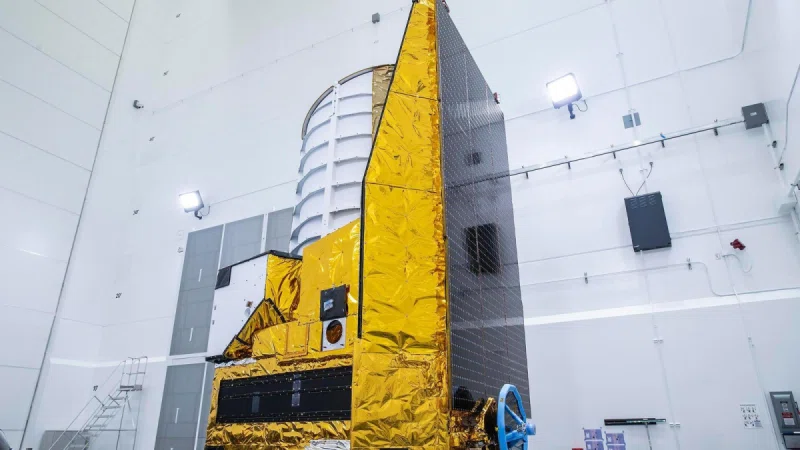
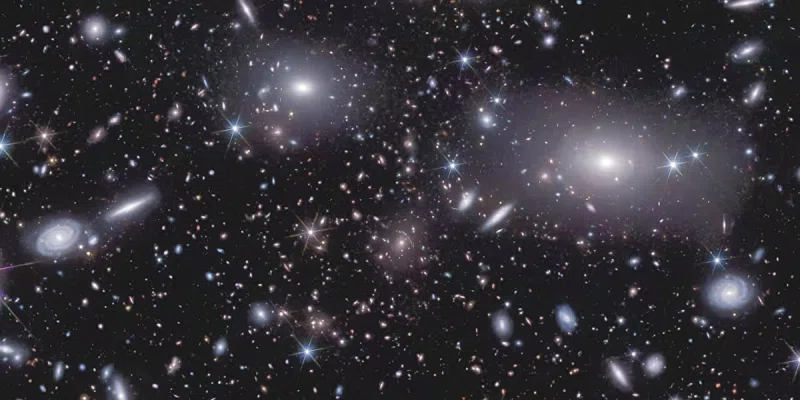
The first major data release from the Euclid mission includes 10,000 sharp images and 160 million spectra to study dark matter and dark energy.
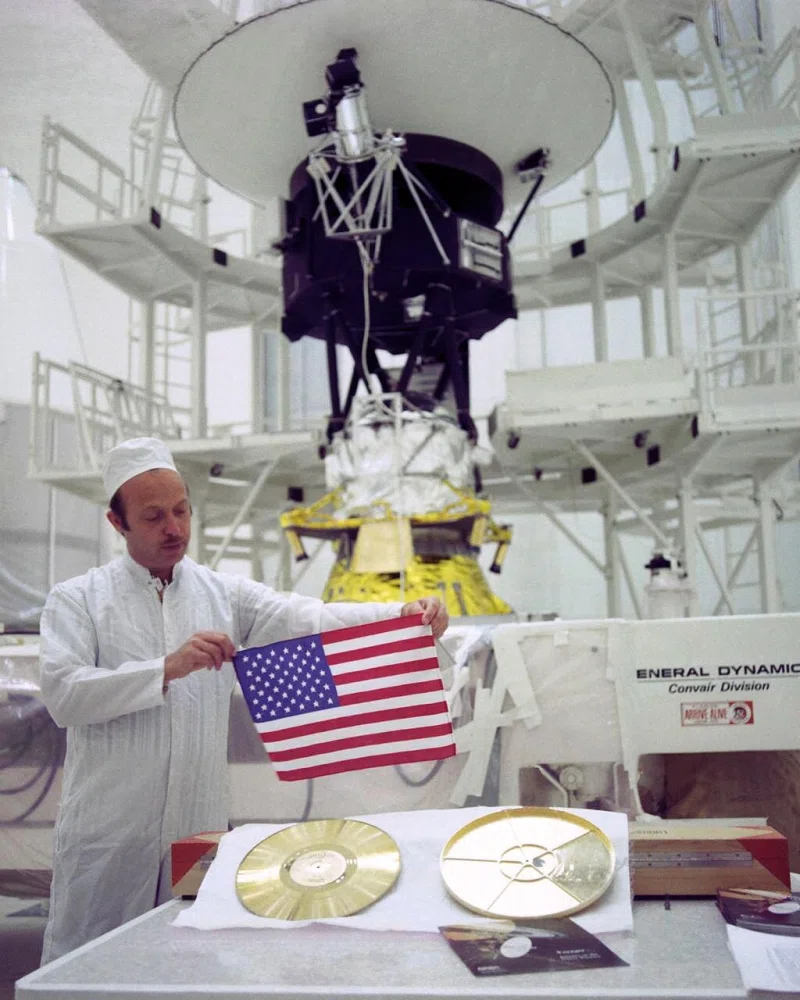
The spacecraft will have travelled more than 16 billion miles since its 1977 launch as it continues its journey through interstellar space.
The company's twin ESCAPADE spacecraft completed precise trans Mars injection burns while its 100th Electron mission successfully deployed a Japanese imaging satellite.
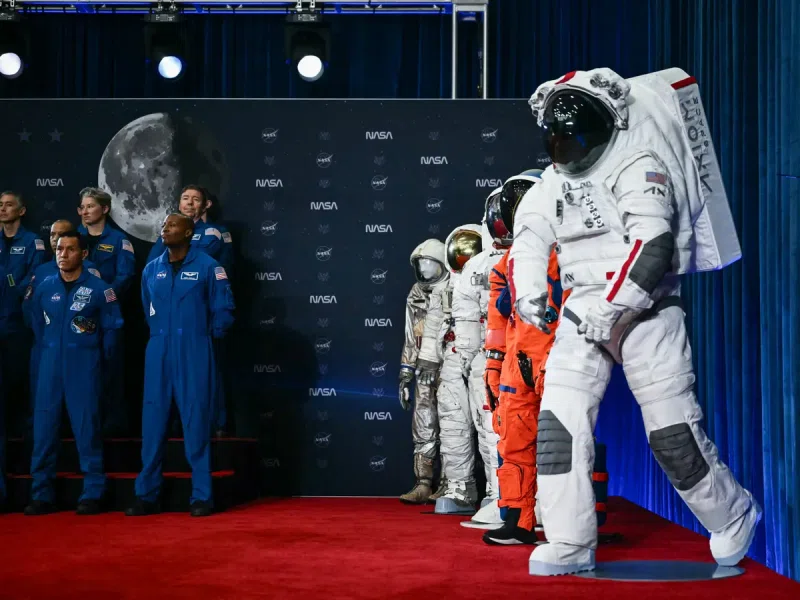
The space-bound humans could go to the moon, build a lunar base, or even head to Mars.
Astronomers using the ExoMars Trace Gas Orbiter have detected hydrogen chloride near Alba Mons, hinting at ongoing igneous processes in the Martian interior.
 United Kingdom
The $81 million project involves a robotic spacecraft with giant claws designed to capture defunct satellites and move them toward Earth's atmosphere for disposal.
 Japan
The JAXA spacecraft will use an H-3 rocket to collect soil from Phobos, aiming to understand how the moon formed and its potential for future manned Mars missions.
The MIT scientist directed the software engineering division that developed the Apollo Guidance Computer, which helped put humans on the moon.
NASA science and cargo are on their way to the International Space Station. The CRS-35 Mission is underway.
A G2 geomagnetic storm watch has been issued for 09 Oct, making the Northern Lights visible across the US. The storm may be visible in the northern US on 8-9 Oct.
Saturn is at its closest approach to Earth this year, and its rings are visible. The planet can be spotted in the sky, along with debris from Halley's Comet.