Nigeria Expands Cancer Care
The Nigerian government is harnessing digital tools and artificial intelligence to strengthen cancer control, while the National Health Insurance Authority is expanding coverage to reduce treatment costs. The moves come as the country marks Breast Cancer Awareness Month, with 16,332 deaths annually.
 Global Newsflix 2 min read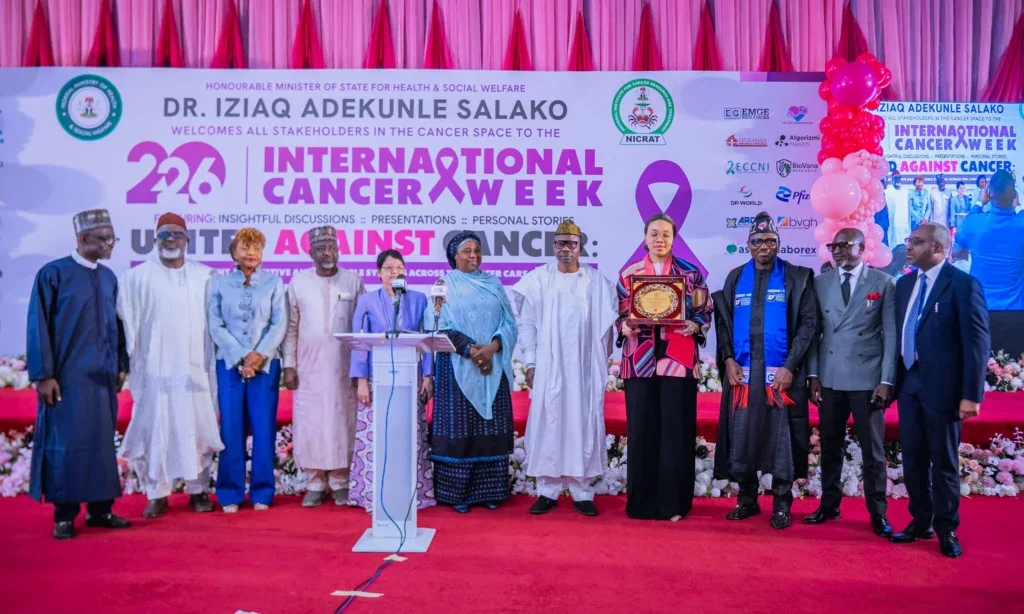
The Minister of State for Health and Social Welfare, Dr Iziaq Salako, said the government will continue to use digitalisation, artificial intelligence, and data analytics to improve cancer prevention, diagnosis, and treatment. He spoke at the opening of the 2026 International Cancer Week in Abuja.
The government is also strengthening cancer registries and using data analytics to improve cancer control. Salako said innovations in cancer care must be affordable, appropriate, scalable, and sustainable to deliver meaningful outcomes within Nigeria's health system.
The National Health Insurance Authority is expanding financial protection for insured cancer patients through a partnership with pharmaceutical company Roche. Under the arrangement, Roche covers 50% of the cost of selected oncology medicines, while the NHIA contributes 30%.
The NHIA is urging women to prioritise early breast cancer detection, as Nigeria records an estimated 32,278 new breast cancer cases and 16,332 deaths annually. The Authority said late presentation remains a major challenge, with many patients seeking care only after the disease has advanced.
The government is committed to ensuring that cancer care is accessible regardless of income, location, or social circumstance. The National Cancer Health Fund and Catastrophic Health Expenditure Fund are strengthening financial protection for cancer patients and families.
The Director-General of the National Institute for Cancer Research and Treatment, Prof. Usman Aliyu, said the institute has strengthened Nigeria's cancer-control efforts. The NHIA is also providing support for radiotherapy, ranging from up to N400,000 to full coverage for eligible patients.
Cancer-related services covered under the relevant health insurance packages include mammography, CT and MRI scans, bone scans, and laboratory investigations. The measures form part of wider efforts under the Nigeria National Cancer Control Plan 2026, 2030 to improve cancer prevention, early detection, diagnosis, and treatment.
Key facts
- Nigeria records an estimated 32,278 new breast cancer cases and 16,332 deaths annually
- The government is harnessing digital tools and artificial intelligence to strengthen cancer control
- The National Health Insurance Authority is expanding coverage to reduce treatment costs
- The NHIA is urging women to prioritise early breast cancer detection
Three perspectives
Neutral
The Nigerian government's efforts to expand cancer care and reduce treatment costs are a step in the right direction. However, the country still faces significant challenges in improving cancer outcomes. The effectiveness of these measures will depend on their implementation and accessibility to those in need.
Positive
The government's commitment to making cancer care accessible regardless of income, location, or social circumstance is a positive development. The partnership between the NHIA and Roche to reduce treatment costs is also a welcome move. These efforts have the potential to improve cancer outcomes and reduce the financial burden on patients and families.
Negative
Despite the government's efforts, Nigeria's cancer burden remains high, with many patients seeking care only after the disease has advanced. The country's healthcare system still faces significant challenges, including limited access to specialist services and high treatment costs. More needs to be done to address these challenges and improve cancer outcomes.
Your week in news, every Wednesday
The biggest stories of the week for your edition, in your inbox every Wednesday morning, your time. Free, and you can unsubscribe at any time.