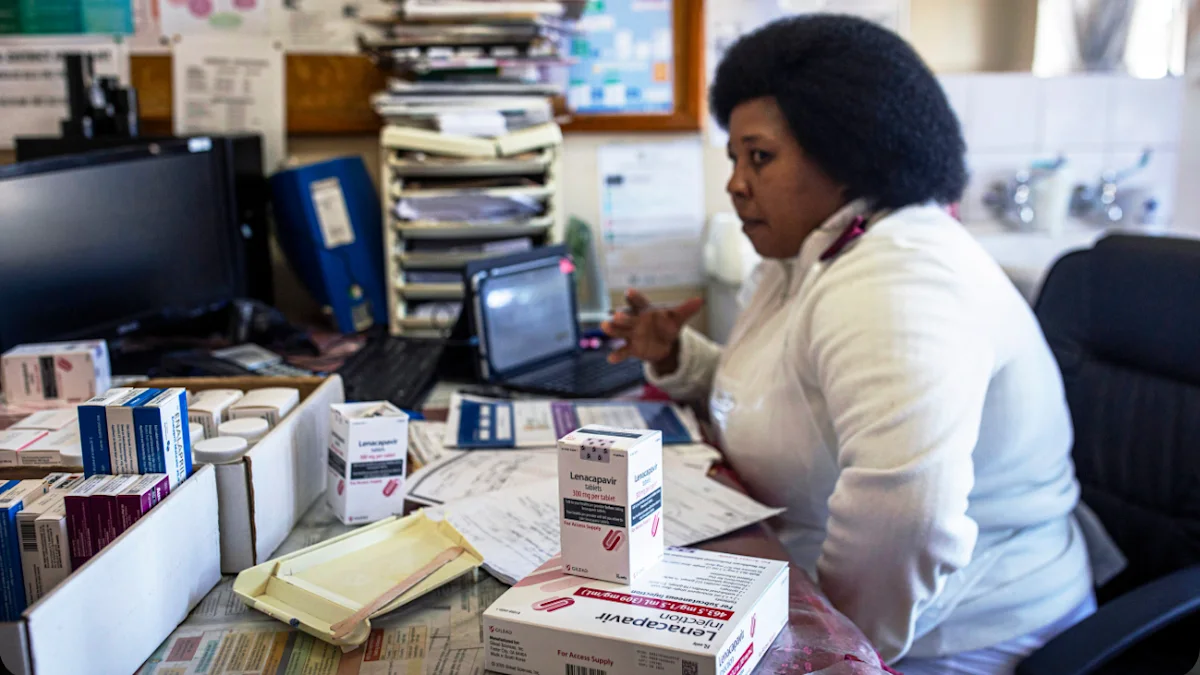
US Aid Cuts Hit HIV Services
A new study finds significant declines in HIV service delivery in Uganda and Zimbabwe after US aid cuts in 2025. The research shows sharp drops in HIV prevention, testing, and treatment services.
 Global Newsflix 2 min read
A study by the London School of Economics and Duke University found that HIV service delivery declined sharply in Uganda and Zimbabwe after the US cut foreign aid in 2025. The research, published in The Lancet Global Health, analyzed data from four non-governmental organizations in the two countries.
The study found that HIV prevention services, including pre-exposure prophylaxis (PrEP), fell by as much as 72% after the aid cuts. HIV testing also dropped, with some organizations experiencing a 64% decline.
Mallah Tabot, a senior adviser at the International Planned Parenthood Federation's Africa regional office, said the shortages of HIV medicines and tests are a warning of what happens when funding becomes uncertain. She noted that HIV infections are rising in several countries, and lives are being lost due to the lack of access to basic commodities.
Liako Serobanyane, a woman from Lesotho, was diagnosed with HIV during her pregnancy and had to rely on her family's support due to the lack of medical care and advice. Her experience highlights the challenges faced by people living with HIV in countries with limited resources.
The US aid cuts have had a significant impact on HIV services in Uganda and Zimbabwe, with many organizations struggling to provide basic care and treatment. The study's findings suggest that the aid cuts have undone decades of progress against HIV.
The International Planned Parenthood Federation found that more than half of its member organizations had run out of stock of HIV tests and PrEP at some point in the past year. The organization's survey of 40 countries also found that 60% of its members had at least one product at low stock levels.
Dr. Henry Cust, the lead researcher, said the study's findings are a concern, as they show that the aid cuts have had a lasting impact on HIV service delivery. He noted that the humanitarian waiver meant to protect life-saving services has not been effective in preventing the decline of HIV services.
Key facts
- HIV prevention services fell by as much as 72% after US aid cuts in 2025
- HIV testing dropped by as much as 64% in some organizations
- More than half of International Planned Parenthood Federation's member organizations had run out of stock of HIV tests and PrEP
- 60% of member organizations had at least one product at low stock levels
Three perspectives
Neutral
The study's findings highlight the challenges faced by countries with limited resources in providing HIV services. The US aid cuts have had a significant impact on HIV service delivery, and it is essential to find alternative funding sources to prevent further declines.
Positive
The study's findings emphasize the need for sustained funding for HIV services. The International Planned Parenthood Federation's efforts to provide HIV care and treatment have helped many people, and continued support is necessary to prevent the spread of the disease.
Negative
The US aid cuts have undone decades of progress against HIV, and the decline in HIV service delivery is a concern. The lack of access to basic commodities, such as HIV tests and PrEP, is a significant challenge, and it is essential to address this issue to prevent further declines.
Your week in news, every Wednesday
The biggest stories of the week for your edition, in your inbox every Wednesday morning, your time. Free, and you can unsubscribe at any time.